Family tree Nijborg » Harm Nijborg (1887-1971)
Personal data Harm Nijborg
- He was born on December 14, 1887 in Vries, Tynaarlo, Drenthe, Nederland.Source 1
- Profession: smidsknecht, smid.
- He died on April 22, 1971 in Assen, Assen, Drenthe, Nederland, he was 83 years old.Source 2
- He is buried in Vries, Tynaarlo, Drenthe, Nederland.
- A child of Geert Nijborg and Annechien Ebbinge
- This information was last updated on March 25, 2023.
Household of Harm Nijborg
He is married to Aaltje Haaijema.
They got married on February 8, 1913 at Vries, Tynaarlo, Drenthe, Nederland, he was 25 years old.Source 3
Child(ren):
- Hendrik Nijborg 1914-1991
Timeline Harm Nijborg
This functionality is only available in Javascript supporting browsers.
Click on the names for more info.
Symbols used:  grandparents
 parents
 brothers/sisters
 children
grandparents
parents
brothers/sisters
children
Image(s) Harm Nijborg


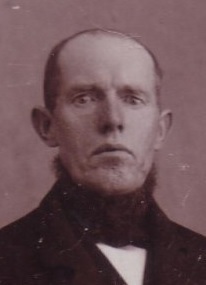
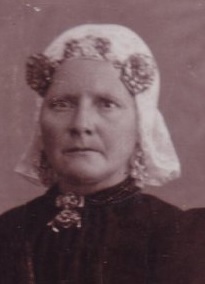

Relationship Harm Nijborg
- Harm Nijborg is the 7th great grandson of Jan Sicke(n)s (Sickinghe):
Sources
Matches in other publications
This person also appears in the publication: View all
Historical events
Birthday December 14, 1887
- The temperature on December 14, 1887 was about 4.6 °C. There was 0.6 mm of rain. The air pressure was 6 kgf/m2 and came mainly from the west-southwest. The airpressure was 75 cm mercury. The atmospheric humidity was 95%. Source: KNMI
- Koning Willem III (Huis van Oranje-Nassau) was from 1849 till 1890 sovereign of the Netherlands (also known as Koninkrijk der Nederlanden)
- In The Netherlands , there was from April 23, 1884 to April 21, 1888 the cabinet Heemskerk, with Mr. J. Heemskerk Azn. (conservatief) as prime minister.
- In the year 1887: Source: Wikipedia
- The Netherlands had about 4.5 million citizens.
- April 4 » Argonia, Kansas elects Susanna M. Salter as the first female mayor in the United States.
- June 8 » Herman Hollerith applies for US patent #395,781 for the 'Art of Compiling Statistics', which was his punched card calculator.
- July 6 » David Kalākaua, monarch of the Kingdom of Hawaii, is forced to sign the Bayonet Constitution, which transfers much of the king's authority to the Legislature of the Kingdom of Hawaii.
- September 5 » A fire at the Theatre Royal, Exeter, kills 186.
- November 9 » The United States receives rights to Pearl Harbor, Hawaii.
- November 13 » Bloody Sunday clashes in central London.
Day of marriage February 8, 1913
- The temperature on February 8, 1913 was between 2.7 °C and 9.4 °C and averaged 6.9 °C. There was 1.1 mm of rain. There was 3.3 hours of sunshine (35%). The average windspeed was 5 Bft (very strong wind) and was prevailing from the west-southwest. Source: KNMI
- Koningin Wilhelmina (Huis van Oranje-Nassau) was from 1890 till 1948 sovereign of the Netherlands (also known as Koninkrijk der Nederlanden)
- In The Netherlands , there was from February 12, 1908 to August 29, 1913 the cabinet Heemskerk, with Mr. Th. Heemskerk (AR) as prime minister.
- In The Netherlands , there was from August 29, 1913 to September 9, 1918 the cabinet Cort van der Linden, with Mr. P.W.A. Cort van der Linden (liberaal) as prime minister.
- In the year 1913: Source: Wikipedia
- The Netherlands had about 6.1 million citizens.
- June 19 » Natives Land Act, 1913 in South Africa implemented.
- June 23 » Second Balkan War: The Greeks defeat the Bulgarians in the Battle of Doiran.
- November 5 » King Otto of Bavaria is deposed by his cousin, Prince Regent Ludwig, who assumes the title Ludwig III.
- November 7 » The first day of the Great Lakes Storm of 1913, a massive blizzard that ultimately killed 250 and caused over $5 million (about $118,098,000 in 2013 dollars) damage. Winds reach hurricane force on this date.
- December 14 » Haruna, the fourth and last Kongō-class ship, launches, eventually becoming one of the Japanese workhorses during World War I and World War II.
- December 21 » Arthur Wynne's "word-cross", the first crossword puzzle, is published in the New York World.
Day of death April 22, 1971
- The temperature on April 22, 1971 was between 9.0 °C and 22.2 °C and averaged 15.6 °C. There was -0.1 mm of rain. There was 4.6 hours of sunshine (32%). The partly clouded was. The average windspeed was 3 Bft (moderate breeze) and was prevailing from the east-southeast. Source: KNMI
- Koningin Juliana (Huis van Oranje-Nassau) was from September 4, 1948 till April 30, 1980 sovereign of the Netherlands (also known as Koninkrijk der Nederlanden)
- In The Netherlands , there was from April 5, 1967 to Tuesday, July 6, 1971 the cabinet De Jong, with P.J.S. de Jong (KVP) as prime minister.
- In The Netherlands , there was from April 5, 1967 to Tuesday, July 6, 1971 the cabinet Biesheuvel I, with Mr. B.W. Biesheuvel (ARP) as prime minister.
- In the year 1971: Source: Wikipedia
- The Netherlands had about 13.1 million citizens.
- February 5 » Astronauts land on the moon in the Apollo 14 mission.
- May 13 » Over 900 unarmed Bengali Hindus are murdered in the Demra massacre.
- June 7 » The United States Supreme Court overturns the conviction of Paul Cohen for disturbing the peace, setting the precedent that vulgar writing is protected under the First Amendment to the United States Constitution.
- June 30 » The crew of the Soviet Soyuz 11 spacecraft are killed when their air supply escapes through a faulty valve.
- October 27 » The Democratic Republic of the Congo is renamed Zaire.
- November 15 » Intel releases the world's first commercial single-chip microprocessor, the 4004.
Same birth/death day
- 1881 » Katherine MacDonald, American actress and producer († 1956)
- 1883 » Manolis Kalomiris, Greek pianist and composer († 1962)
- 1883 » Morihei Ueshiba, Japanese martial artist, developed aikido († 1969)
- 1884 » Jane Cowl, American actress and playwright († 1950)
- 1887 » Xul Solar, Argentinian painter and sculptor († 1963)
- 1894 » Alexander Nelke, Estonian-American painter and carpenter († 1974)
- 1968 » Stephen H. Sholes, American record producer (b. 1911)
- 1978 » Will Geer, American actor (b. 1902)
- 1980 » Fritz Strassmann, German chemist and physicist (b. 1902)
- 1980 » Jane Froman, American actress and singer (b. 1907)
- 1983 » Earl Hines, American pianist and bandleader (b. 1903)
- 1984 » Ansel Adams, American photographer and environmentalist (b. 1902)
About the surname Nijborg
- View the information that Genealogie Online has about the surname Nijborg.
- Check the information Open Archives has about Nijborg.
- Check the Wie (onder)zoekt wie? register to see who is (re)searching Nijborg.
The Family tree Nijborg publication was prepared by Dick Nijborg.
When copying data from this family tree, please include a reference to the origin:
Dick Nijborg, "Family tree Nijborg", database, Genealogy Online (https://www.genealogieonline.nl/stamboom-nijborg/I74.php : accessed February 15, 2026), "Harm Nijborg (1887-1971)".
Dick Nijborg, "Family tree Nijborg", database, Genealogy Online (https://www.genealogieonline.nl/stamboom-nijborg/I74.php : accessed February 15, 2026), "Harm Nijborg (1887-1971)".