Family tree Nijborg » Antonie Nieborg (1891-1966)
Personal data Antonie Nieborg
- He was born on September 27, 1891 in De Groeve, Tynaarlo, Drenthe, Nederland.Source 1
- Profession: machinist.
- He died on January 12, 1966 in Drouwenerveen, Borger-Odoorn, Drenthe, Nederland, he was 74 years old.Source 2
- He is buried in Drouwenerveen, Borger-Odoorn, Drenthe, Nederland.
- A child of Tie Nieborg and Roelfje Klok
- This information was last updated on April 5, 2021.
Household of Antonie Nieborg
He is married to Geesje Nijhof.
They got married on August 31, 1918 at Zuidlaren, Tynaarlo, Drenthe, Nederland, he was 26 years old.Source 3
Child(ren):
- Tie Nieborg 1919-1968
- (Not public)
Timeline Antonie Nieborg
This functionality is only available in Javascript supporting browsers.
Click on the names for more info.
Symbols used:  grandparents
 parents
 brothers/sisters
 children
grandparents
parents
brothers/sisters
children
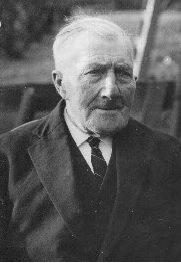
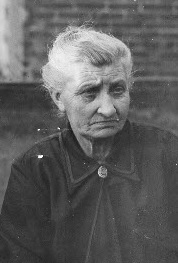
Image(s) Antonie Nieborg

Relationship Antonie Nieborg
- Antonie Nieborg is the 6th great grandson of Jan Sicke(n)s (Sickinghe):
Sources
Historical events
Birthday September 27, 1891
- The temperature on September 27, 1891 was about 16.1 °C. There was 0.1 mm of rain. The air pressure was 5 kgf/m2 and came mainly from the west-southwest. The airpressure was 76 cm mercury. The atmospheric humidity was 65%. Source: KNMI
- Koningin Wilhelmina (Huis van Oranje-Nassau) was from 1890 till 1948 sovereign of the Netherlands (also known as Koninkrijk der Nederlanden)
- Regentes Emma (Huis van Oranje-Nassau) was from 1890 till 1898 sovereign of the Netherlands (also known as Koninkrijk der Nederlanden)
- In The Netherlands , there was from April 21, 1888 to August 21, 1891 the cabinet Mackay, with Mr. A. baron Mackay (AR) as prime minister.
- In The Netherlands , there was from August 21, 1891 to May 9, 1894 the cabinet Van Tienhoven, with Mr. G. van Tienhoven (unie-liberaal) as prime minister.
- In the year 1891: Source: Wikipedia
- The Netherlands had about 5.1 million citizens.
- January 31 » History of Portugal: The first attempt at a Portuguese republican revolution breaks out in the northern city of Porto.
- March 17 » SSUtopia collides with HMSAnson in the Bay of Gibraltar and sinks, killing 562 of the 880 passengers on board.
- May 5 » The Music Hall in New York City (later known as Carnegie Hall) has its grand opening and first public performance, with Tchaikovsky as the guest conductor.
- August 18 » Major hurricane strikes Martinique, leaving 700 dead.
- August 24 » Thomas Edison patents the motion picture camera.
- October 1 » Stanford University opens its doors in California, United States.
Day of marriage August 31, 1918
- The temperature on August 31, 1918 was between 9.3 °C and 17.2 °C and averaged 13.6 °C. There was 12.6 mm of rain. There was 1.8 hours of sunshine (13%). The average windspeed was 3 Bft (moderate breeze) and was prevailing from the west-southwest. Source: KNMI
- Koningin Wilhelmina (Huis van Oranje-Nassau) was from 1890 till 1948 sovereign of the Netherlands (also known as Koninkrijk der Nederlanden)
- In The Netherlands , there was from August 29, 1913 to September 9, 1918 the cabinet Cort van der Linden, with Mr. P.W.A. Cort van der Linden (liberaal) as prime minister.
- In The Netherlands , there was from September 9, 1918 to September 18, 1922 the cabinet Ruys de Beerenbrouck I, with Jonkheer mr. Ch.J.M. Ruys de Beerenbrouck (RKSP) as prime minister.
- In the year 1918: Source: Wikipedia
- The Netherlands had about 6.6 million citizens.
- March 19 » The US Congress establishes time zones and approves daylight saving time.
- July 4 » Bolsheviks kill Tsar Nicholas II of Russia and his family (Julian calendar date).
- October 1 » Sayid Abdullah becomes the last Khan of Khiva.
- November 3 » The German Revolution of 1918–19 begins when 40,000 sailors take over the port in Kiel.
- November 9 » Kaiser Wilhelm II of Germany abdicates after the German Revolution, and Germany is proclaimed a Republic.
- November 26 » The Montenegran Podgorica Assembly votes for a "union of the people", declaring assimilation into the Kingdom of Serbia.
Day of death January 12, 1966
- The temperature on January 12, 1966 was between -5.0 °C and -0.7 °C and averaged -2.4 °C. There was 0.2 hours of sunshine (2%). The partly or heavily clouded was. The average windspeed was 3 Bft (moderate breeze) and was prevailing from the northeast. Source: KNMI
- Koningin Juliana (Huis van Oranje-Nassau) was from September 4, 1948 till April 30, 1980 sovereign of the Netherlands (also known as Koninkrijk der Nederlanden)
- In The Netherlands , there was from April 14, 1965 to November 22, 1966 the cabinet Cals, with Mr. J.M.L.Th. Cals (KVP) as prime minister.
- In The Netherlands , there was from November 22, 1966 to April 5, 1967 the cabinet Zijlstra, with Prof. dr. J. Zijlstra (ARP) as prime minister.
- In the year 1966: Source: Wikipedia
- The Netherlands had about 12.4 million citizens.
- February 28 » A NASA T-38 Talon crashes into the McDonnell Aircraft factory while attempting a poor-visibility landing at Lambert Field, St. Louis, killing astronauts Elliot See and Charles Bassett.
- March 5 » BOAC Flight 911, a Boeing 707 aircraft, breaks apart in mid-air due to clear-air turbulence and crashes into Mount Fuji, Japan, killing all 124 people on board.
- July 1 » The first color television transmission in Canada takes place from Toronto.
- August 1 » Purges of intellectuals and imperialists becomes official China policy at the beginning of the Cultural Revolution.
- August 23 » Lunar Orbiter 1 takes the first photograph of Earth from orbit around the Moon.
- October 21 » A colliery spoil tip collapses on the village of Aberfan in Wales, killing 144 people, mostly schoolchildren.
Same birth/death day
- 1885 » Harry Blackstone, Sr., American magician († 1965)
- 1892 » George Bambridge, English diplomat († 1943)
- 1894 » Lothar von Richthofen, German lieutenant and pilot († 1922)
- 1895 » Woolf Barnato, English race car driver and financier († 1948)
- 1896 » Gilbert Ashton, English cricketer († 1981)
- 1896 » Sam Ervin, American soldier and politician († 1985)
- 1960 » Nevil Shute, English engineer and author (b. 1899)
- 1962 » Ariadna Tyrkova-Williams, Russian journalist and activist (b. 1869)
- 1965 » Lorraine Hansberry, American author, playwright, and director (b. 1936)
- 1967 » Burhan Asaf Belge, Turkish diplomat (b. 1887)
- 1971 » John Tovey, 1st Baron Tovey, English admiral (b. 1885)
- 1973 » Roy Franklin Nichols, American historian and academic (b. 1896)
About the surname Nieborg
- View the information that Genealogie Online has about the surname Nieborg.
- Check the information Open Archives has about Nieborg.
- Check the Wie (onder)zoekt wie? register to see who is (re)searching Nieborg.
The Family tree Nijborg publication was prepared by Dick Nijborg.
When copying data from this family tree, please include a reference to the origin:
Dick Nijborg, "Family tree Nijborg", database, Genealogy Online (https://www.genealogieonline.nl/stamboom-nijborg/I187.php : accessed February 27, 2026), "Antonie Nieborg (1891-1966)".
Dick Nijborg, "Family tree Nijborg", database, Genealogy Online (https://www.genealogieonline.nl/stamboom-nijborg/I187.php : accessed February 27, 2026), "Antonie Nieborg (1891-1966)".