Family tree Nijborg » Kornelis Nieborg (1887-1962)
Personal data Kornelis Nieborg
- He was born on June 13, 1887 in Kropswolde, Midden-Groningen, Groningen, Nederland.Source 1
- Profession: timmerman, caféhouder.
- He died on January 12, 1962 in Zuidlaren, Tynaarlo, Drenthe, Nederland, he was 74 years old.Source 2
- A child of Tie Nieborg and Roelfje Klok
- This information was last updated on September 22, 2021.
Household of Kornelis Nieborg
He is married to Jantje Venema.
They got married on April 23, 1910 at Zuidlaren, Tynaarlo, Drenthe, Nederland, he was 22 years old.Source 3
Child(ren):
- Rutger Nieborg 1910-
- Roelfje Nieborg 1910-
- Tie Nieborg 1912-
Timeline Kornelis Nieborg
This functionality is only available in Javascript supporting browsers.
Click on the names for more info.
Symbols used:  grandparents
 parents
 brothers/sisters
 children
grandparents
parents
brothers/sisters
children
Image(s) Kornelis Nieborg

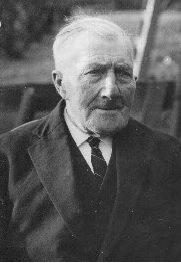
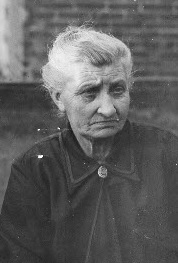
Relationship Kornelis Nieborg
- Kornelis Nieborg is the 6th great grandson of Jan Sicke(n)s (Sickinghe):
Sources
Historical events
Birthday June 13, 1887
- The temperature on June 13, 1887 was about 22.1 °C. The air pressure was 12 kgf/m2 and came mainly from the west-northwest. The airpressure was 76 cm mercury. The atmospheric humidity was 60%. Source: KNMI
- Koning Willem III (Huis van Oranje-Nassau) was from 1849 till 1890 sovereign of the Netherlands (also known as Koninkrijk der Nederlanden)
- In The Netherlands , there was from April 23, 1884 to April 21, 1888 the cabinet Heemskerk, with Mr. J. Heemskerk Azn. (conservatief) as prime minister.
- In the year 1887: Source: Wikipedia
- The Netherlands had about 4.5 million citizens.
- February 2 » In Punxsutawney, Pennsylvania the first Groundhog Day is observed.
- April 28 » A week after being arrested by the Prussian Secret Police, French police inspector Guillaume Schnaebelé is released on order of William I, German Emperor, defusing a possible war.
- June 8 » Herman Hollerith applies for US patent #395,781 for the 'Art of Compiling Statistics', which was his punched card calculator.
- July 6 » David Kalākaua, monarch of the Kingdom of Hawaii, is forced to sign the Bayonet Constitution, which transfers much of the king's authority to the Legislature of the Kingdom of Hawaii.
- July 26 » Publication of the Unua Libro, founding the Esperanto movement.
- September 5 » A fire at the Theatre Royal, Exeter, kills 186.
Day of marriage April 23, 1910
- The temperature on April 23, 1910 was between 1.4 °C and 9.2 °C and averaged 6.2 °C. There was 0.4 mm of rain. There was 5.7 hours of sunshine (40%). The average windspeed was 4 Bft (moderate breeze) and was prevailing from the west-southwest. Source: KNMI
- Koningin Wilhelmina (Huis van Oranje-Nassau) was from 1890 till 1948 sovereign of the Netherlands (also known as Koninkrijk der Nederlanden)
- In The Netherlands , there was from February 12, 1908 to August 29, 1913 the cabinet Heemskerk, with Mr. Th. Heemskerk (AR) as prime minister.
- In the year 1910: Source: Wikipedia
- The Netherlands had about 5.9 million citizens.
- March 1 » The deadliest avalanche in United States history buries a Great Northern Railway train in northeastern King County, Washington, killing 96 people.
- April 12 » SMSZrínyi, one of the last pre-dreadnought battleships built by the Austro-Hungarian Navy, is launched.
- May 31 » The South Africa Act comes into force, establishing the Union of South Africa.
- June 19 » The first Father's Day is celebrated in Spokane, Washington.
- June 25 » The United States Congress passes the Mann Act, which prohibits interstate transport of women or girls for “immoral purposes”; the ambiguous language would be used to selectively prosecute people for years to come.
- September 22 » The Duke of York's Picture House opens in Brighton, now the oldest continually operating cinema in Britain.
Day of death January 12, 1962
- The temperature on January 12, 1962 was between 3.1 °C and 8.5 °C and averaged 5.2 °C. There was 2.4 mm of rain during 2.1 hours. There was 0.3 hours of sunshine (4%). The partly clouded was. The average windspeed was 4 Bft (moderate breeze) and was prevailing from the southwest. Source: KNMI
- Koningin Juliana (Huis van Oranje-Nassau) was from September 4, 1948 till April 30, 1980 sovereign of the Netherlands (also known as Koninkrijk der Nederlanden)
- In The Netherlands , there was from May 19, 1959 to July 24, 1964 the cabinet De Quay, with Prof. dr. J.E. de Quay (KVP) as prime minister.
- In the year 1962: Source: Wikipedia
- The Netherlands had about 11.7 million citizens.
- February 8 » Charonne massacre. Nine trade unionists are killed by French police at the instigation of Nazi collaborator Maurice Papon, then chief of the Paris Prefecture of Police.
- March 4 » A Caledonian Airways Douglas DC-7 crashes shortly after takeoff from Cameroon, killing 111 - the worst crash of a DC-7.
- March 18 » The Évian Accords end the Algerian War of Independence, which had begun in 1954.
- October 12 » The Columbus Day Storm strikes the U.S. Pacific Northwest with record wind velocities; 46 dead and at least U.S. $230 million in damages.
- November 4 » The United States concludes Operation Fishbowl, its final above-ground nuclear weapons testing series, in anticipation of the 1963 Partial Nuclear Test Ban Treaty.
- December 25 » The Soviet Union conducts its final above-ground nuclear weapon test, in anticipation of the 1963 Partial Nuclear Test Ban Treaty.
Same birth/death day
- 1884 » Étienne Gilson, French philosopher and academic († 1978)
- 1884 » Leon Chwistek, Polish painter, philosopher, and mathematician († 1944)
- 1885 » Henry George Lamond, Australian farmer and author († 1969)
- 1887 » André François-Poncet, French politician and diplomat († 1978)
- 1887 » Bruno Frank, German-American author, poet, and playwright († 1945)
- 1888 » Fernando Pessoa, Portuguese poet and critic († 1935)
- 1958 » Charles Hatfield, American meteorologist (b. 1875)
- 1960 » Nevil Shute, English engineer and author (b. 1899)
- 1962 » Ariadna Tyrkova-Williams, Russian journalist and activist (b. 1869)
- 1965 » Lorraine Hansberry, American author, playwright, and director (b. 1936)
- 1967 » Burhan Asaf Belge, Turkish diplomat (b. 1887)
- 1971 » John Tovey, 1st Baron Tovey, English admiral (b. 1885)
About the surname Nieborg
- View the information that Genealogie Online has about the surname Nieborg.
- Check the information Open Archives has about Nieborg.
- Check the Wie (onder)zoekt wie? register to see who is (re)searching Nieborg.
The Family tree Nijborg publication was prepared by Dick Nijborg.
When copying data from this family tree, please include a reference to the origin:
Dick Nijborg, "Family tree Nijborg", database, Genealogy Online (https://www.genealogieonline.nl/stamboom-nijborg/I145.php : accessed February 27, 2026), "Kornelis Nieborg (1887-1962)".
Dick Nijborg, "Family tree Nijborg", database, Genealogy Online (https://www.genealogieonline.nl/stamboom-nijborg/I145.php : accessed February 27, 2026), "Kornelis Nieborg (1887-1962)".