Family tree Nijborg » Hilbrand Nieborg (1914-1990)
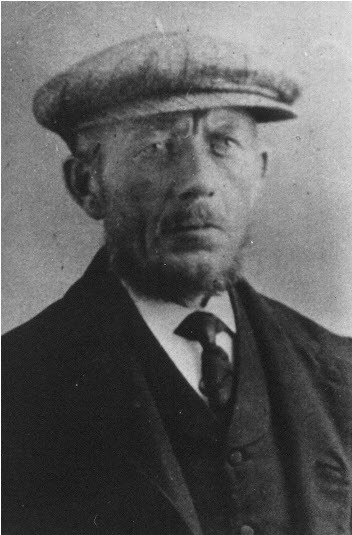
Personal data Hilbrand Nieborg
- He was born on December 25, 1914 in Kropswolde, Midden-Groningen, Groningen, Nederland.Source 1
- Profession: manufacturier.
- He died on November 23, 1990 in Harkstede, Midden-Groningen, Groningen, Nederland, he was 75 years old.
- A child of Hendrik Nieborg and Hinderkien Kerlien
- This information was last updated on June 15, 2024.
Household of Hilbrand Nieborg
He is married to Jantina Engel.
They got married on July 11, 1942 at Slochteren, Midden-Groningen, Groningen, Nederland, he was 27 years old.Source 2
Child(ren):
- (Not public)
- (Not public)
Timeline Hilbrand Nieborg
This functionality is only available in Javascript supporting browsers.
Click on the names for more info.
Symbols used:  grandparents
 parents
 brothers/sisters
 children
grandparents
parents
brothers/sisters
children
Relationship Hilbrand Nieborg
- Hilbrand Nieborg is the 7th great grandson of Jan Sicke(n)s (Sickinghe):
Sources
Historical events
Birthday December 25, 1914
- The temperature on December 25, 1914 was between -6.0 °C and 1.0 °C and averaged -2.9 °C. There was 0.2 mm of rain. There was 3.6 hours of sunshine (47%). The average windspeed was 2 Bft (weak wind) and was prevailing from the south-southeast. Source: KNMI
- Koningin Wilhelmina (Huis van Oranje-Nassau) was from 1890 till 1948 sovereign of the Netherlands (also known as Koninkrijk der Nederlanden)
- In The Netherlands , there was from August 29, 1913 to September 9, 1918 the cabinet Cort van der Linden, with Mr. P.W.A. Cort van der Linden (liberaal) as prime minister.
- In the year 1914: Source: Wikipedia
- The Netherlands had about 6.2 million citizens.
- May 25 » The House of Commons of the United Kingdom passes the Home Rule Bill for devolution in Ireland.
- August 12 » World War I: The Battle of Halen a.k.a. Battle of the Silver Helmets a clash between large Belgian and German cavalry formations at Halen, Belgium.
- September 3 » World War I: Start of the Battle of Grand Couronné, a German assault against French positions on high ground near the city of Nancy.
- October 18 » The Schoenstatt Movement is founded in Germany.
- November 13 » Zaian War: Berber tribesmen inflict the heaviest defeat of French forces in Morocco at the Battle of El Herri.
- December 14 » Lisandro de la Torre and others found the Democratic Progressive Party (Partido Demócrata Progresista, PDP) at the Hotel Savoy, Buenos Aires, Argentina.
Day of marriage July 11, 1942
- The temperature on July 11, 1942 was between 10.3 °C and 14.7 °C and averaged 12.3 °C. There was 53.6 mm of rain during 12.8 hours. The average windspeed was 5 Bft (very strong wind) and was prevailing from the west-northwest. Source: KNMI
- Koningin Wilhelmina (Huis van Oranje-Nassau) was from 1890 till 1948 sovereign of the Netherlands (also known as Koninkrijk der Nederlanden)
- In The Netherlands , there was from July 27, 1941 to February 23, 1945 the cabinet Gerbrandy II, with Prof. dr. P.S. Gerbrandy (ARP) as prime minister.
- In the year 1942: Source: Wikipedia
- The Netherlands had about 9.0 million citizens.
- January 2 » World War II: Manila is captured by Japanese forces, enabling them to control the Philippines.
- April 3 » World War II: Japanese forces begin an assault on the United States and Filipino troops on the Bataan Peninsula.
- June 8 » World War II: The Japanese imperial submarines I-21 and I-24 shell the Australian cities of Sydney and Newcastle.
- June 26 » The first flight of the Grumman F6F Hellcat.
- July 23 » Bulgarian poet and Communist leader Nikola Vaptsarov is executed by firing squad.
- December 20 » World War II: Japanese air forces bomb Calcutta, India.
Day of death November 23, 1990
- The temperature on November 23, 1990 was between -0.1 °C and 2.3 °C and averaged 1.4 °C. The almost completely overcast was. The average windspeed was 2 Bft (weak wind) and was prevailing from the east-southeast. Source: KNMI
- Koningin Beatrix (Huis van Oranje-Nassau) was from April 30, 1980 till April 30, 2013 sovereign of the Netherlands (also known as Koninkrijk der Nederlanden)
- In The Netherlands , there was from Tuesday, November 7, 1989 to Monday, August 22, 1994 the cabinet Lubbers III, with Drs. R.F.M. Lubbers (CDA) as prime minister.
- In the year 1990: Source: Wikipedia
- The Netherlands had about 14.9 million citizens.
- March 18 » Germans in the German Democratic Republic vote in the first democratic elections in the former communist dictatorship.
- March 28 » United States President George H. W. Bush posthumously awards Jesse Owens the Congressional Gold Medal.
- June 20 » The 7.4 Mw Manjil–Rudbar earthquake affects northern Iran with a maximum Mercalli intensity of X (Extreme), killing 35,000–50,000, and injuring 60,000–105,000.
- August 23 » Saddam Hussein appears on Iraqi state television with a number of Western "guests" (actually hostages) to try to prevent the Gulf War.
- September 2 » Transnistria is unilaterally proclaimed a Soviet republic; the Soviet president Mikhail Gorbachev declares the decision null and void.
- November 14 » After German reunification, the Federal Republic of Germany and Poland sign a treaty confirming the Oder–Neisse line as the border between Germany and Poland.
Same birth/death day
- 1913 » Candy Candido, American singer, bass player, and voice actor († 1999)
- 1913 » Tony Martin, American singer († 2012)
- 1914 » James Fletcher Jnr, New Zealand businessman († 2007)
- 1914 » Oscar Lewis, American anthropologist of Latin America († 1970)
- 1915 » Pete Rugolo, Italian-American composer and producer († 2011)
- 1916 » Ahmed Ben Bella, Algerian soldier and politician, 1st President of Algeria († 2012)
- 1990 » Bo Díaz, Venezuelan baseball player (b. 1953)
- 1990 » Roald Dahl, British novelist, poet, and screenwriter (b. 1916)
- 1991 » Klaus Kinski, German-American actor and director (b. 1926)
- 1992 » Jean-François Thiriart, Belgian politician (b. 1922)
- 1992 » Roy Acuff, American singer-songwriter and fiddler (b. 1903)
- 1994 » Art Barr, American wrestler (b. 1966)
About the surname Nieborg
- View the information that Genealogie Online has about the surname Nieborg.
- Check the information Open Archives has about Nieborg.
- Check the Wie (onder)zoekt wie? register to see who is (re)searching Nieborg.
The Family tree Nijborg publication was prepared by Dick Nijborg.
When copying data from this family tree, please include a reference to the origin:
Dick Nijborg, "Family tree Nijborg", database, Genealogy Online (https://www.genealogieonline.nl/stamboom-nijborg/I302.php : accessed February 27, 2026), "Hilbrand Nieborg (1914-1990)".
Dick Nijborg, "Family tree Nijborg", database, Genealogy Online (https://www.genealogieonline.nl/stamboom-nijborg/I302.php : accessed February 27, 2026), "Hilbrand Nieborg (1914-1990)".