Family tree Luberti » Johanna Nicolina Luberti (1919-1965)
Personal data Johanna Nicolina Luberti
- She was born on December 27, 1919 in Amsterdam.Source 1
- She died on August 24, 1965 in Haarlem, she was 45 years old.Source 1
- A child of Nicolaas Luberti and Johanna Maria Alida Putting
- This information was last updated on December 9, 2024.
Household of Johanna Nicolina Luberti
She is married to (Not public).
They got married on May 13, 1942 at Velsen, she was 22 years old.Source 1
Timeline Johanna Nicolina Luberti
This functionality is only available in Javascript supporting browsers.
Click on the names for more info.
Symbols used:  grandparents
 parents
 brothers/sisters
 children
grandparents
parents
brothers/sisters
children
Ancestors (and descendant) of Johanna Nicolina Luberti
Johanna Nicolina Luberti | ||||||||||||||||||
1942 | ||||||||||||||||||
| (Not public) | ||||||||||||||||||
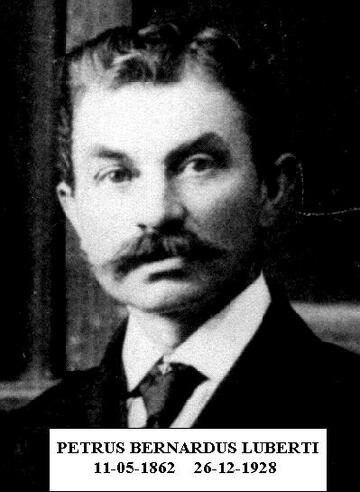
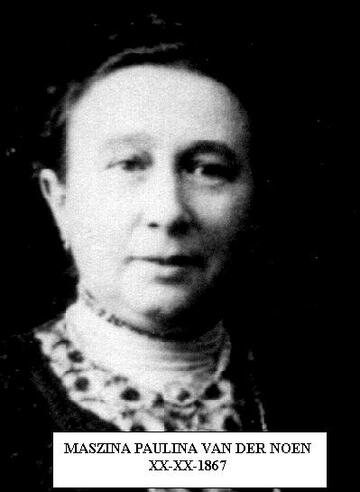
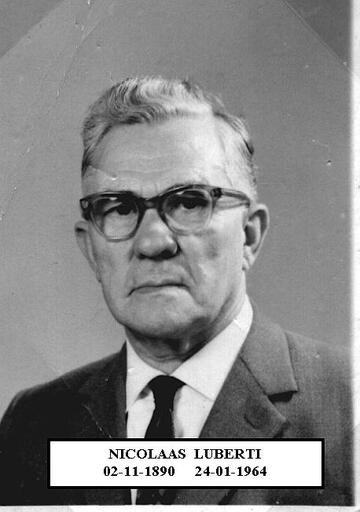
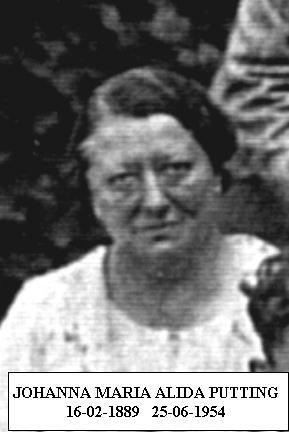
Relationship Johanna Nicolina Luberti
- Johanna Nicolina Luberti is the 4th great granddaughter of Schato Sr./Lubbartus/Luberti Degelenkamp:
Sources
- (Not public)
Matches in other publications
This person also appears in the publication: View all
Historical events
Birthday December 27, 1919
- The temperature on December 27, 1919 was between 0.3 °C and 8.7 °C and averaged 4.6 °C. There was 5.1 mm of rain. The average windspeed was 5 Bft (very strong wind) and was prevailing from the southwest. Source: KNMI
- Koningin Wilhelmina (Huis van Oranje-Nassau) was from 1890 till 1948 sovereign of the Netherlands (also known as Koninkrijk der Nederlanden)
- In The Netherlands , there was from September 9, 1918 to September 18, 1922 the cabinet Ruys de Beerenbrouck I, with Jonkheer mr. Ch.J.M. Ruys de Beerenbrouck (RKSP) as prime minister.
- In the year 1919: Source: Wikipedia
- The Netherlands had about 6.7 million citizens.
- January 7 » Montenegrin guerrilla fighters rebel against the planned annexation of Montenegro by Serbia, but fail.
- February 17 » The Ukrainian People's Republic asks Entente and the US for help fighting the Bolsheviks.
- February 21 » German socialist Kurt Eisner is assassinated. His death results in the establishment of the Bavarian Soviet Republic and parliament and government fleeing Munich, Germany.
- July 27 » The Chicago Race Riot erupts after a racial incident occurred on a South Side beach, leading to 38 fatalities and 537 injuries over a five-day period.
- September 18 » Fritz Pollard becomes the first African American to play professional football for a major team, the Akron Pros.
- December 3 » After nearly 20 years of planning and construction, including two collapses causing 89 deaths, the Quebec Bridge opens to traffic.
Day of marriage May 13, 1942
- The temperature on May 13, 1942 was between 9.7 °C and 14.1 °C and averaged 11.5 °C. There was 8.4 mm of rain during 6.2 hours. There was 0.3 hours of sunshine (2%). The average windspeed was 3 Bft (moderate breeze) and was prevailing from the north-northeast. Source: KNMI
- Koningin Wilhelmina (Huis van Oranje-Nassau) was from 1890 till 1948 sovereign of the Netherlands (also known as Koninkrijk der Nederlanden)
- In The Netherlands , there was from July 27, 1941 to February 23, 1945 the cabinet Gerbrandy II, with Prof. dr. P.S. Gerbrandy (ARP) as prime minister.
- In the year 1942: Source: Wikipedia
- The Netherlands had about 9.0 million citizens.
- January 13 » Henry Ford patents a plastic automobile, which is 30% lighter than a regular car.
- February 9 » Year-round Daylight saving time (aka War Time) is re-instated in the United States as a wartime measure to help conserve energy resources.
- March 9 » World War II: Dutch East Indies unconditionally surrendered to the Japanese forces in Kalijati, Subang, West Java, and the Japanese completed their Dutch East Indies campaign.
- June 23 » World War II: Germany's latest fighter aircraft, a Focke-Wulf Fw 190, is captured intact when it mistakenly lands at RAF Pembrey in Wales.
- November 19 » Mutesa II is crowned the 35th and last Kabaka (king) of Buganda, prior to the restoration of the kingdom in 1993.
- December 22 » World War II: Adolf Hitler signs the order to develop the V-2 rocket as a weapon.
Day of death August 24, 1965
- The temperature on August 24, 1965 was between 11.0 °C and 19.3 °C and averaged 15.1 °C. There was 3.4 mm of rain during 3.8 hours. There was 5.0 hours of sunshine (35%). The heavily clouded was. The average windspeed was 2 Bft (weak wind) and was prevailing from the southwest. Source: KNMI
- Koningin Juliana (Huis van Oranje-Nassau) was from September 4, 1948 till April 30, 1980 sovereign of the Netherlands (also known as Koninkrijk der Nederlanden)
- In The Netherlands , there was from July 24, 1963 to April 14, 1965 the cabinet Marijnen, with Mr. V.G.M. Marijnen (KVP) as prime minister.
- In The Netherlands , there was from April 14, 1965 to November 22, 1966 the cabinet Cals, with Mr. J.M.L.Th. Cals (KVP) as prime minister.
- In the year 1965: Source: Wikipedia
- The Netherlands had about 12.2 million citizens.
- May 12 » The Soviet spacecraft Luna 5 crashes on the Moon.
- July 29 » Vietnam War: The first 4,000 101st Airborne Division paratroopers arrive in Vietnam, landing at Cam Ranh Bay.
- September 6 » India retaliates following Pakistan's Operation Grand Slam which results in the Indo-Pakistani War of 1965 that ends in a stalemate followed by the signing of the Tashkent Declaration.
- September 17 » The Battle of Chawinda is fought between Pakistan and India.
- October 17 » The 1964–65 New York World's Fair closes after two years and more than 51 million attendees.
- December 30 » Ferdinand Marcos becomes President of the Philippines.
Same birth/death day
- 1917 » Buddy Boudreaux, American saxophonist and clarinet player († 2015)
- 1917 » Onni Palaste, Finnish soldier and author († 2009)
- 1917 » T. Nadaraja, Sri Lankan lawyer and academic († 2004)
- 1918 » John Celardo, American captain and illustrator († 2012)
- 1919 » Charles Sweeney, American general and pilot († 2004)
- 1920 » Bruce Hobbs, American jockey and trainer († 2005)
- 1954 » Getúlio Vargas, Brazilian lawyer and politician, 14th President of Brazil (b. 1882)
- 1956 » Kenji Mizoguchi, Japanese director and screenwriter (b. 1898)
- 1958 » Paul Henry, Irish painter and educator (b. 1876)
- 1967 » Henry J. Kaiser, American businessman, founded Kaiser Shipyards and Kaiser Aluminum (b. 1882)
- 1974 » Alexander P. de Seversky, Russian-American pilot and businessman, co-founded Republic Aviation (b. 1894)
- 1977 » Buddy O'Connor, Canadian ice hockey player (b. 1916)
About the surname Luberti
- View the information that Genealogie Online has about the surname Luberti.
- Check the information Open Archives has about Luberti.
- Check the Wie (onder)zoekt wie? register to see who is (re)searching Luberti.
The Family tree Luberti publication was prepared by Yvonne Luberti.
When copying data from this family tree, please include a reference to the origin:
Yvonne Luberti, "Family tree Luberti", database, Genealogy Online (https://www.genealogieonline.nl/stamboom-luberti/I927.php : accessed February 4, 2026), "Johanna Nicolina Luberti (1919-1965)".
Yvonne Luberti, "Family tree Luberti", database, Genealogy Online (https://www.genealogieonline.nl/stamboom-luberti/I927.php : accessed February 4, 2026), "Johanna Nicolina Luberti (1919-1965)".