Family tree Van Dijk » Durk Berends Nagelhout (1887-1973)
Personal data Durk Berends Nagelhout
- He was born on January 3, 1887 in Mirns en Bakhuizen, Friesland, Nederland.
- He died on April 22, 1973 in Bakhuizen, Friesland, Nederland, he was 86 years old.
- A child of Johannes Durks Nagelhout and Durkjen Sikkens
- This information was last updated on August 1, 2009.
Household of Durk Berends Nagelhout
He is married to Willemke van der Wal.
They got married on May 23, 1914 at Hemelumer Oldefaert, Friesland, Nederland, he was 27 years old.
Child(ren):
- Johannes Nagelhout 1915-1940
- Jozef Nagelhout 1922-1998
Timeline Durk Berends Nagelhout
This functionality is only available in Javascript supporting browsers.
Click on the names for more info.
Symbols used:  grandparents
 parents
 brothers/sisters
 children
grandparents
parents
brothers/sisters
children
Ancestors (and descendant) of Durk Berends Nagelhout
Durk Berends Nagelhout | |||||||||||||||||||||||||||||||||||
1914 | |||||||||||||||||||||||||||||||||||
Willemke van der Wal | |||||||||||||||||||||||||||||||||||
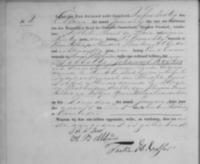
The data shown has no sources.
Historical events
Birthday January 3, 1887
- The temperature on January 3, 1887 was about -4.4 °C. The air pressure was 6 kgf/m2 and came mainly from the south-southwest. The airpressure was 76 cm mercury. The atmospheric humidity was 89%. Source: KNMI
- Koning Willem III (Huis van Oranje-Nassau) was from 1849 till 1890 sovereign of the Netherlands (also known as Koninkrijk der Nederlanden)
- In The Netherlands , there was from April 23, 1884 to April 21, 1888 the cabinet Heemskerk, with Mr. J. Heemskerk Azn. (conservatief) as prime minister.
- In the year 1887: Source: Wikipedia
- The Netherlands had about 4.5 million citizens.
- February 8 » The Dawes Act authorizes the President of the United States to survey Native American tribal land and divide it into individual allotments.
- July 6 » David Kalākaua, monarch of the Kingdom of Hawaii, is forced to sign the Bayonet Constitution, which transfers much of the king's authority to the Legislature of the Kingdom of Hawaii.
- July 26 » Publication of the Unua Libro, founding the Esperanto movement.
- September 5 » A fire at the Theatre Royal, Exeter, kills 186.
- November 11 » August Spies, Albert Parsons, Adolph Fischer and George Engel are executed as a result of the Haymarket affair.
- November 13 » Bloody Sunday clashes in central London.
Day of marriage May 23, 1914
- The temperature on May 23, 1914 was between 11.1 °C and 24.5 °C and averaged 17.2 °C. There was 1.1 mm of rain. There was 6.2 hours of sunshine (39%). The average windspeed was 3 Bft (moderate breeze) and was prevailing from the southwest. Source: KNMI
- Koningin Wilhelmina (Huis van Oranje-Nassau) was from 1890 till 1948 sovereign of the Netherlands (also known as Koninkrijk der Nederlanden)
- In The Netherlands , there was from August 29, 1913 to September 9, 1918 the cabinet Cort van der Linden, with Mr. P.W.A. Cort van der Linden (liberaal) as prime minister.
- In the year 1914: Source: Wikipedia
- The Netherlands had about 6.2 million citizens.
- January 1 » The SPT Airboat Line becomes the world's first scheduled airline to use a winged aircraft.
- August 24 » World War I: The Battle of Cer ends as the first Allied victory in the war.
- August 25 » World War I: The library of the Catholic University of Leuven is deliberately destroyed by the German Army. Hundreds of thousands of irreplaceable volumes and Gothic and Renaissance manuscripts are lost.
- September 8 » World War I: Private Thomas Highgate becomes the first British soldier to be executed for desertion during the war.
- October 27 » First World War: The new British battleship HMS Audacious is sunk by a minefield laid by the armed German merchant-cruiser Berlin.
- December 15 » A gas explosion at Mitsubishi Hōjō coal mine, in Kyushu, Japan, kills 687.
Day of death April 22, 1973
- The temperature on April 22, 1973 was between 1.2 °C and 12.3 °C and averaged 6.7 °C. There was 8.8 hours of sunshine (61%). The partly clouded was. The average windspeed was 3 Bft (moderate breeze) and was prevailing from the east-northeast. Source: KNMI
- Koningin Juliana (Huis van Oranje-Nassau) was from September 4, 1948 till April 30, 1980 sovereign of the Netherlands (also known as Koninkrijk der Nederlanden)
- In The Netherlands , there was from Thursday, July 20, 1972 to Friday, May 11, 1973 the cabinet Biesheuvel II, with Mr. B.W. Biesheuvel (ARP) as prime minister.
- In The Netherlands , there was from Friday, May 11, 1973 to Monday, December 19, 1977 the cabinet Den Uyl, with Drs. J.M. den Uyl (PvdA) as prime minister.
- In the year 1973: Source: Wikipedia
- The Netherlands had about 13.4 million citizens.
- June 20 » Snipers fire upon left-wing Peronists in Buenos Aires, Argentina, in what is known as the Ezeiza massacre. At least 13 are killed and more than 300 are injured.
- August 15 » Vietnam War: The United States bombing of Cambodia ends.
- August 22 » The Congress of Chile votes in favour of a resolution condemning President Salvador Allende's government and demands that he resign or else be unseated through force and new elections.
- August 23 » A bank robbery gone wrong in Stockholm, Sweden, turns into a hostage crisis; over the next five days the hostages begin to sympathise with their captors, leading to the term "Stockholm syndrome".
- October 30 » The Bosphorus Bridge in Turkey is completed, connecting the continents of Europe and Asia over the Bosphorus for the second time.
- November 22 » The Italian Fascist organization Ordine Nuovo is disbanded.
Same birth/death day
- 1883 » Clement Attlee, English soldier, lawyer, and politician, Prime Minister of the United Kingdom († 1967)
- 1884 » Raoul Koczalski, Polish pianist and composer († 1948)
- 1885 » Harry Elkins Widener, American businessman († 1912)
- 1886 » Arthur Mailey, Australian cricketer († 1967)
- 1886 » John Gould Fletcher, American poet and author († 1950)
- 1887 » August Macke, German-French painter († 1914)
- 1968 » Stephen H. Sholes, American record producer (b. 1911)
- 1978 » Will Geer, American actor (b. 1902)
- 1980 » Fritz Strassmann, German chemist and physicist (b. 1902)
- 1980 » Jane Froman, American actress and singer (b. 1907)
- 1983 » Earl Hines, American pianist and bandleader (b. 1903)
- 1984 » Ansel Adams, American photographer and environmentalist (b. 1902)
About the surname Nagelhout
- View the information that Genealogie Online has about the surname Nagelhout.
- Check the information Open Archives has about Nagelhout.
- Check the Wie (onder)zoekt wie? register to see who is (re)searching Nagelhout.
The Family tree Van Dijk publication was prepared by wijlen Jan van Dijk (contact is not possible).
When copying data from this family tree, please include a reference to the origin:
wijlen Jan van Dijk, "Family tree Van Dijk", database, Genealogy Online (https://www.genealogieonline.nl/stamboom-van-dijk/I13086.php : accessed March 6, 2026), "Durk Berends Nagelhout (1887-1973)".
wijlen Jan van Dijk, "Family tree Van Dijk", database, Genealogy Online (https://www.genealogieonline.nl/stamboom-van-dijk/I13086.php : accessed March 6, 2026), "Durk Berends Nagelhout (1887-1973)".