Family tree Van Dijk » Sibbeltje Nagelhout (1880-1969)
Personal data Sibbeltje Nagelhout
- She was born on November 12, 1880 in Mirns en Bakhuizen, Friesland, Nederland.
- She died on October 17, 1969 in Sneek, Friesland, Nederland, she was 88 years old.
- A child of Johannes Durks Nagelhout and Durkjen Sikkens
- This information was last updated on August 1, 2009.
Household of Sibbeltje Nagelhout
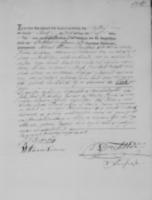
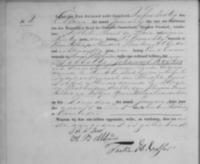
She is married to Johannes Konst.
They got married on May 14, 1904 at Gaasterland, Friesland, Nederland, she was 23 years old.
Child(ren):
- Johannes Konst 1910-1952
Timeline Sibbeltje Nagelhout
This functionality is only available in Javascript supporting browsers.
Click on the names for more info.
Symbols used:  grandparents
 parents
 brothers/sisters
 children
grandparents
parents
brothers/sisters
children
Ancestors (and descendant) of Sibbeltje Nagelhout
Sibbeltje Nagelhout | ||||||||||||||||||||||||||||||||||
1904 | ||||||||||||||||||||||||||||||||||
Johannes Konst | ||||||||||||||||||||||||||||||||||
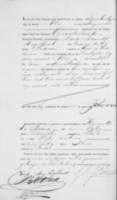
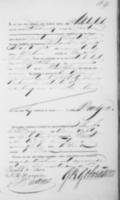
The data shown has no sources.
Historical events
Birthday November 12, 1880
- The temperature on November 12, 1880 was about 8.5 °C. There was 0.6 mm of rain. The air pressure was 2 kgf/m2 and came mainly from the south-southwest. The airpressure was 76 cm mercury. The atmospheric humidity was 97%. Source: KNMI
- Koning Willem III (Huis van Oranje-Nassau) was from 1849 till 1890 sovereign of the Netherlands (also known as Koninkrijk der Nederlanden)
- In The Netherlands , there was from August 20, 1879 to April 23, 1883 the cabinet Van Lijnden van Sandenburg, with Mr. C.Th. baron Van Lijnden van Sandenburg (conservatief-AR) as prime minister.
- In the year 1880: Source: Wikipedia
- The Netherlands had about 4.0 million citizens.
- January 27 » Thomas Edison receives a patent for his incandescent lamp.
- May 13 » In Menlo Park, New Jersey, Thomas Edison performs the first test of his electric railway.
- June 24 » First performance of O Canada at the Congrès national des Canadiens-Français. The song would later become the national anthem of Canada.
- June 29 » France annexes Tahiti, renaming the independent Kingdom of Tahiti as "Etablissements de français de l'Océanie".
- July 27 » Second Anglo-Afghan War: Battle of Maiwand: Afghan forces led by Mohammad Ayub Khan defeat the British Army in battle near Maiwand, Afghanistan.
- September 1 » The army of Mohammad Ayub Khan is routed by the British at the Battle of Kandahar, ending the Second Anglo-Afghan War.
Day of marriage May 14, 1904
- The temperature on May 14, 1904 was between 9.5 °C and 21.3 °C and averaged 15.7 °C. There was 1.1 hours of sunshine (7%). The average windspeed was 4 Bft (moderate breeze) and was prevailing from the southwest. Source: KNMI
- Koningin Wilhelmina (Huis van Oranje-Nassau) was from 1890 till 1948 sovereign of the Netherlands (also known as Koninkrijk der Nederlanden)
- In The Netherlands , there was from August 1, 1901 to August 16, 1905 the cabinet Kuijper, with Dr. A. Kuijper (AR) as prime minister.
- In the year 1904: Source: Wikipedia
- The Netherlands had about 5.4 million citizens.
- February 17 » Madama Butterfly receives its première at La Scala in Milan.
- February 28 » S.L. Benfica is founded in Portugal.
- April 8 » The French Third Republic and the United Kingdom of Great Britain and Ireland sign the Entente cordiale.
- May 15 » Russo-Japanese War: The Russian minelayer Amur lays a minefield about 15 miles off Port Arthur and sinks Japan's battleships Hatsuse, 15,000 tons, with 496 crew and Yashima.
- May 21 » The Fédération Internationale de Football Association (FIFA) is founded in Paris.
- August 10 » Russo-Japanese War: The Battle of the Yellow Sea between the Russian and Japanese battleship fleets takes place.
Day of death October 17, 1969
- The temperature on October 17, 1969 was between 6.9 °C and 21.2 °C and averaged 12.6 °C. There was 0.1 mm of rain. There was 7.9 hours of sunshine (74%). The partly clouded was. The average windspeed was 2 Bft (weak wind) and was prevailing from the east-southeast. Source: KNMI
- Koningin Juliana (Huis van Oranje-Nassau) was from September 4, 1948 till April 30, 1980 sovereign of the Netherlands (also known as Koninkrijk der Nederlanden)
- In The Netherlands , there was from April 5, 1967 to Tuesday, July 6, 1971 the cabinet De Jong, with P.J.S. de Jong (KVP) as prime minister.
- In the year 1969: Source: Wikipedia
- The Netherlands had about 12.8 million citizens.
- January 16 » Czech student Jan Palach commits suicide by self-immolation in Prague, Czechoslovakia, in protest against the Soviets' crushing of the Prague Spring the year before.
- February 4 » Yasser Arafat takes over as chairman of the Palestine Liberation Organization.
- August 14 » The Troubles: British troops are deployed in Northern Ireland as political and sectarian violence breaks out, marking the start of the 37-year Operation Banner.
- November 17 » Cold War: Negotiators from the Soviet Union and the United States meet in Helsinki, Finland to begin SALT I negotiations aimed at limiting the number of strategic weapons on both sides.
- November 19 » Association football player Pelé scores his 1,000th goal.
- December 4 » Black Panther Party members Fred Hampton and Mark Clark are shot and killed during a raid by 14 Chicago police officers.
Same birth/death day
- 1872 » William Fay, Irish actor and producer († 1947)
- 1881 » Maximilian von Weichs, German field marshal († 1954)
- 1881 » Olev Siinmaa, Estonian-Swedish architect († 1948)
- 1886 » Ben Travers, English author and playwright († 1980)
- 1886 » Günther Dyhrenfurth, German geologist and mountaineer († 1975)
- 1889 » DeWitt Wallace, American publisher and philanthropist, co-founded Reader's Digest († 1981)
- 1966 » Sidney Hatch, American runner and soldier (b. 1883)
- 1966 » Wieland Wagner, German director and manager (b. 1917)
- 1967 » Puyi, Chinese emperor (b. 1906)
- 1970 » Pierre Laporte, Canadian journalist, lawyer, and politician (b. 1921)
- 1970 » Quincy Wright, American political scientist and academic (b. 1890)
- 1970 » Vola Vale, American actress (b. 1897)
About the surname Nagelhout
- View the information that Genealogie Online has about the surname Nagelhout.
- Check the information Open Archives has about Nagelhout.
- Check the Wie (onder)zoekt wie? register to see who is (re)searching Nagelhout.
The Family tree Van Dijk publication was prepared by wijlen Jan van Dijk (contact is not possible).
When copying data from this family tree, please include a reference to the origin:
wijlen Jan van Dijk, "Family tree Van Dijk", database, Genealogy Online (https://www.genealogieonline.nl/stamboom-van-dijk/I13083.php : accessed February 17, 2026), "Sibbeltje Nagelhout (1880-1969)".
wijlen Jan van Dijk, "Family tree Van Dijk", database, Genealogy Online (https://www.genealogieonline.nl/stamboom-van-dijk/I13083.php : accessed February 17, 2026), "Sibbeltje Nagelhout (1880-1969)".