Family tree Severijn » Jacobus (Ko) Eweg (1886-1959)
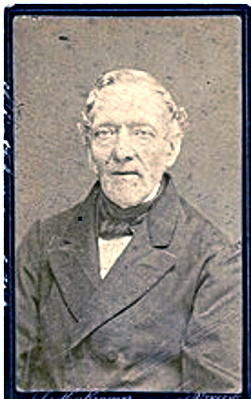
Personal data Jacobus (Ko) Eweg
- He was born on February 5, 1886 in Utrecht.
- He died on October 28, 1959 in Utrecht, he was 73 years old.
- A child of Corneille Eweg and Everdina Severijn
Household of Jacobus (Ko) Eweg
He is married to Neeltje Penneweert.
They got married on June 24, 1915 at Utrecht, he was 29 years old.
Timeline Jacobus (Ko) Eweg
This functionality is only available in Javascript supporting browsers.
Click on the names for more info.
Symbols used:  grandparents
 parents
 brothers/sisters
 children
grandparents
parents
brothers/sisters
children
Ancestors (and descendant) of Jacobus (Ko) Eweg
Jacobus (Ko) Eweg | ||||||||||||||||||
1915 | ||||||||||||||||||
Neeltje Penneweert | ||||||||||||||||||
The data shown has no sources.
Historical events
Birthday February 5, 1886
- The temperature on February 5, 1886 was about 2.2 °C. There was 0.2 mm of rain. The air pressure was 2 kgf/m2 and came mainly from the north. The airpressure was 76 cm mercury. The atmospheric humidity was 85%. Source: KNMI
- Koning Willem III (Huis van Oranje-Nassau) was from 1849 till 1890 sovereign of the Netherlands (also known as Koninkrijk der Nederlanden)
- In The Netherlands , there was from April 23, 1884 to April 21, 1888 the cabinet Heemskerk, with Mr. J. Heemskerk Azn. (conservatief) as prime minister.
- In the year 1886: Source: Wikipedia
- The Netherlands had about 4.5 million citizens.
- January 18 » Modern field hockey is born with the formation of The Hockey Association in England.
- February 23 » Charles Martin Hall produced the first samples of aluminium from the electrolysis of aluminium oxide, after several years of intensive work. He was assisted in this project by his older sister, Julia Brainerd Hall.
- March 1 » The Anglo-Chinese School, Singapore is founded by Bishop William Oldham.
- May 4 » Haymarket affair: A bomb is thrown at policemen trying to break up a labor rally in Chicago, United States, killing eight and wounding 60. The police fire into the crowd.
- July 3 » The New-York Tribune becomes the first newspaper to use a linotype machine, eliminating typesetting by hand.
- September 4 » American Indian Wars: After almost 30 years of fighting, Apache leader Geronimo, with his remaining warriors, surrenders to General Nelson Miles in Arizona.
Day of marriage June 24, 1915
- The temperature on June 24, 1915 was between 12.1 °C and 21.9 °C and averaged 16.4 °C. There was 16.4 mm of rain. There was 3.2 hours of sunshine (19%). The average windspeed was 2 Bft (weak wind) and was prevailing from the south-southeast. Source: KNMI
- Koningin Wilhelmina (Huis van Oranje-Nassau) was from 1890 till 1948 sovereign of the Netherlands (also known as Koninkrijk der Nederlanden)
- In The Netherlands , there was from August 29, 1913 to September 9, 1918 the cabinet Cort van der Linden, with Mr. P.W.A. Cort van der Linden (liberaal) as prime minister.
- In the year 1915: Source: Wikipedia
- The Netherlands had about 6.3 million citizens.
- January 21 » Kiwanis International is founded in Detroit.
- January 28 » An act of the U.S. Congress creates the United States Coast Guard as a branch of the United States Armed Forces.
- April 25 » World War I: The Battle of Gallipoli begins: The invasion of the Turkish Gallipoli Peninsula by British, French, Indian, Newfoundland, Australian and New Zealand troops, begins with landings at Anzac Cove and Cape Helles.
- May 22 » Three trains collide in the Quintinshill rail disaster near Gretna Green, Scotland, killing 227 people and injuring 246.
- May 27 » HMS Princess Irene exploded and sank off Sheerness, Kent with the loss of 352 lives.
- September 5 » The pacifist Zimmerwald Conference begins.
Day of death October 28, 1959
- The temperature on October 28, 1959 was between 1.2 °C and 11.2 °C and averaged 6.7 °C. There was 1.1 mm of rain during 1.5 hours. There was 6.7 hours of sunshine (68%). The partly clouded was. The average windspeed was 3 Bft (moderate breeze) and was prevailing from the southwest. Source: KNMI
- Koningin Juliana (Huis van Oranje-Nassau) was from September 4, 1948 till April 30, 1980 sovereign of the Netherlands (also known as Koninkrijk der Nederlanden)
- In The Netherlands , there was from December 22, 1957 to May 19, 1959 the cabinet Beel II, with Dr. L.J.M. Beel (KVP) as prime minister.
- In The Netherlands , there was from May 19, 1959 to July 24, 1964 the cabinet De Quay, with Prof. dr. J.E. de Quay (KVP) as prime minister.
- In the year 1959: Source: Wikipedia
- The Netherlands had about 11.3 million citizens.
- January 2 » Luna 1, the first spacecraft to reach the vicinity of the Moon and to orbit the Sun, is launched by the Soviet Union.
- January 30 » MSHans Hedtoft, said to be the safest ship afloat and "unsinkable" like the RMSTitanic, strikes an iceberg on her maiden voyage and sinks, killing all 95 aboard.
- June 23 » Convicted Manhattan Project spy Klaus Fuchs is released after only nine years in prison and allowed to emigrate to Dresden, East Germany where he resumes a scientific career.
- August 3 » Portugal's state police force PIDE fires upon striking workers in Bissau, Portuguese Guinea, killing over 50 people.
- November 2 » The first section of the M1 motorway, the first inter-urban motorway in the United Kingdom, is opened between the present junctions 5 and 18, along with the M10 motorway and M45 motorway.
- December 13 » Archbishop Makarios III becomes the first President of Cyprus.
Same birth/death day
- 1880 » Gabriel Voisin, French pilot and engineer († 1973)
- 1889 » Ernest Tyldesley, English cricketer († 1962)
- 1889 » Patsy Hendren, English cricketer and footballer († 1962)
- 1889 » Recep Peker, Turkish officer and politician († 1950)
- 1891 » Renato Petronio, Italian rower († 1976)
- 1892 » Elizabeth Ryan, American tennis player († 1979)
- 1952 » Billy Hughes, English-Australian politician, 7th Prime Minister of Australia (b. 1862)
- 1957 » Ernst Gräfenberg, German-American physician and gynecologist (b. 1881)
- 1959 » Camilo Cienfuegos, Cuban soldier (b. 1932)
- 1963 » Mart Saar, Estonian organist and composer (b. 1882)
- 1965 » Thomas Graham Brown, Scottish mountaineer and physiologist (b. 1882)
- 1969 » Constance Dowling, American model and actress (b. 1920)
About the surname Eweg
- View the information that Genealogie Online has about the surname Eweg.
- Check the information Open Archives has about Eweg.
- Check the Wie (onder)zoekt wie? register to see who is (re)searching Eweg.
The Family tree Severijn publication was prepared by Gijsbertus Cornelis (Bert) Severijn.
When copying data from this family tree, please include a reference to the origin:
Gijsbertus Cornelis (Bert) Severijn, "Family tree Severijn", database, Genealogy Online (https://www.genealogieonline.nl/stamboom-severijn/I200.php : accessed March 7, 2026), "Jacobus (Ko) Eweg (1886-1959)".
Gijsbertus Cornelis (Bert) Severijn, "Family tree Severijn", database, Genealogy Online (https://www.genealogieonline.nl/stamboom-severijn/I200.php : accessed March 7, 2026), "Jacobus (Ko) Eweg (1886-1959)".