Family tree Leemborg » Hendrik Dijk (1914-1966)
Personal data Hendrik Dijk
- He was born on April 5, 1914 in Grijpskerk (Gr).
- He died on December 14, 1966 in Hamilton-Ontario-Canada, he was 52 years old.
- A child of Jakob Dijk and Koertje Leemborg
- This information was last updated on June 11, 2004.
Household of Hendrik Dijk
He is married to Ida Flikkema.
They got married on April 2, 1935 at Appingedam (Gr), he was 20 years old.
Child(ren):
Timeline Hendrik Dijk
This functionality is only available in Javascript supporting browsers.
Click on the names for more info.
Symbols used:  grandparents
 parents
 brothers/sisters
 children
grandparents
parents
brothers/sisters
children
Image(s) Hendrik Dijk


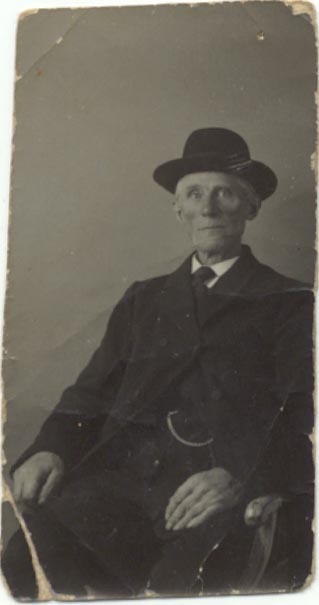
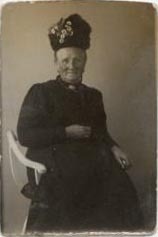
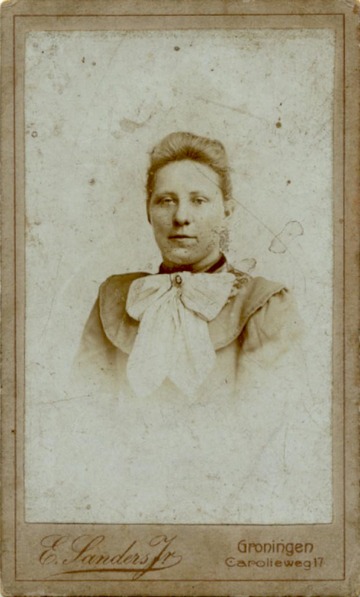
The data shown has no sources.
Historical events
Birthday April 5, 1914
- The temperature on April 5, 1914 was between 3.8 °C and 11.6 °C and averaged 8.5 °C. There was 2.7 mm of rain. There was 2.8 hours of sunshine (21%). The average windspeed was 5 Bft (very strong wind) and was prevailing from the south-southwest. Source: KNMI
- Koningin Wilhelmina (Huis van Oranje-Nassau) was from 1890 till 1948 sovereign of the Netherlands (also known as Koninkrijk der Nederlanden)
- In The Netherlands , there was from August 29, 1913 to September 9, 1918 the cabinet Cort van der Linden, with Mr. P.W.A. Cort van der Linden (liberaal) as prime minister.
- In the year 1914: Source: Wikipedia
- The Netherlands had about 6.2 million citizens.
- April 9 » Mexican Revolution: One of the world's first naval/air skirmishes takes place off the coast of western Mexico.
- April 23 » First baseball game at Wrigley Field, then known as Weeghman Park, in Chicago.
- August 28 » World War I: German troops take the city of Namur in Belgium.
- September 9 » World War I: The creation of the Canadian Automobile Machine Gun Brigade, the first fully mechanized unit in the British Army.
- September 11 » World War I: Australia invades German New Guinea, defeating a German contingent at the Battle of Bita Paka.
- November 26 » HMS Bulwark was destroyed by a large internal explosion with the loss of 741 men near Sheerness.
Day of marriage April 2, 1935
- The temperature on April 2, 1935 was between 1.1 °C and 7.5 °C and averaged 4.0 °C. There was 3.3 mm of rain during 4.1 hours. There was 1.1 hours of sunshine (8%). The average windspeed was 4 Bft (moderate breeze) and was prevailing from the north-northwest. Source: KNMI
- Koningin Wilhelmina (Huis van Oranje-Nassau) was from 1890 till 1948 sovereign of the Netherlands (also known as Koninkrijk der Nederlanden)
- In The Netherlands , there was from May 26, 1933 to July 31, 1935 the cabinet Colijn II, with Dr. H. Colijn (ARP) as prime minister.
- In The Netherlands , there was from July 31, 1935 to June 24, 1937 the cabinet Colijn III, with Dr. H. Colijn (ARP) as prime minister.
- In the year 1935: Source: Wikipedia
- The Netherlands had about 8.4 million citizens.
- May 6 » New Deal: Under the authority of the newly-enacted Federal Emergency Relief Administration, President Franklin D. Roosevelt issues Executive Order 7034 to create the Works Progress Administration.
- June 11 » Inventor Edwin Armstrong gives the first public demonstration of FM broadcasting in the United States at Alpine, New Jersey.
- July 28 » First flight of the Boeing B-17 Flying Fortress.
- August 14 » Franklin D. Roosevelt signs the Social Security Act, creating a government pension system for the retired.
- November 9 » The Congress of Industrial Organizations is founded in Atlantic City, New Jersey, by eight trade unions belonging to the American Federation of Labor.
- December 30 » The Italian Air Force bombs a Swedish Red Cross hospital during the Second Italo-Abyssinian War.
Day of death December 14, 1966
- The temperature on December 14, 1966 was between 0.2 °C and 6.1 °C and averaged 2.8 °C. There was 0.7 mm of rain during 0.7 hours. There was 4.3 hours of sunshine (55%). The partly clouded was. The average windspeed was 2 Bft (weak wind) and was prevailing from the west-northwest. Source: KNMI
- Koningin Juliana (Huis van Oranje-Nassau) was from September 4, 1948 till April 30, 1980 sovereign of the Netherlands (also known as Koninkrijk der Nederlanden)
- In The Netherlands , there was from April 14, 1965 to November 22, 1966 the cabinet Cals, with Mr. J.M.L.Th. Cals (KVP) as prime minister.
- In The Netherlands , there was from November 22, 1966 to April 5, 1967 the cabinet Zijlstra, with Prof. dr. J. Zijlstra (ARP) as prime minister.
- In the year 1966: Source: Wikipedia
- The Netherlands had about 12.4 million citizens.
- January 17 » Palomares incident: A B-52 bomber collides with a KC-135 Stratotanker over Spain, killing seven airmen, and dropping three 70-kiloton nuclear bombs near the town of Palomares and another one into the sea.
- January 31 » The Soviet Union launches the unmanned Luna 9 spacecraft as part of the Luna program.
- April 26 » The magnitude 5.1 Tashkent earthquake affects the largest city in Soviet Central Asia with a maximum MSK intensity of VII (Very strong). Tashkent is mostly destroyed and 15–200 are killed.
- August 22 » Labor movements NFWA and AWOC merge to become the United Farm Workers Organizing Committee (UFWOC), predecessor of the United Farm Workers.
- October 14 » The city of Montreal begins the operation of its underground Montreal Metro rapid transit system.
- November 8 » U.S. President Lyndon B. Johnson signs into law an antitrust exemption allowing the National Football League to merge with the upstart American Football League.
Same birth/death day
- 1912 » Habib Elghanian, Iranian businessman († 1979)
- 1912 » Jehan Buhan, French fencer († 1999)
- 1913 » Antoni Clavé, Catalan artist († 2005)
- 1913 » Nicolas Grunitzky, 2nd President of Togo († 1969)
- 1913 » Ruth Smith, Faroese artist († 1958)
- 1914 » Felice Borel, Italian footballer († 1993)
- 1963 » Dinah Washington, American singer and pianist (b. 1924)
- 1964 » William Bendix, American actor (b. 1906)
- 1970 » Franz Schlegelberger, German judge and politician, German Reich Minister of Justice (b. 1876)
- 1971 » Mufazzal Haider Chaudhury, Bangladeshi linguist and scholar (b. 1926)
- 1971 » Munier Choudhury, Bangladeshi author, playwright, and critic (b. 1925)
- 1971 » Shahidullah Kaiser, Bangladeshi journalist and author (b. 1927)
About the surname Dijk
- View the information that Genealogie Online has about the surname Dijk.
- Check the information Open Archives has about Dijk.
- Check the Wie (onder)zoekt wie? register to see who is (re)searching Dijk.
The Family tree Leemborg publication was prepared by Roelf Schrik.
When copying data from this family tree, please include a reference to the origin:
Roelf Schrik, "Family tree Leemborg", database, Genealogy Online (https://www.genealogieonline.nl/stamboom-leemborg/I177.php : accessed March 16, 2026), "Hendrik Dijk (1914-1966)".
Roelf Schrik, "Family tree Leemborg", database, Genealogy Online (https://www.genealogieonline.nl/stamboom-leemborg/I177.php : accessed March 16, 2026), "Hendrik Dijk (1914-1966)".