Family tree Jager » Grietje Kaap van der (1863-1942)
Personal data Grietje Kaap van der
- Alternative name: Foekens
- She was born on April 11, 1863 in Zuidhorn, Nederland.
- Resident:
- in the year 1938: Witlattenstraat 35, Groningen, Groningen, Nederland.
- in the year 1942: Kanaalstraat 4, Groningen, Groningen, Nederland.
- (Reference Number) .
68
- (Overlijdensakte) on March 9, 1942 in Gemeente Groningen, Groningen, Nederland.Source 1
Overlijdensakte 409
- (Geboorteakte) on April 11, 1863 in Zuidhorn, Nederland.
Geboorteakte 28
- She died on March 8, 1942 in Gemeente Groningen, Groningen, Nederland, she was 78 years old.Source 1
- She is buried on March 12, 1942 in Groningen, Groningen, Nederland.
Zuiderbegraafplaats
Zuiderbegraafplaats
- A child of Albert van der Kaap and Johanna Feenstra
Household of Grietje Kaap van der
She is married to Harm Foekens.
They got married on July 5, 1885 at akte 197, Groningen, Groningen, Nederland, she was 22 years old.Source 1
Child(ren):
- Matje Foekens 1890-1891
- Karst Foekens 1891-1916
- Johanna Foekens 1895-1898
- Kornelia Foekens 1897-1942
- Adriaan Foekens 1902-1958
- Stientje Foekens 1904-1982
Timeline Grietje Kaap van der
This functionality is only available in Javascript supporting browsers.
Click on the names for more info.
Symbols used:  grandparents
 parents
 brothers/sisters
 children
grandparents
parents
brothers/sisters
children
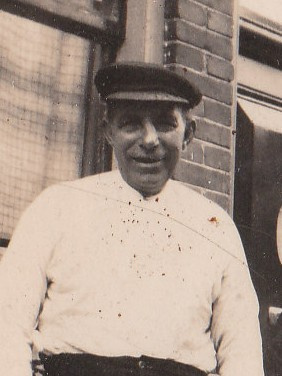
Image(s) Grietje Kaap van der

Sources
- (Not public)
Historical events
Birthday April 11, 1863
- The temperature on April 11, 1863 was about 10.8 °C. The air pressure was 7 kgf/m2 and came mainly from the east-southeast. The airpressure was 76 cm mercury. The atmospheric humidity was 45%. Source: KNMI
- Koning Willem III (Huis van Oranje-Nassau) was from 1849 till 1890 sovereign of the Netherlands (also known as Koninkrijk der Nederlanden)
- In The Netherlands , there was from February 1, 1862 to February 10, 1866 the cabinet Thorbecke II, with Mr. J.R. Thorbecke (liberaal) as prime minister.
- In the year 1863: Source: Wikipedia
- The Netherlands had about 3.6 million citizens.
- January 8 » American Civil War: Second Battle of Springfield.
- May 12 » American Civil War: Battle of Raymond: Two divisions of James B. McPherson's XVII Corps turn the left wing of Confederate General John C. Pemberton's defensive line on Fourteen Mile Creek, opening up the interior of Mississippi to the Union Army during the Vicksburg Campaign.
- June 9 » American Civil War: Battle of Brandy Station, Virginia.
- August 16 » The Dominican Restoration War begins when Gregorio Luperón raises the Dominican flag in Santo Domingo after Spain had recolonized the country.
- September 16 » Robert College, in Istanbul, the first American educational institution outside the United States, is founded by Christopher Robert, an American philanthropist.
- October 26 » The Football Association is founded.
Day of marriage July 5, 1885
- The temperature on July 5, 1885 was about 21.0 °C. The air pressure was 1 kgf/m2 and came mainly from the north-northeast. The airpressure was 77 cm mercury. The atmospheric humidity was 60%. Source: KNMI
- Koning Willem III (Huis van Oranje-Nassau) was from 1849 till 1890 sovereign of the Netherlands (also known as Koninkrijk der Nederlanden)
- In The Netherlands , there was from April 23, 1884 to April 21, 1888 the cabinet Heemskerk, with Mr. J. Heemskerk Azn. (conservatief) as prime minister.
- In the year 1885: Source: Wikipedia
- The Netherlands had about 4.5 million citizens.
- January 17 » A British force defeats a large Dervish army at the Battle of Abu Klea in the Sudan.
- March 23 » Sino-French War: Chinese victory in the Battle of Phu Lam Tao near Hưng Hóa, northern Vietnam.
- April 30 » Governor of New York David B. Hill signs legislation creating the Niagara Reservation, New York's first state park, ensuring that Niagara Falls will not be devoted solely to industrial and commercial use.
- May 12 » North-West Rebellion: The four-day Battle of Batoche, pitting rebel Métis against the Canadian government, comes to an end with a decisive rebel defeat.
- September 2 » Rock Springs massacre: In Rock Springs, Wyoming, 150 white miners, who are struggling to unionize so they could strike for better wages and work conditions, attack their Chinese fellow workers killing 28, wounding 15 and forcing several hundred more out of town.
- November 17 » Serbo-Bulgarian War: The decisive Battle of Slivnitsa begins.
Day of death March 8, 1942
- The temperature on March 8, 1942 was between -2.0 °C and 4.9 °C and averaged 1.2 °C. There was 7.0 hours of sunshine (62%). The average windspeed was 3 Bft (moderate breeze) and was prevailing from the southwest. Source: KNMI
- Koningin Wilhelmina (Huis van Oranje-Nassau) was from 1890 till 1948 sovereign of the Netherlands (also known as Koninkrijk der Nederlanden)
- In The Netherlands , there was from July 27, 1941 to February 23, 1945 the cabinet Gerbrandy II, with Prof. dr. P.S. Gerbrandy (ARP) as prime minister.
- In the year 1942: Source: Wikipedia
- The Netherlands had about 9.0 million citizens.
- January 2 » The Federal Bureau of Investigation (FBI) obtains the conviction of 33 members of a German spy ring headed by Fritz Joubert Duquesne in the largest espionage case in United States history—the Duquesne Spy Ring.
- March 26 » World War II: The first female prisoners arrive at Auschwitz concentration camp in German-occupied Poland.
- May 4 » World War II: The Battle of the Coral Sea begins with an attack by aircraft from the United States aircraft carrier USSYorktown on Japanese naval forces at Tulagi Island in the Solomon Islands. The Japanese forces had invaded Tulagi the day before.
- July 18 » World War II: During the Beisfjord massacre in Norway, 15 Norwegian paramilitary guards help members of the SS to kill 288 political prisoners from Yugoslavia.
- October 6 » World War II: American troops force the Japanese from their positions east of the Matanikau River on Guadalcanal.
- October 28 » The Alaska Highway first connects Alaska to the North American railway network at Dawson Creek in Canada.
Day of burial March 12, 1942
- The temperature on March 12, 1942 was between -5.8 °C and -0.8 °C and averaged -3.0 °C. There was 1.6 hours of sunshine (14%). The average windspeed was 3 Bft (moderate breeze) and was prevailing from the east-northeast. Source: KNMI
- Koningin Wilhelmina (Huis van Oranje-Nassau) was from 1890 till 1948 sovereign of the Netherlands (also known as Koninkrijk der Nederlanden)
- In The Netherlands , there was from July 27, 1941 to February 23, 1945 the cabinet Gerbrandy II, with Prof. dr. P.S. Gerbrandy (ARP) as prime minister.
- In the year 1942: Source: Wikipedia
- The Netherlands had about 9.0 million citizens.
- February 8 » World War II: Dutch Colonial Army General Destruction Unit (AVC, Algemene Vernielings Corps) burns Banjarmasin, South Borneo to avoid Japanese capture.
- April 5 » World War II: The Imperial Japanese Navy launches a carrier-based air attack on Colombo, Ceylon during the Indian Ocean raid. Port and civilian facilities are damaged and the Royal Navy cruisers HMSCornwall and HMSDorsetshire are sunk southwest of the island.
- June 28 » World War II: Nazi Germany starts its strategic summer offensive against the Soviet Union, codenamed Case Blue.
- July 23 » Bulgarian poet and Communist leader Nikola Vaptsarov is executed by firing squad.
- August 9 » World War II: Battle of Savo Island: Allied naval forces protecting their amphibious forces during the initial stages of the Battle of Guadalcanal are surprised and defeated by an Imperial Japanese Navy cruiser force.
- September 12 » World War II: First day of the Battle of Edson's Ridge during the Guadalcanal Campaign. U.S. Marines protecting Henderson Field are attacked by Japanese troops.
Same birth/death day
- 1859 » Stefanos Thomopoulos, Greek historian and author († 1939)
- 1862 » Charles Evans Hughes, American lawyer and politician, 44th United States Secretary of State († 1948)
- 1862 » William Wallace Campbell, American astronomer and academic († 1938)
- 1864 » Johanna Elberskirchen, German author and activist († 1943)
- 1866 » Bernard O'Dowd, Australian journalist, author, and poet († 1953)
- 1867 » Mark Keppel, American educator († 1928)
- 1937 » Howie Morenz, Canadian ice hockey player and coach (b. 1902)
- 1941 » Sherwood Anderson, American novelist and short story writer (b. 1876)
- 1942 » José Raúl Capablanca, Cuban chess player and theoretician (b. 1888)
- 1944 » Fredy Hirsch, German Jewish athlete who helped thousands of Jewish children in the Holocaust (b. 1916)
- 1945 » Frederick Bligh Bond, English archaeologist and architect (b. 1864)
- 1948 » Hulusi Behçet, Turkish dermatologist and scientist (b. 1889)
About the surname Kaap
- View the information that Genealogie Online has about the surname Kaap.
- Check the information Open Archives has about Kaap.
- Check the Wie (onder)zoekt wie? register to see who is (re)searching Kaap.
The Family tree Jager publication was prepared by H. Jager.
When copying data from this family tree, please include a reference to the origin:
H. Jager, "Family tree Jager", database, Genealogy Online (https://www.genealogieonline.nl/stamboom-jager/I67.php : accessed February 2, 2026), "Grietje Kaap van der (1863-1942)".
H. Jager, "Family tree Jager", database, Genealogy Online (https://www.genealogieonline.nl/stamboom-jager/I67.php : accessed February 2, 2026), "Grietje Kaap van der (1863-1942)".