Family tree Coster » Jacob Ancona (1895-1943)
Personal data Jacob Ancona
- He was born on August 5, 1895 in Amsterdam.
- Profession: Diamantslijper.
- He died on June 11, 1943 in Sobibor, he was 47 years old.
- The birth parents are Levie Ancona and Sophia Coster
- This information was last updated on June 9, 2020.
Household of Jacob Ancona
He is married to Vrouwtje Witteboon.
They got married on December 4, 1919 at Amsterdam, he was 24 years old.
Child(ren):
- Louis Ancona 1921-1942
- Esther Ancona 1927-1943
Timeline Jacob Ancona
This functionality is only available in Javascript supporting browsers.
Click on the names for more info.
Symbols used:  grandparents
 parents
 brothers/sisters
 children
grandparents
parents
brothers/sisters
children
Image(s) Jacob Ancona

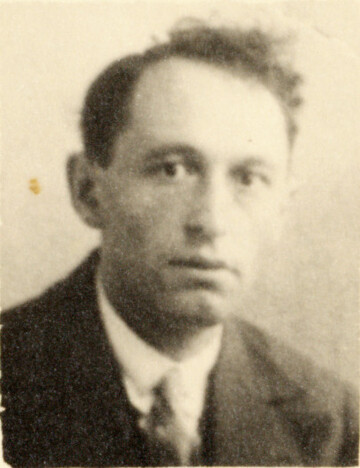
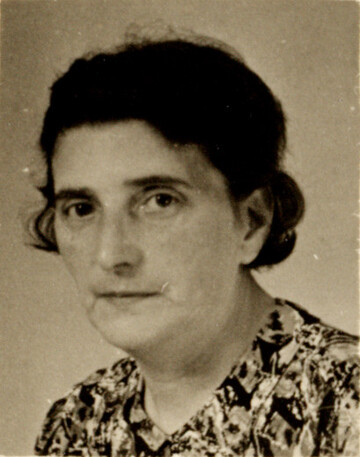
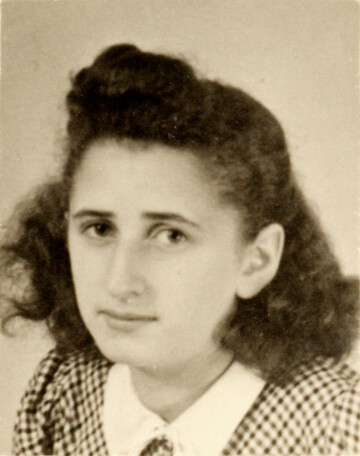
The data shown has no sources.
Matches in other publications
This person also appears in the publication: View all
Historical events
Birthday August 5, 1895
- The temperature on August 5, 1895 was about 14.9 °C. There was 0.5 mm of rain. The airpressure was 75 cm mercury. The atmospheric humidity was 87%. Source: KNMI
- Koningin Wilhelmina (Huis van Oranje-Nassau) was from 1890 till 1948 sovereign of the Netherlands (also known as Koninkrijk der Nederlanden)
- Regentes Emma (Huis van Oranje-Nassau) was from 1890 till 1898 sovereign of the Netherlands (also known as Koninkrijk der Nederlanden)
- In The Netherlands , there was from May 9, 1894 to July 27, 1897 the cabinet Roëll, with Jonkheer mr. J. Roëll (oud-liberaal) as prime minister.
- In the year 1895: Source: Wikipedia
- The Netherlands had about 5.1 million citizens.
- April 3 » The trial in the libel case brought by Oscar Wilde begins, eventually resulting in his imprisonment on charges of homosexuality.
- April 8 » In Pollock v. Farmers' Loan & Trust Co. the Supreme Court of the United States declares unapportioned income tax to be unconstitutional.
- May 25 » Playwright, poet and novelist Oscar Wilde is convicted of "committing acts of gross indecency with other male persons" and sentenced to serve two years in prison.
- August 31 » German Count Ferdinand von Zeppelin patents his navigable balloon.
- November 27 » At the Swedish–Norwegian Club in Paris, Alfred Nobel signs his last will and testament, setting aside his estate to establish the Nobel Prize after he dies.
- November 28 » The first American automobile race takes place over the 54 miles from Chicago's Jackson Park to Evanston, Illinois. Frank Duryea wins in approximately 10 hours.
Day of marriage December 4, 1919
- The temperature on December 4, 1919 was between 3.9 °C and 10.5 °C and averaged 8.2 °C. There was 5.4 mm of rain. There was 2.9 hours of sunshine (36%). The average windspeed was 5 Bft (very strong wind) and was prevailing from the west. Source: KNMI
- Koningin Wilhelmina (Huis van Oranje-Nassau) was from 1890 till 1948 sovereign of the Netherlands (also known as Koninkrijk der Nederlanden)
- In The Netherlands , there was from September 9, 1918 to September 18, 1922 the cabinet Ruys de Beerenbrouck I, with Jonkheer mr. Ch.J.M. Ruys de Beerenbrouck (RKSP) as prime minister.
- In the year 1919: Source: Wikipedia
- The Netherlands had about 6.7 million citizens.
- January 5 » The German Workers' Party, which would become the Nazi Party, is founded in Munich.
- January 7 » Montenegrin guerrilla fighters rebel against the planned annexation of Montenegro by Serbia, but fail.
- June 2 » Anarchists simultaneously set off bombs in eight separate U.S. cities.
- June 11 » Sir Barton wins the Belmont Stakes, becoming the first horse to win the U.S. Triple Crown.
- October 16 » Adolf Hitler delivers his first public address at a meeting of the German Workers' Party.
- December 17 » Uruguay becomes a signatory to the Buenos Aires copyright treaty.
Day of death June 11, 1943
- The temperature on June 11, 1943 was between 10.0 °C and 25.1 °C and averaged 17.6 °C. There was 0.1 mm of rain. There was 11.5 hours of sunshine (69%). The average windspeed was 2 Bft (weak wind) and was prevailing from the northwest. Source: KNMI
- Koningin Wilhelmina (Huis van Oranje-Nassau) was from 1890 till 1948 sovereign of the Netherlands (also known as Koninkrijk der Nederlanden)
- In The Netherlands , there was from July 27, 1941 to February 23, 1945 the cabinet Gerbrandy II, with Prof. dr. P.S. Gerbrandy (ARP) as prime minister.
- In the year 1943: Source: Wikipedia
- The Netherlands had about 9.1 million citizens.
- March 6 » World War II: The Battle of Fardykambos, one of the first major battles between the Greek Resistance and the occupying Royal Italian Army, ends with the surrender of an entire Italian battalion, the bulk of the garrison of the town of Grevena, leading to its liberation a fortnight later.
- July 28 » World War II: Operation Gomorrah: The Royal Air Force bombs Hamburg, Germany causing a firestorm that kills 42,000 German civilians.
- August 17 » World War II: First Québec Conference of Winston Churchill, Franklin D. Roosevelt, and William Lyon Mackenzie King begins.
- August 17 » World War II: The U.S. Eighth Air Force suffers the loss of 60 bombers on the Schweinfurt–Regensburg mission.
- October 16 » Holocaust in Italy: Raid of the Ghetto of Rome.
- October 17 » The Burma Railway (Burma–Thailand Railway) is completed.
Same birth/death day
- 1889 » Conrad Aiken, American novelist, short story writer, critic, and poet († 1973)
- 1890 » Erich Kleiber, Austrian conductor and director († 1956)
- 1890 » Naum Gabo, Russian-American sculptor († 1977)
- 1897 » Aksel Larsen, Danish lawyer and politician († 1972)
- 1897 » Roberta Dodd Crawford, American soprano and educator († 1954)
- 1900 » Rudolf Schottlaender, German philosopher, classical philologist and translator († 1988)
- 1927 » William Attewell, English cricketer (b. 1861)
- 1934 » Lev Vygotsky, Belarusian-Russian psychologist and theorist (b. 1896)
- 1936 » Robert E. Howard, American author and poet (b. 1906)
- 1937 » R. J. Mitchell, English engineer, designed the Supermarine Spitfire (b. 1895)
- 1941 » Daniel Carter Beard, American author and illustrator, founded the Boy Scouts of America (b. 1850)
- 1955 » Pierre Levegh, French race car driver (b. 1905)
About the surname Ancona
- View the information that Genealogie Online has about the surname Ancona.
- Check the information Open Archives has about Ancona.
- Check the Wie (onder)zoekt wie? register to see who is (re)searching Ancona.
The Family tree Coster publication was prepared by Frank Coster.
When copying data from this family tree, please include a reference to the origin:
Frank Coster, "Family tree Coster", database, Genealogy Online (https://www.genealogieonline.nl/stamboom_coster/I4933.php : accessed March 9, 2026), "Jacob Ancona (1895-1943)".
Frank Coster, "Family tree Coster", database, Genealogy Online (https://www.genealogieonline.nl/stamboom_coster/I4933.php : accessed March 9, 2026), "Jacob Ancona (1895-1943)".