Family tree Coster » Abraham "Bram" de Vries (1891-1954)
Personal data Abraham "Bram" de Vries
- Nickname is Bram.
- He was born on March 30, 1891 in Den Haag.
- He died on April 3, 1954 in Den Haag, he was 63 years old.
- He is buried on April 7, 1954 in Algemene Begraafplaats Westduin Loosduinen.
- The birth parents are Abraham de Vries and Christina de Rooij
- This information was last updated on June 9, 2020.
Household of Abraham "Bram" de Vries
He is married to Alida Adriana Schutte.
They got married on May 17, 1916 at Den Haag, he was 25 years old.Source 1
Child(ren):
- Abraham de Vries 1917-
- (Not public)
- (Not public)
- (Not public)
Timeline Abraham "Bram" de Vries
This functionality is only available in Javascript supporting browsers.
Click on the names for more info.
Symbols used:  grandparents
 parents
 brothers/sisters
 children
grandparents
parents
brothers/sisters
children
Image(s) Abraham "Bram" de Vries

Ancestors (and descendant) of Abraham de Vries
Abraham de Vries 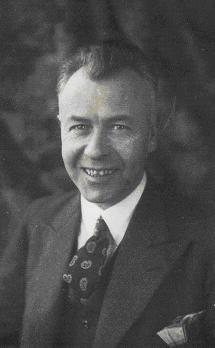 | |||||||||||||||||||||||||||||||||||||
1916 | |||||||||||||||||||||||||||||||||||||
Alida Adriana Schutte | |||||||||||||||||||||||||||||||||||||
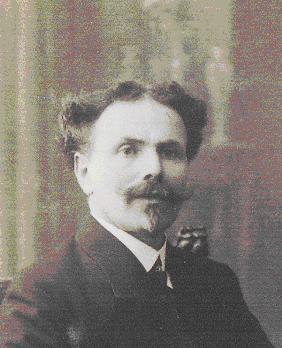
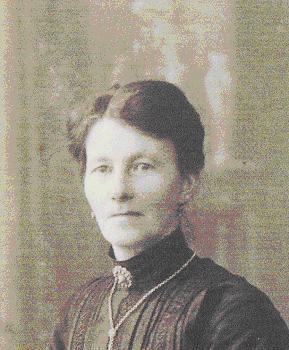
Sources
Matches in other publications
This person also appears in the publication: View all
Historical events
Birthday March 30, 1891
- The temperature on March 30, 1891 was about 0.7 °C. There was 7 mm of rain. The airpressure was 75 cm mercury. The atmospheric humidity was 85%. Source: KNMI
- Koningin Wilhelmina (Huis van Oranje-Nassau) was from 1890 till 1948 sovereign of the Netherlands (also known as Koninkrijk der Nederlanden)
- Regentes Emma (Huis van Oranje-Nassau) was from 1890 till 1898 sovereign of the Netherlands (also known as Koninkrijk der Nederlanden)
- In The Netherlands , there was from April 21, 1888 to August 21, 1891 the cabinet Mackay, with Mr. A. baron Mackay (AR) as prime minister.
- In The Netherlands , there was from August 21, 1891 to May 9, 1894 the cabinet Van Tienhoven, with Mr. G. van Tienhoven (unie-liberaal) as prime minister.
- In the year 1891: Source: Wikipedia
- The Netherlands had about 5.1 million citizens.
- January 29 » Liliuokalani is proclaimed the last monarch and only queen regnant of the Kingdom of Hawaii.
- March 10 » Almon Strowger patents the Strowger switch, a device which led to the automation of telephone circuit switching.
- May 16 » The International Electrotechnical Exhibition opens in Frankfurt, Germany, and will feature the world's first long-distance transmission of high-power, three-phase electric current (the most common form today).
- July 26 » France annexes Tahiti.
- August 18 » Major hurricane strikes Martinique, leaving 700 dead.
- August 24 » Thomas Edison patents the motion picture camera.
Day of marriage May 17, 1916
- The temperature on May 17, 1916 was between 7.4 °C and 19.7 °C and averaged 13.8 °C. There was 11.3 hours of sunshine (72%). The average windspeed was 3 Bft (moderate breeze) and was prevailing from the west-northwest. Source: KNMI
- Koningin Wilhelmina (Huis van Oranje-Nassau) was from 1890 till 1948 sovereign of the Netherlands (also known as Koninkrijk der Nederlanden)
- In The Netherlands , there was from August 29, 1913 to September 9, 1918 the cabinet Cort van der Linden, with Mr. P.W.A. Cort van der Linden (liberaal) as prime minister.
- In the year 1916: Source: Wikipedia
- The Netherlands had about 6.4 million citizens.
- February 29 » Tokelau is annexed by the United Kingdom.
- April 24 » Easter Rising: Irish rebels, led by Patrick Pearse and James Connolly, launch an uprising in Dublin against British rule and proclaim an Irish Republic.
- April 29 » Easter Rising: After six days of fighting, Irish rebel leaders surrender to British forces in Dublin, bringing the Easter Rising to an end.
- July 7 » The New Zealand Labour Party was founded in Wellington.
- September 11 » The Quebec Bridge's central span collapses, killing 11 men. The bridge previously collapsed completely on August 29, 1907.
- December 6 » World War I: The Central Powers capture Bucharest.
Day of death April 3, 1954
- The temperature on April 3, 1954 was between 7.3 °C and 13.0 °C and averaged 10.3 °C. There was 0.7 mm of rain during 1.6 hours. The almost completely overcast was. The average windspeed was 4 Bft (moderate breeze) and was prevailing from the west-southwest. Source: KNMI
- Koningin Juliana (Huis van Oranje-Nassau) was from September 4, 1948 till April 30, 1980 sovereign of the Netherlands (also known as Koninkrijk der Nederlanden)
- In The Netherlands , there was from September 2, 1952 to October 13, 1956 the cabinet Drees II, with Dr. W. Drees (PvdA) as prime minister.
- In the year 1954: Source: Wikipedia
- The Netherlands had about 10.6 million citizens.
- March 9 » McCarthyism: CBS television broadcasts the See It Now episode, "A Report on Senator Joseph McCarthy", produced by Fred Friendly.
- April 25 » The first practical solar cell is publicly demonstrated by Bell Telephone Laboratories.
- July 5 » Elvis Presley records his first single, "That's All Right", at Sun Records in Memphis, Tennessee.
- July 7 » Elvis Presley makes his radio debut when WHBQ Memphis played his first recording for Sun Records, "That's All Right".
- August 16 » The first issue of Sports Illustrated is published.
- October 15 » Hurricane Hazel devastates the eastern seaboard of North America, killing 95 and causing massive floods as far north as Toronto.
Day of burial April 7, 1954
- The temperature on April 7, 1954 was between 1.9 °C and 9.7 °C and averaged 5.3 °C. There was 1.0 mm of rain during 0.3 hours. There was 9.5 hours of sunshine (71%). The partly clouded was. The average windspeed was 3 Bft (moderate breeze) and was prevailing from the north. Source: KNMI
- Koningin Juliana (Huis van Oranje-Nassau) was from September 4, 1948 till April 30, 1980 sovereign of the Netherlands (also known as Koninkrijk der Nederlanden)
- In The Netherlands , there was from September 2, 1952 to October 13, 1956 the cabinet Drees II, with Dr. W. Drees (PvdA) as prime minister.
- In the year 1954: Source: Wikipedia
- The Netherlands had about 10.6 million citizens.
- January 7 » Georgetown-IBM experiment: The first public demonstration of a machine translation system is held in New York at the head office of IBM.
- June 18 » Carlos Castillo Armas leads an invasion force across the Guatemalan border, setting in motion the 1954 Guatemalan coup d'état.
- July 21 » First Indochina War: The Geneva Conference partitions Vietnam into North Vietnam and South Vietnam.
- August 15 » Alfredo Stroessner begins his dictatorship in Paraguay.
- October 11 » In accord with the 1954 Geneva Conference, French troops complete their withdrawal from North Vietnam.
- December 23 » First successful kidney transplant is performed by J. Hartwell Harrison and Joseph Murray.
Same birth/death day
- 1891 » Chunseong, Korean monk, writer and philosopher († 1977)
- 1892 » Erhard Milch, German field marshal († 1972)
- 1892 » Erwin Panofsky, German historian and academic († 1968)
- 1892 » Fortunato Depero, Italian painter and sculptor († 1960)
- 1892 » Johannes Pääsuke, Estonian photographer and director († 1918)
- 1892 » Stefan Banach, Polish mathematician and academic († 1945)
- 1950 » Carter G. Woodson, American historian, author, and journalist, founded Black History Month (b. 1875)
- 1950 » Kurt Weill, German-American composer and pianist (b. 1900)
- 1951 » Henrik Visnapuu, Estonian poet and playwright (b. 1890)
- 1952 » Miina Sillanpää, Finnish minister and politician (b. 1866)
- 1957 » Ned Sparks, Canadian-American actor (b. 1883)
- 1958 » Jaan Kärner, Estonian poet and author (b. 1891)
About the surname De Vries
- View the information that Genealogie Online has about the surname De Vries.
- Check the information Open Archives has about De Vries.
- Check the Wie (onder)zoekt wie? register to see who is (re)searching De Vries.
The Family tree Coster publication was prepared by Frank Coster.
When copying data from this family tree, please include a reference to the origin:
Frank Coster, "Family tree Coster", database, Genealogy Online (https://www.genealogieonline.nl/stamboom_coster/I259.php : accessed February 18, 2026), "Abraham "Bram" de Vries (1891-1954)".
Frank Coster, "Family tree Coster", database, Genealogy Online (https://www.genealogieonline.nl/stamboom_coster/I259.php : accessed February 18, 2026), "Abraham "Bram" de Vries (1891-1954)".