Family tree Verbeeck » Eduard Théodore François Marie Hubert Ghislain Hanon de Louvet (1860-1937)
Personal data Eduard Théodore François Marie Hubert Ghislain Hanon de Louvet
- He was born on July 10, 1860 in Tuillies.
- Profession: notaris.
- Resident: 1900: Braine le Comte.
- He died on August 7, 1937 in Brussel, he was 77 years old.
- A child of Joseph Célestin Ghislain Hanon de Louvet and Félicie Angélique Charlotte Mussche
Household of Eduard Théodore François Marie Hubert Ghislain Hanon de Louvet
He is married to Marie Eugénie Joséphine BERRYER.
They got married on December 18, 1900 at Luik, he was 40 years old.
Timeline Eduard Théodore François Marie Hubert Ghislain Hanon de Louvet
This functionality is only available in Javascript supporting browsers.
Click on the names for more info.
Symbols used:  grandparents
 parents
 brothers/sisters
 children
grandparents
parents
brothers/sisters
children
Ancestors (and descendant) of Eduard Théodore François Marie Hubert Ghislain Hanon de Louvet
Eduard Théodore François Marie Hubert Ghislain Hanon de Louvet | ||||||||||
1900 | ||||||||||
Marie Eugénie Joséphine BERRYER 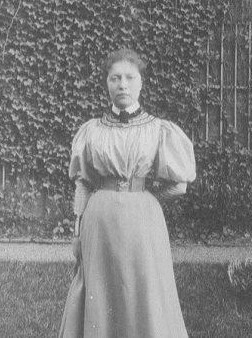 | ||||||||||
The data shown has no sources.
Historical events
Birthday July 10, 1860
- The temperature on July 10, 1860 was about 14.9 °C. The air pressure was 1.5 kgf/m2 and came mainly from the east-northeast. The airpressure was 76 cm mercury. The atmospheric humidity was 89%. Source: KNMI
- Koning Willem III (Huis van Oranje-Nassau) was from 1849 till 1890 sovereign of the Netherlands (also known as Koninkrijk der Nederlanden)
- From March 18, 1858 till February 23, 1860 the Netherlands had a cabinet Rochussen - Van Bosse with the prime ministers J.J. Rochussen (conservatief-liberaal) and Mr. P.P. van Bosse (liberaal).
- From February 23, 1860 till March 14, 1861 the Netherlands had a cabinet Van Hall - Van Heemstra with the prime ministers Mr. F.A. baron Van Hall (conservatief-liberaal) and Mr. S. baron Van Heemstra (liberaal).
- In the year 1860: Source: Wikipedia
- The Netherlands had about 3.3 million citizens.
- March 17 » The First Taranaki War begins in Taranaki, New Zealand, a major phase of the New Zealand Wars.
- March 28 » First Taranaki War: The Battle of Waireka begins.
- April 6 » The Reorganized Church of Jesus Christ of Latter Day Saints, later renamed Community of Christ, is organized by Joseph Smith III and others at Amboy, Illinois.
- October 17 » First The Open Championship (referred to in North America as the British Open).
- December 26 » The first ever inter-club English association football match takes place between Hallam and Sheffield football clubs in Sheffield.
- December 29 » The launch of HMSWarrior, with her combination of screw propeller, iron hull and iron armour, renders all previous warships obsolete.
Day of marriage December 18, 1900
- The temperature on December 18, 1900 was about 3.0 °C. The airpressure was 77 cm mercury. The atmospheric humidity was 90%. Source: KNMI
- Koningin Wilhelmina (Huis van Oranje-Nassau) was from 1890 till 1948 sovereign of the Netherlands (also known as Koninkrijk der Nederlanden)
- In The Netherlands , there was from July 27, 1897 to August 1, 1901 the cabinet Pierson, with Mr. N.G. Pierson (unie-liberaal) as prime minister.
- In the year 1900: Source: Wikipedia
- The Netherlands had about 5.1 million citizens.
- January 6 » Second Boer War: Having already besieged the fortress at Ladysmith, Boer forces attack it, but are driven back by British defenders.
- January 24 » Second Boer War: Boers stop a British attempt to break the Siege of Ladysmith in the Battle of Spion Kop.
- March 7 » The German liner SSKaiser Wilhelm der Grosse becomes the first ship to send wireless signals to shore.
- March 24 » Mayor of New York City Robert Anderson Van Wyck breaks ground for a new underground "Rapid Transit Railroad" that would link Manhattan and Brooklyn.
- July 9 » The Federation of Australia is given royal assent.
- December 18 » The Upper Ferntree Gully to Gembrook, Victoria Narrow-gauge (2ft 6 in or 762mm) Railway (now the Puffing Billy Railway) in Victoria, Australia is opened for traffic.
Day of death August 7, 1937
- The temperature on August 7, 1937 was between 14.6 °C and 31.0 °C and averaged 22.5 °C. There was 12.1 hours of sunshine (80%). The average windspeed was 2 Bft (weak wind) and was prevailing from the east-southeast. Source: KNMI
- Koningin Wilhelmina (Huis van Oranje-Nassau) was from 1890 till 1948 sovereign of the Netherlands (also known as Koninkrijk der Nederlanden)
- In The Netherlands , there was from July 31, 1935 to June 24, 1937 the cabinet Colijn III, with Dr. H. Colijn (ARP) as prime minister.
- In The Netherlands , there was from June 24, 1937 to July 25, 1939 the cabinet Colijn IV, with Dr. H. Colijn (ARP) as prime minister.
- In the year 1937: Source: Wikipedia
- The Netherlands had about 8.6 million citizens.
- January 19 » Howard Hughes sets a new air record by flying from Los Angeles to New York City in 7 hours, 28 minutes, 25 seconds.
- April 12 » Sir Frank Whittle ground-tests the first jet engine designed to power an aircraft, at Rugby, England.
- May 7 » Spanish Civil War: The German Condor Legion, equipped with Heinkel He 51 biplanes, arrives in Spain to assist Francisco Franco's forces.
- June 11 » Great Purge: The Soviet Union under Joseph Stalin executes eight army leaders.
- July 7 » The Peel Commission Report recommends the partition of Palestine, which was the first formal recommendation for partition in the history of Palestine.
- September 10 » Nine nations attend the Nyon Conference to address international piracy in the Mediterranean Sea.
Same birth/death day
- 1856 » Nikola Tesla, Serbian-American physicist and engineer († 1943)
- 1864 » Austin Chapman, Australian businessman and politician, 4th Australian Minister for Defence († 1926)
- 1867 » Prince Maximilian of Baden († 1929)
- 1871 » Marcel Proust, French novelist, critic, and essayist († 1922)
- 1874 » Sergey Konenkov, Russian sculptor († 1971)
- 1875 » Mary McLeod Bethune, American educator and activist († 1955)
- 1917 » Edwin Harris Dunning, South African-English commander and pilot (b. 1891)
- 1938 » Konstantin Stanislavski, Russian actor and director (b. 1863)
- 1941 » Rabindranath Tagore, Indian author, poet, and playwright, Nobel Prize laureate (b. 1861)
- 1948 » Charles Bryant, English-American actor and director (b. 1879)
- 1953 » Abner Powell, American baseball player and manager (b. 1860)
- 1957 » Oliver Hardy, American actor, singer, and director (b. 1892)
About the surname Hanon de Louvet
- View the information that Genealogie Online has about the surname Hanon de Louvet.
- Check the information Open Archives has about Hanon de Louvet.
- Check the Wie (onder)zoekt wie? register to see who is (re)searching Hanon de Louvet.
The Family tree Verbeeck publication was prepared by Carl Verbeeck.
When copying data from this family tree, please include a reference to the origin:
Carl Verbeeck, "Family tree Verbeeck", database, Genealogy Online (https://www.genealogieonline.nl/stamboom-verbeeck/I7501.php : accessed February 25, 2026), "Eduard Théodore François Marie Hubert Ghislain Hanon de Louvet (1860-1937)".
Carl Verbeeck, "Family tree Verbeeck", database, Genealogy Online (https://www.genealogieonline.nl/stamboom-verbeeck/I7501.php : accessed February 25, 2026), "Eduard Théodore François Marie Hubert Ghislain Hanon de Louvet (1860-1937)".