Family tree Van Luijk » Pieternella Jansen (1893-1963)
Personal data Pieternella Jansen
- She was born on March 25, 1893 in Axel.
- Profession: dienstmeid.
- She died on January 31, 1963 in Axel, she was 69 years old.
- A child of Adriaan Jansen and Elisabeth Maria van den Berge
- This information was last updated on May 5, 2025.
Household of Pieternella Jansen
She is married to Willem de Bruijne.
They got married on March 13, 1913 at Axel, she was 19 years old.Source 1
Aktenummer (number) : 7 Aktedatum (date) : 13-03-1913
Child(ren):
- (Not public)
- (Not public)
- Daniël de Bruijne 1922-1945
- Hendrik de Bruijne 1925-1926
- de Bruijne 1930
- (Not public)
Timeline Pieternella Jansen
This functionality is only available in Javascript supporting browsers.
Click on the names for more info.
Symbols used:  grandparents
 parents
 brothers/sisters
 children
grandparents
parents
brothers/sisters
children
Image(s) Pieternella Jansen

Ancestors (and descendant) of Pieternella Jansen
Pieternella Jansen 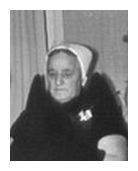 | |||||||||||||||||||||||||||||||||||||||||||||||||||||||||||||||||||||||||||||||||||||||||||||||||||||||||||
1913 | |||||||||||||||||||||||||||||||||||||||||||||||||||||||||||||||||||||||||||||||||||||||||||||||||||||||||||
Willem de Bruijne 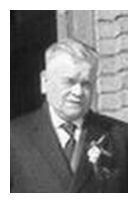 | |||||||||||||||||||||||||||||||||||||||||||||||||||||||||||||||||||||||||||||||||||||||||||||||||||||||||||
Sources
Matches in other publications
This person also appears in the publication: View all
Historical events
Birthday March 25, 1893
- The temperature on March 25, 1893 was about 4.2 °C. The airpressure was 77 cm mercury. The atmospheric humidity was 98%. Source: KNMI
- Koningin Wilhelmina (Huis van Oranje-Nassau) was from 1890 till 1948 sovereign of the Netherlands (also known as Koninkrijk der Nederlanden)
- Regentes Emma (Huis van Oranje-Nassau) was from 1890 till 1898 sovereign of the Netherlands (also known as Koninkrijk der Nederlanden)
- In The Netherlands , there was from August 21, 1891 to May 9, 1894 the cabinet Van Tienhoven, with Mr. G. van Tienhoven (unie-liberaal) as prime minister.
- In the year 1893: Source: Wikipedia
- The Netherlands had about 5.1 million citizens.
- January 6 » The Washington National Cathedral is chartered by Congress. The charter is signed by President Benjamin Harrison.
- February 1 » Thomas A. Edison finishes construction of the first motion picture studio, the Black Maria in West Orange, New Jersey.
- March 1 » Electrical engineer Nikola Tesla gives the first public demonstration of radio in St. Louis, Missouri.
- June 22 » The Royal Navy battleship HMSCamperdown accidentally rams the British Mediterranean Fleet flagship HMSVictoria which sinks taking 358 crew with her, including the fleet's commander, Vice-Admiral Sir George Tryon.
- July 11 » The first cultured pearl is obtained by Kōkichi Mikimoto.
- November 28 » Women's suffrage in New Zealand concludes with the 1893 New Zealand general election.
Day of marriage March 13, 1913
- The temperature on March 13, 1913 was between 3.8 °C and 13.6 °C and averaged 7.3 °C. There was 7.3 hours of sunshine (63%). The average windspeed was 2 Bft (weak wind) and was prevailing from the south east. Source: KNMI
- Koningin Wilhelmina (Huis van Oranje-Nassau) was from 1890 till 1948 sovereign of the Netherlands (also known as Koninkrijk der Nederlanden)
- In The Netherlands , there was from February 12, 1908 to August 29, 1913 the cabinet Heemskerk, with Mr. Th. Heemskerk (AR) as prime minister.
- In The Netherlands , there was from August 29, 1913 to September 9, 1918 the cabinet Cort van der Linden, with Mr. P.W.A. Cort van der Linden (liberaal) as prime minister.
- In the year 1913: Source: Wikipedia
- The Netherlands had about 6.1 million citizens.
- February 2 » Grand Central Terminal is opened in New York City.
- February 9 » A group of meteors is visible across much of the eastern seaboard of North and South America, leading astronomers to conclude the source had been a small, short-lived natural satellite of the Earth.
- March 3 » Thousands of women march in the Woman Suffrage Procession in Washington, D.C.
- December 1 » Ford Motor Company introduces the first moving assembly line.
- December 14 » Haruna, the fourth and last Kongō-class ship, launches, eventually becoming one of the Japanese workhorses during World War I and World War II.
- December 24 » The Italian Hall disaster in Calumet, Michigan results in the deaths of 73 Christmas party participants (including 59 children) when someone falsely yells "fire".
Day of death January 31, 1963
- The temperature on January 31, 1963 was between -10.4 °C and -4.4 °C and averaged -6.8 °C. There was 1.2 mm of rain during 2.8 hours. There was 5.8 hours of sunshine (64%). The partly clouded was. The average windspeed was 1 Bft (weak wind) and was prevailing from the north-northeast. Source: KNMI
- Koningin Juliana (Huis van Oranje-Nassau) was from September 4, 1948 till April 30, 1980 sovereign of the Netherlands (also known as Koninkrijk der Nederlanden)
- In The Netherlands , there was from May 19, 1959 to July 24, 1964 the cabinet De Quay, with Prof. dr. J.E. de Quay (KVP) as prime minister.
- In The Netherlands , there was from July 24, 1963 to April 14, 1965 the cabinet Marijnen, with Mr. V.G.M. Marijnen (KVP) as prime minister.
- In the year 1963: Source: Wikipedia
- The Netherlands had about 11.9 million citizens.
- January 13 » Coup d'état in Togo results in the assassination of president Sylvanus Olympio.
- August 24 » Buddhist crisis: As a result of the Xá Lợi Pagoda raids, the US State Department cables the United States Embassy, Saigon to encourage Army of the Republic of Vietnam generals to launch a coup against President Ngô Đình Diệm if he did not remove his brother Ngô Đình Nhu.
- August 28 » March on Washington for Jobs and Freedom: The Reverend Martin Luther King, Jr. gives his I Have a Dream speech.
- November 2 » South Vietnamese President Ngô Đình Diệm is assassinated following a military coup.
- November 29 » "I Want to Hold Your Hand", recorded on October 17, 1963, is released by the Beatles in the United Kingdom.
- December 31 » The Central African Federation officially collapses, subsequently becoming Zambia, Malawi and Rhodesia.
Same birth/death day
- 1885 » Jimmy Seed, English international footballer, inside forward and manager († 1966)
- 1893 » Johannes Villemson, Estonian runner († 1971)
- 1895 » Siegfried Handloser, German general and physician († 1954)
- 1897 » Leslie Averill, New Zealand doctor and soldier († 1981)
- 1899 » François Rozet, French-Canadian actor († 1994)
- 1901 » Ed Begley, American actor († 1970)
- 1958 » Karl Selter, Estonian politician, 14th Estonian Minister of Foreign Affairs (b. 1898)
- 1960 » Auguste Herbin, French painter (b. 1882)
- 1961 » Krishna Singh, Indian politician, 1st Chief Minister of Bihar (b. 1887)
- 1966 » Arthur Percival, English general (b. 1887)
- 1967 » Eddie Tolan, American sprinter and educator (b. 1908)
- 1969 » Meher Baba, Indian spiritual master (b. 1894)
About the surname Jansen
- View the information that Genealogie Online has about the surname Jansen.
- Check the information Open Archives has about Jansen.
- Check the Wie (onder)zoekt wie? register to see who is (re)searching Jansen.
The Family tree Van Luijk publication was prepared by H. van Luijk.
When copying data from this family tree, please include a reference to the origin:
H. van Luijk, "Family tree Van Luijk", database, Genealogy Online (https://www.genealogieonline.nl/stamboom-van-luijk/I7172.php : accessed March 6, 2026), "Pieternella Jansen (1893-1963)".
H. van Luijk, "Family tree Van Luijk", database, Genealogy Online (https://www.genealogieonline.nl/stamboom-van-luijk/I7172.php : accessed March 6, 2026), "Pieternella Jansen (1893-1963)".