Family tree Van Luijk » Abraham van Bendegem (1877-1968)
Personal data Abraham van Bendegem
- He was born on October 31, 1877 in Axel.
Aktedatum : 01-11-1877, aktenummer (number) : 117
- Birth registration on November 1, 1877.Source 1
- Profession: werkman, koopman.
- He died on October 24, 1968 in Axel, he was 90 years old.
- A child of Pieter Cornelis van Bendegem and Elizabeth Neeltje Heijnsdijk
- This information was last updated on December 30, 2023.
Household of Abraham van Bendegem
He is married to Elizabeth Deij.
They got married on May 17, 1900 at Axel, he was 22 years old.Source 2
Aktenummer (number) : 7 Aktedatum (date) : 17-05-1900
Child(ren):
- Pieter van Bendegem 1900-1901
- Jozina van Bendegem 1902-1902
- Johannes van Bendegem 1905-
- Christiaan van Bendegem 1910-1988
Timeline Abraham van Bendegem
This functionality is only available in Javascript supporting browsers.
Click on the names for more info.
Symbols used:  grandparents
 parents
 brothers/sisters
 children
grandparents
parents
brothers/sisters
children
Image(s) Abraham van Bendegem

Ancestors (and descendant) of Abraham van Bendegem
Abraham van Bendegem 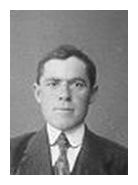 | ||||||||||||||||||||||||||||||||||||||||||||||||||||||||||||||||||||||
1900 | ||||||||||||||||||||||||||||||||||||||||||||||||||||||||||||||||||||||
Elizabeth Deij 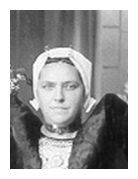 | ||||||||||||||||||||||||||||||||||||||||||||||||||||||||||||||||||||||
Sources
Historical events
Birthday October 31, 1877
- The temperature on October 31, 1877 was about 11.7 °C. There was 0.2 mm of rain. The air pressure was 26 kgf/m2 and came mainly from the west. The airpressure was 76 cm mercury. The atmospheric humidity was 91%. Source: KNMI
- Koning Willem III (Huis van Oranje-Nassau) was from 1849 till 1890 sovereign of the Netherlands (also known as Koninkrijk der Nederlanden)
- From August 27, 1874 till November 3, 1877 the Netherlands had a cabinet Heemskerk - Van Lijnden van Sandenburg with the prime ministers Mr. J. Heemskerk Azn. (conservatief) and Mr. C.Th. baron Van Lijnden van Sandenburg (AR).
- In The Netherlands , there was from November 3, 1877 to August 20, 1879 the cabinet Kappeijne van de Coppello, with Mr. J. Kappeijne van de Coppello (liberaal) as prime minister.
- In the year 1877: Source: Wikipedia
- The Netherlands had about 4.0 million citizens.
- March 2 » Just two days before inauguration, the U.S. Congress declares Rutherford B. Hayes the winner of the 1876 U.S. presidential election even though Samuel J. Tilden had won the popular vote.
- June 15 » Henry Ossian Flipper becomes the first African American cadet to graduate from the United States Military Academy.
- June 20 » Alexander Graham Bell installs the world's first commercial telephone service in Hamilton, Ontario, Canada.
- July 21 » After rioting by Baltimore and Ohio Railroad workers and the deaths of nine rail workers at the hands of the Maryland militia, workers in Pittsburgh, Pennsylvania, stage a sympathy strike that is met with an assault by the state militia.
- September 5 » American Indian Wars: Oglala Sioux chief Crazy Horse is bayoneted by a United States soldier after resisting confinement in a guardhouse at Fort Robinson in Nebraska.
- December 6 » The first edition of The Washington Post is published.
Day of marriage May 17, 1900
- The temperature on May 17, 1900 was about 13.0 °C. The airpressure was 76 cm mercury. The atmospheric humidity was 62%. Source: KNMI
- Koningin Wilhelmina (Huis van Oranje-Nassau) was from 1890 till 1948 sovereign of the Netherlands (also known as Koninkrijk der Nederlanden)
- In The Netherlands , there was from July 27, 1897 to August 1, 1901 the cabinet Pierson, with Mr. N.G. Pierson (unie-liberaal) as prime minister.
- In the year 1900: Source: Wikipedia
- The Netherlands had about 5.1 million citizens.
- April 2 » The United States Congress passes the Foraker Act, giving Puerto Rico limited self-rule.
- April 30 » Hawaii becomes a territory of the United States, with Sanford B. Dole as governor.
- June 20 » Baron Eduard Toll, leader of the Russian Polar Expedition of 1900, departs Saint Petersburg in Russia on the explorer ship Zarya, never to return.
- October 9 » The Cook Islands become a territory of the United Kingdom.
- October 19 » Max Planck discovers Planck's law of black-body radiation.
- December 14 » Quantum mechanics: Max Planck presents a theoretical derivation of his black-body radiation law.
Day of death October 24, 1968
- The temperature on October 24, 1968 was between 4.9 °C and 13.0 °C and averaged 8.7 °C. There was 3.9 hours of sunshine (38%). The partly clouded was. The average windspeed was 2 Bft (weak wind) and was prevailing from the east. Source: KNMI
- Koningin Juliana (Huis van Oranje-Nassau) was from September 4, 1948 till April 30, 1980 sovereign of the Netherlands (also known as Koninkrijk der Nederlanden)
- In The Netherlands , there was from April 5, 1967 to Tuesday, July 6, 1971 the cabinet De Jong, with P.J.S. de Jong (KVP) as prime minister.
- In the year 1968: Source: Wikipedia
- The Netherlands had about 12.7 million citizens.
- January 22 » Operation Igloo White, a US electronic surveillance system to stop communist infiltration into South Vietnam begins installation.
- February 17 » In Springfield, Massachusetts, the Naismith Memorial Basketball Hall of Fame opens.
- April 6 » In Richmond, Indiana's downtown district, a double explosion kills 41 and injures 150.
- September 24 » First episode of 60 Minutes airs on television.
- October 20 » Former First Lady Jacqueline Kennedy marries Greek shipping tycoon Aristotle Onassis.
- December 10 » Japan's biggest heist, the still-unsolved "300 million yen robbery", is carried out in Tokyo.
Same birth/death day
- 1875 » Eugene Meyer, American businessman and publisher († 1954)
- 1875 » Vallabhbhai Patel, Indian lawyer, freedom fighter and politician, 1st Deputy Prime Minister of India († 1950)
- 1876 » Natalie Clifford Barney, American poet and playwright († 1972)
- 1879 » Karel Hašler, Czech actor, director, and composer († 1941)
- 1880 » Julia Peterkin, American author († 1961)
- 1880 » Mikhail Tomsky, Soviet politician, member of the Politburo of the Central Committee of the Communist Party of the Soviet Union († 1936)
- 1965 » Hans Meerwein, German chemist (b. 1879)
- 1966 » Sofya Yanovskaya, Russian mathematician and historian (b. 1896)
- 1969 » Behçet Kemal Çağlar, Turkish poet and politician (b. 1908)
- 1970 » Richard Hofstadter, American historian and author (b. 1916)
- 1971 » Carl Ruggles, American composer (b. 1876)
- 1971 » Jo Siffert, Swiss race car driver and motorcycle racer (b. 1936)
About the surname Van Bendegem
- View the information that Genealogie Online has about the surname Van Bendegem.
- Check the information Open Archives has about Van Bendegem.
- Check the Wie (onder)zoekt wie? register to see who is (re)searching Van Bendegem.
The Family tree Van Luijk publication was prepared by H. van Luijk.
When copying data from this family tree, please include a reference to the origin:
H. van Luijk, "Family tree Van Luijk", database, Genealogy Online (https://www.genealogieonline.nl/stamboom-van-luijk/I617.php : accessed March 6, 2026), "Abraham van Bendegem (1877-1968)".
H. van Luijk, "Family tree Van Luijk", database, Genealogy Online (https://www.genealogieonline.nl/stamboom-van-luijk/I617.php : accessed March 6, 2026), "Abraham van Bendegem (1877-1968)".