Family tree Van Dijk » Gerrit Wielink (1897-????)
Personal data Gerrit Wielink
- He was born on May 3, 1897 in Zalk, Overijssel, Nederland.
- A child of Berend Wielink and Janna Boom
- This information was last updated on January 7, 2007.
Household of Gerrit Wielink
He is married to Niesje Kuterman.
They got married on May 6, 1926 at Nieuwleusen, Overijssel, Nederland, he was 29 years old.
Timeline Gerrit Wielink
This functionality is only available in Javascript supporting browsers.
Click on the names for more info.
Symbols used:  grandparents
 parents
 brothers/sisters
 children
grandparents
parents
brothers/sisters
children
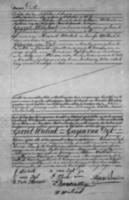
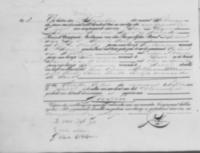
The data shown has no sources.
Historical events
Birthday May 3, 1897
- The temperature on May 3, 1897 was about 13.0 °C. The airpressure was 76 cm mercury. The atmospheric humidity was 68%. Source: KNMI
- Koningin Wilhelmina (Huis van Oranje-Nassau) was from 1890 till 1948 sovereign of the Netherlands (also known as Koninkrijk der Nederlanden)
- Regentes Emma (Huis van Oranje-Nassau) was from 1890 till 1898 sovereign of the Netherlands (also known as Koninkrijk der Nederlanden)
- In The Netherlands , there was from May 9, 1894 to July 27, 1897 the cabinet Roëll, with Jonkheer mr. J. Roëll (oud-liberaal) as prime minister.
- In The Netherlands , there was from July 27, 1897 to August 1, 1901 the cabinet Pierson, with Mr. N.G. Pierson (unie-liberaal) as prime minister.
- In the year 1897: Source: Wikipedia
- The Netherlands had about 5.1 million citizens.
- February 28 » Queen Ranavalona III, the last monarch of Madagascar, is deposed by a French military force.
- April 30 » J. J. Thomson of the Cavendish Laboratory announces his discovery of the electron as a subatomic particle, over 1,800 times smaller than a proton (in the atomic nucleus), at a lecture at the Royal Institution in London.
- August 21 » Oldsmobile, an American automobile manufacturer and marque, is founded.
- September 1 » The Tremont Street Subway in Boston opens, becoming the first underground rapid transit system in North America.
- September 12 » Tirah Campaign: In the Battle of Saragarhi, ten thousand Pashtun tribesmen suffer several hundred casualties while attacking 21 Sikh soldiers in British service.
- December 9 » Activist Marguerite Durand founds the feminist daily newspaper La Fronde in Paris.
Day of marriage May 6, 1926
- The temperature on May 6, 1926 was between 2.5 °C and 12.1 °C and averaged 7.0 °C. There was 5.6 mm of rain. There was 7.5 hours of sunshine (49%). The average windspeed was 4 Bft (moderate breeze) and was prevailing from the north-northwest. Source: KNMI
- Koningin Wilhelmina (Huis van Oranje-Nassau) was from 1890 till 1948 sovereign of the Netherlands (also known as Koninkrijk der Nederlanden)
- In The Netherlands , there was from August 4, 1925 to March 8, 1926 the cabinet Colijn I, with Dr. H. Colijn (ARP) as prime minister.
- In The Netherlands , there was from March 8, 1926 to August 10, 1929 the cabinet De Geer I, with Jonkheer mr. D.J. de Geer (CHU) as prime minister.
- In the year 1926: Source: Wikipedia
- The Netherlands had about 7.4 million citizens.
- April 6 » Varney Airlines makes its first commercial flight (Varney is the root company of United Airlines).
- May 28 » The 28 May 1926 coup d'état: Ditadura Nacional is established in Portugal to suppress the unrest of the First Republic.
- July 23 » Fox Film buys the patents of the Movietone sound system for recording sound onto film.
- August 5 » Harry Houdini performs his greatest feat, spending 91 minutes underwater in a sealed tank before escaping.
- September 8 » Germany is admitted to the League of Nations.
- November 11 » The United States Numbered Highway System is established.
Same birth/death day
- 1896 » Dodie Smith, English author and playwright († 1990)
- 1896 » Karl Allmenröder, German soldier and pilot († 1917)
- 1896 » V. K. Krishna Menon, Indian lawyer, jurist, and politician, Indian Minister of Defence († 1974)
- 1897 » William Joseph Browne, Canadian lawyer and politician, 20th Solicitor General of Canada († 1989)
- 1898 » Golda Meir, Ukrainian-Israeli educator and politician, 4th Prime Minister of Israel († 1978)
- 1898 » Septima Poinsette Clark, American educator and activist († 1987)
About the surname Wielink
- View the information that Genealogie Online has about the surname Wielink.
- Check the information Open Archives has about Wielink.
- Check the Wie (onder)zoekt wie? register to see who is (re)searching Wielink.
The Family tree Van Dijk publication was prepared by wijlen Jan van Dijk (contact is not possible).
When copying data from this family tree, please include a reference to the origin:
wijlen Jan van Dijk, "Family tree Van Dijk", database, Genealogy Online (https://www.genealogieonline.nl/stamboom-van-dijk/I7020.php : accessed February 15, 2026), "Gerrit Wielink (1897-????)".
wijlen Jan van Dijk, "Family tree Van Dijk", database, Genealogy Online (https://www.genealogieonline.nl/stamboom-van-dijk/I7020.php : accessed February 15, 2026), "Gerrit Wielink (1897-????)".