Family tree Van Dijk » Klaas Visscher (1868-1921)
Personal data Klaas Visscher
- He was born on January 19, 1868 in Genemuiden, Overijssel, Nederland.
- He died on April 28, 1921 in Genemuiden, Overijssel, Nederland, he was 53 years old.
- A child of Lubbert Visscher and Gerrigje Eenkhoorn
- This information was last updated on January 25, 2012.
Household of Klaas Visscher
He is married to Alberdina Pleijzier.
They got married on January 28, 1898 at Genemuiden, Overijssel, Nederland, he was 30 years old.
Timeline Klaas Visscher
This functionality is only available in Javascript supporting browsers.
Click on the names for more info.
Symbols used:  grandparents
 parents
 brothers/sisters
 children
grandparents
parents
brothers/sisters
children
Ancestors (and descendant) of Klaas Visscher
Klaas Visscher | ||||||||||||||||||
1898 | ||||||||||||||||||
Alberdina Pleijzier | ||||||||||||||||||
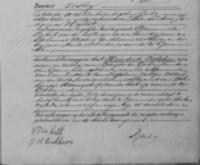
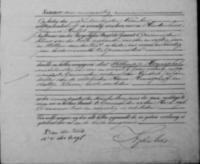
The data shown has no sources.
Matches in other publications
This person also appears in the publication: View all
Historical events
Birthday January 19, 1868
- The temperature on January 19, 1868 was about 6.3 °C. There was 0.5 mm of rain. The air pressure was 20 kgf/m2 and came mainly from the west-southwest. The airpressure was 74 cm mercury. The atmospheric humidity was 85%. Source: KNMI
- Koning Willem III (Huis van Oranje-Nassau) was from 1849 till 1890 sovereign of the Netherlands (also known as Koninkrijk der Nederlanden)
- From June 1, 1866 till June 4, 1868 the Netherlands had a cabinet Van Zuijlen van Nijevelt - Heemskerk with the prime ministers Mr. J.P.J.A. graaf Van Zuijlen van Nijevelt (AR) and Mr. J. Heemskerk Azn. (conservatief).
- From June 4, 1868 till January 4, 1871 the Netherlands had a cabinet Van Bosse - Fock with the prime ministers Mr. P.P. van Bosse (liberaal) and Mr. C. Fock (liberaal).
- In the year 1868: Source: Wikipedia
- The Netherlands had about 3.6 million citizens.
- January 3 » Meiji Restoration in Japan: The Tokugawa shogunate is abolished; agents of Satsuma and Chōshū seize power.
- May 14 » Boshin War: The Battle of Utsunomiya Castle ends as former Tokugawa shogunate forces withdraw northward.
- September 23 » Grito de Lares ("Lares Revolt") occurs in Puerto Rico against Spanish rule.
- October 10 » The Ten Years' War begins against Spanish rule in Cuba.
- December 10 » The first traffic lights are installed, outside the Palace of Westminster in London. Resembling railway signals, they use semaphore arms and are illuminated at night by red and green gas lamps.
- December 11 » Paraguayan War: Brazilian troops defeat Paraguayan at the Battle of Avay.
Day of marriage January 28, 1898
- The temperature on January 28, 1898 was about 6.9 °C. The airpressure was 77 cm mercury. The atmospheric humidity was 90%. Source: KNMI
- Koningin Wilhelmina (Huis van Oranje-Nassau) was from 1890 till 1948 sovereign of the Netherlands (also known as Koninkrijk der Nederlanden)
- Regentes Emma (Huis van Oranje-Nassau) was from 1890 till 1898 sovereign of the Netherlands (also known as Koninkrijk der Nederlanden)
- In The Netherlands , there was from July 27, 1897 to August 1, 1901 the cabinet Pierson, with Mr. N.G. Pierson (unie-liberaal) as prime minister.
- In the year 1898: Source: Wikipedia
- The Netherlands had about 5.1 million citizens.
- April 25 » Spanish–American War: The United States declares war on Spain.
- May 8 » The first games of the Italian football league system are played.
- June 10 » Spanish–American War: In the Battle of Guantánamo Bay, U.S. Marines begin the American invasion of Spanish-held Cuba.
- November 3 » France withdraws its troops from Fashoda (now in Sudan), ending the Fashoda Incident.
- December 10 » Spanish–American War: The Treaty of Paris is signed, officially ending the conflict.
- December 18 » Gaston de Chasseloup-Laubat sets the first officially recognized land speed record of 39.245mph (63.159km/h) in a Jeantaud electric car.
Day of death April 28, 1921
- The temperature on April 28, 1921 was between 8.4 °C and 20.1 °C and averaged 14.4 °C. There was 11.9 hours of sunshine (81%). The average windspeed was 4 Bft (moderate breeze) and was prevailing from the east-northeast. Source: KNMI
- Koningin Wilhelmina (Huis van Oranje-Nassau) was from 1890 till 1948 sovereign of the Netherlands (also known as Koninkrijk der Nederlanden)
- In The Netherlands , there was from September 9, 1918 to September 18, 1922 the cabinet Ruys de Beerenbrouck I, with Jonkheer mr. Ch.J.M. Ruys de Beerenbrouck (RKSP) as prime minister.
- In the year 1921: Source: Wikipedia
- The Netherlands had about 6.9 million citizens.
- February 22 » After Russian forces under Baron Roman von Ungern-Sternberg drive the Chinese out, the Bogd Khan is reinstalled as the emperor of Mongolia.
- March 8 » Spanish Prime Minister Eduardo Dato Iradier is assassinated while exiting the parliament building in Madrid.
- March 21 » The New Economic Policy is implemented by the Bolshevik Party in response to the economic failure as a result of war communism.
- May 31 » The Tulsa race massacre kills at least 39, but other estimates of black fatalities vary from 55 to about 300.
- July 29 » Adolf Hitler becomes leader of the National Socialist German Workers Party.
- December 6 » The Anglo-Irish Treaty is signed in London by British and Irish representatives.
Same birth/death day
- 1863 » Werner Sombart, German economist and sociologist († 1941)
- 1866 » Harry Davenport, American stage and film actor († 1949)
- 1871 » Dame Gruev, Bulgarian educator and activist, co-founded the Internal Macedonian Revolutionary Organization († 1906)
- 1874 » Hitachiyama Taniemon, Japanese sumo wrestler, the 19th Yokozuna († 1922)
- 1876 » Dragotin Kette, Slovenian poet and author († 1899)
- 1876 » Wakashima Gonshirō, Japanese sumo wrestler, the 21st Yokozuna († 1943)
- 1903 » Josiah Willard Gibbs, American scientist (b. 1839)
- 1905 » Fitzhugh Lee, American general and politician, 40th Governor of Virginia (b. 1835)
- 1925 » Richard Butler, English-Australian politician, 23rd Premier of South Australia (b. 1850)
- 1928 » May Jordan McConnel, Australian trade unionist and suffragist (b. 1860)
- 1929 » Hendrik van Heuckelum, Dutch footballer (b. 1879)
- 1936 » Fuad I of Egypt (b. 1868)
About the surname Visscher
- View the information that Genealogie Online has about the surname Visscher.
- Check the information Open Archives has about Visscher.
- Check the Wie (onder)zoekt wie? register to see who is (re)searching Visscher.
The Family tree Van Dijk publication was prepared by wijlen Jan van Dijk (contact is not possible).
When copying data from this family tree, please include a reference to the origin:
wijlen Jan van Dijk, "Family tree Van Dijk", database, Genealogy Online (https://www.genealogieonline.nl/stamboom-van-dijk/I6437.php : accessed February 6, 2026), "Klaas Visscher (1868-1921)".
wijlen Jan van Dijk, "Family tree Van Dijk", database, Genealogy Online (https://www.genealogieonline.nl/stamboom-van-dijk/I6437.php : accessed February 6, 2026), "Klaas Visscher (1868-1921)".