Family tree Van Dijk » Femmigje Russchenberg (1867-1938)
Personal data Femmigje Russchenberg
- She was born on July 29, 1867 in Kamperveen, Overijssel, Nederland.
- She died on March 15, 1938 in Kampen, Overijssel, Nederland, she was 70 years old.
- A child of Teunis Russchenberg and Berendje van Dijk
- This information was last updated on January 7, 2007.
Household of Femmigje Russchenberg
She is married to Hendrik Plender.
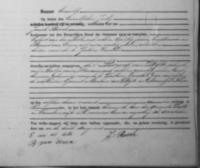
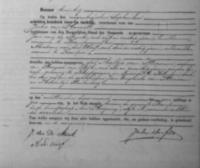
They got married on September 1, 1892 at Kamperveen, Overijssel, Nederland, she was 25 years old.
Timeline Femmigje Russchenberg
This functionality is only available in Javascript supporting browsers.
Click on the names for more info.
Symbols used:  grandparents
 parents
 brothers/sisters
 children
grandparents
parents
brothers/sisters
children
Ancestors (and descendant) of Femmigje Russchenberg
Femmigje Russchenberg | ||||||||||||||||||
1892 | ||||||||||||||||||
Hendrik Plender | ||||||||||||||||||
The data shown has no sources.
Matches in other publications
This person also appears in the publication: View all
Historical events
Birthday July 29, 1867
- The temperature on July 29, 1867 was about 12.5 °C. There was 2 mm of rain. The air pressure was 11 kgf/m2 and came mainly from the west-northwest. The airpressure was 76 cm mercury. The atmospheric humidity was 86%. Source: KNMI
- Koning Willem III (Huis van Oranje-Nassau) was from 1849 till 1890 sovereign of the Netherlands (also known as Koninkrijk der Nederlanden)
- From June 1, 1866 till June 4, 1868 the Netherlands had a cabinet Van Zuijlen van Nijevelt - Heemskerk with the prime ministers Mr. J.P.J.A. graaf Van Zuijlen van Nijevelt (AR) and Mr. J. Heemskerk Azn. (conservatief).
- In the year 1867: Source: Wikipedia
- The Netherlands had about 3.6 million citizens.
- February 17 » The first ship passes through the Suez Canal.
- March 1 » Nebraska becomes the 37th U.S. state; Lancaster, Nebraska is renamed Lincoln and becomes the state capital.
- September 2 » Mutsuhito, Emperor Meiji of Japan, marries Masako Ichijō, thereafter known as Empress Shōken.
- September 28 » Toronto becomes the capital of Ontario, having also been the capital of Ontario's predecessors since 1796.
- December 2 » At Tremont Temple in Boston, British author Charles Dickens gives his first public reading in the United States.
- December 4 » Former Minnesota farmer Oliver Hudson Kelley founds the Order of the Patrons of Husbandry (better known today as the Grange).
Day of marriage September 1, 1892
- The temperature on September 1, 1892 was about 15.9 °C. There was 0.3 mm of rain. The airpressure was 76 cm mercury. The atmospheric humidity was 91%. Source: KNMI
- Koningin Wilhelmina (Huis van Oranje-Nassau) was from 1890 till 1948 sovereign of the Netherlands (also known as Koninkrijk der Nederlanden)
- Regentes Emma (Huis van Oranje-Nassau) was from 1890 till 1898 sovereign of the Netherlands (also known as Koninkrijk der Nederlanden)
- In The Netherlands , there was from August 21, 1891 to May 9, 1894 the cabinet Van Tienhoven, with Mr. G. van Tienhoven (unie-liberaal) as prime minister.
- In the year 1892: Source: Wikipedia
- The Netherlands had about 5.1 million citizens.
- January 1 » Ellis Island begins processing immigrants into the United States.
- June 30 » The Homestead Strike begins near Pittsburgh, Pennsylvania.
- September 8 » The Pledge of Allegiance is first recited.
- September 28 » The first night game for American football takes place in a contest between Wyoming Seminary and Mansfield State Normal.
- November 8 » The New Orleans general strike begins, uniting black and white American trade unionists in a successful four-day general strike action for the first time.
- December 18 » Premiere performance of The Nutcracker by Pyotr Ilyich Tchaikovsky in Saint Petersburg, Russia.
Day of death March 15, 1938
- The temperature on March 15, 1938 was between -0.9 °C and 16.1 °C and averaged 7.7 °C. There was 8.7 hours of sunshine (74%). The average windspeed was 3 Bft (moderate breeze) and was prevailing from the south-southwest. Source: KNMI
- Koningin Wilhelmina (Huis van Oranje-Nassau) was from 1890 till 1948 sovereign of the Netherlands (also known as Koninkrijk der Nederlanden)
- In The Netherlands , there was from June 24, 1937 to July 25, 1939 the cabinet Colijn IV, with Dr. H. Colijn (ARP) as prime minister.
- In the year 1938: Source: Wikipedia
- The Netherlands had about 8.6 million citizens.
- April 10 » The 1938 German parliamentary election and referendum seeks approval for a single list of Nazi candidates and the recent annexation of Austria.
- June 25 » Dr. Douglas Hyde is inaugurated as the first President of Ireland.
- July 3 » World speed record for a steam locomotive is set in England, by the Mallard, which reaches a speed of 125.88 miles per hour (202.58km/h).
- September 5 » Chile: A group of youths affiliated with the fascist National Socialist Movement of Chile are executed after surrendering during a failed coup.
- September 23 » The Czechoslovak army is mobilized in response to the Munich Agreement.
- November 1 » Seabiscuit defeats War Admiral in an upset victory during a match race deemed "the match of the century" in horse racing.
Same birth/death day
- 1860 » Charles Cochrane-Baillie, 2nd Baron Lamington, English politician, 8th Governor of Queensland († 1940)
- 1867 » Berthold Oppenheim, Moravian rabbi († 1942)
- 1869 » Booth Tarkington, American novelist and dramatist († 1946)
- 1871 » Jakob Mändmets, Estonian writer and journalist († 1930)
- 1872 » Eric Alfred Knudsen, American author, lawyer, and politician († 1957)
- 1874 » J. S. Woodsworth, Canadian minister and politician († 1942)
- 1933 » Gustavo Jiménez, Peruvian colonel and politician, 73rd President of Peru (b. 1886)
- 1937 » H. P. Lovecraft, American short story writer, editor, and novelist (b. 1890)
- 1938 » Nikolai Bukharin, Russian journalist and politician (b. 1888)
- 1939 » Luis Barceló, Spanish colonel (b. 1896)
- 1941 » Alexej von Jawlensky, Russian-German painter (b. 1864)
- 1944 » Otto von Below, Prussian general (b. 1857)
About the surname Russchenberg
- View the information that Genealogie Online has about the surname Russchenberg.
- Check the information Open Archives has about Russchenberg.
- Check the Wie (onder)zoekt wie? register to see who is (re)searching Russchenberg.
The Family tree Van Dijk publication was prepared by wijlen Jan van Dijk (contact is not possible).
When copying data from this family tree, please include a reference to the origin:
wijlen Jan van Dijk, "Family tree Van Dijk", database, Genealogy Online (https://www.genealogieonline.nl/stamboom-van-dijk/I5277.php : accessed February 16, 2026), "Femmigje Russchenberg (1867-1938)".
wijlen Jan van Dijk, "Family tree Van Dijk", database, Genealogy Online (https://www.genealogieonline.nl/stamboom-van-dijk/I5277.php : accessed February 16, 2026), "Femmigje Russchenberg (1867-1938)".