Family tree Van Dijk » Arrien Jacobs de Jonge (1762-1846)
Personal data Arrien Jacobs de Jonge
- He was born on January 31, 1762 in Wanneperveen, Overijssel, Nederland.
- Profession: Turfmaker.
- He died on November 3, 1846 in Zwartsluis, Overijssel, Nederland, he was 84 years old.
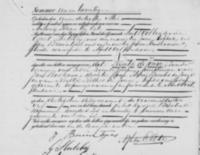
Aktenr. 98
- A child of Jacob Arries de Jonge and Trijntje Alberts de Jonge
- This information was last updated on December 18, 2010.
Household of Arrien Jacobs de Jonge
He is married to Neeltje Netters de Jonge.
They got married on December 6, 1789 at Wanneperveen, Overijssel, Nederland, he was 27 years old.
Child(ren):
- Annegien Arries Jacobs de Jonge 1793-????
Timeline Arrien Jacobs de Jonge
This functionality is only available in Javascript supporting browsers.
Click on the names for more info.
Symbols used:  grandparents
 parents
 brothers/sisters
 children
grandparents
parents
brothers/sisters
children
Ancestors (and descendant) of Arrien Jacobs de Jonge
Arrien Jacobs de Jonge 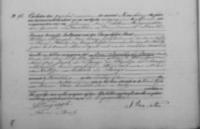 | |||||||||||||||||||||||||||||||||||
1789 | |||||||||||||||||||||||||||||||||||
Neeltje Netters de Jonge 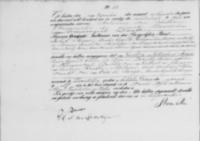 | |||||||||||||||||||||||||||||||||||
The data shown has no sources.
Matches in other publications
This person also appears in the publication: View all
- Genealogie Zwanepol
- Sluzigers (e.a.), one author has confirmed this is the same person
- Stamboom van Stipriaan
Historical events
Birthday January 31, 1762
- The temperature on January 31, 1762 was about 5.0 °C. There was 66 mm of rainWind direction mainly south-southwest. Weather type: regen geheel betrokken. Source: KNMI
- Erfstadhouder Prins Willem V (Willem Batavus) (Huis van Oranje-Nassau) was from 1751 till 1795 sovereign of the Netherlands (also known as Republiek der Zeven Verenigde Nederlanden)
- Regent Lodewijk Ernst (Hertog van Brunswijk-Wolfenbüttel) was from 1759 till 1766 sovereign of the Netherlands (also known as Republiek der Zeven Verenigde Nederlanden)
- In the year 1762: Source: Wikipedia
- January 4 » Great Britain declares war on Spain, thus entering the Seven Years' War.
- March 10 » French Huguenot Jean Calas, who had been wrongly convicted of killing his son, dies after being tortured by authorities; the event inspired Voltaire to begin a campaign for religious tolerance and legal reform.
- June 24 » Battle of Wilhelmsthal: The British-Hanoverian army of Ferdinand of Brunswick defeats French forces in Westphalia.
- July 17 » Former emperor Peter III of Russia is murdered.
- September 12 » The Sultanate of Sulu ceded Balambangan Island to the British East India Company
- October 6 » Seven Years' War: The British Capture Manila from Spain and occupy it.
Day of marriage December 6, 1789
- The temperature on December 6, 1789 was about 5.0 °C. Wind direction mainly southwest. Weather type: betrokken mist. Source: KNMI
- Erfstadhouder Prins Willem V (Willem Batavus) (Huis van Oranje-Nassau) was from 1751 till 1795 sovereign of the Netherlands (also known as Republiek der Zeven Verenigde Nederlanden)
- In the year 1789: Source: Wikipedia
- January 30 » Tây Sơn forces emerge victorious against Qing armies and liberate the capital Thăng Long.
- March 4 » In New York City, the first Congress of the United States meets, putting the United States Constitution into effect. The United States Bill of Rights is written and proposed to Congress.
- July 11 » Jacques Necker is dismissed as France's Finance Minister sparking the Storming of the Bastille.
- September 15 » The United States "Department of Foreign Affairs", established by law in July, is renamed the Department of State and given a variety of domestic duties.
- September 22 » Battle of Rymnik: Alexander Suvorov's Russian and allied army defeats superior Ottoman Empire forces.
- September 29 » The United States Department of War first establishes a regular army with a strength of several hundred men.
Day of death November 3, 1846
- The temperature on November 3, 1846 was about 12.0 °C. Wind direction mainly south east. Weather type: helder dampig. Source: KNMI
- This page is only available in Dutch.De Republiek der Verenigde Nederlanden werd in 1794-1795 door de Fransen veroverd onder leiding van bevelhebber Charles Pichegru (geholpen door de Nederlander Herman Willem Daendels); de verovering werd vergemakkelijkt door het dichtvriezen van de Waterlinie; Willem V moest op 18 januari 1795 uitwijken naar Engeland (en van daaruit in 1801 naar Duitsland); de patriotten namen de macht over van de aristocratische regenten en proclameerden de Bataafsche Republiek; op 16 mei 1795 werd het Haags Verdrag gesloten, waarmee ons land een vazalstaat werd van Frankrijk; in 3.1796 kwam er een Nationale Vergadering; in 1798 pleegde Daendels een staatsgreep, die de unitarissen aan de macht bracht; er kwam een nieuwe grondwet, die een Vertegenwoordigend Lichaam (met een Eerste en Tweede Kamer) instelde en als regering een Directoire; in 1799 sloeg Daendels bij Castricum een Brits-Russische invasie af; in 1801 kwam er een nieuwe grondwet; bij de Vrede van Amiens (1802) kreeg ons land van Engeland zijn koloniën terug (behalve Ceylon); na de grondwetswijziging van 1805 kwam er een raadpensionaris als eenhoofdig gezag, namelijk Rutger Jan Schimmelpenninck (van 31 oktober 1761 tot 25 maart 1825).
- In the year 1846: Source: Wikipedia
- The Netherlands had about 3.1 million citizens.
- April 25 » Thornton Affair: Open conflict begins over the disputed border of Texas, triggering the Mexican–American War.
- May 23 » Mexican–American War: President Mariano Paredes of Mexico unofficially declares war on the United States.
- August 10 » The Smithsonian Institution is chartered by the United States Congress after James Smithson donates $500,000.
- September 12 » Elizabeth Barrett elopes with Robert Browning.
- September 14 » Jang Bahadur and his brothers massacre about 40 members of the Nepalese palace court.
- September 23 » Astronomers Urbain Le Verrier, John Couch Adams and Johann Gottfried Galle collaborate on the discovery of Neptune.
Same birth/death day
- 1752 » Gouverneur Morris, American lawyer, politician, and diplomat, United States Ambassador to France († 1816)
- 1759 » François Devienne, French flute player and composer († 1803)
- 1769 » André-Jacques Garnerin, French balloonist and the inventor of the frameless parachute († 1823)
- 1785 » Magdalena Dobromila Rettigová, Czech cook book author († 1845)
- 1797 » Franz Schubert, Austrian pianist and composer († 1828)
- 1799 » Rodolphe Töpffer, Swiss teacher, author, painter, cartoonist, and caricaturist († 1846)
- 1794 » François-Joachim de Pierre de Bernis, French cardinal and diplomat (b. 1715)
- 1850 » William E. Shannon, Irish-born American politician (b. 1821/1822)
- 1858 » Harriet Taylor Mill, English philosopher and author (b. 1807)
- 1869 » Andreas Kalvos, Greek poet and playwright (b. 1792)
- 1890 » Ulrich Ochsenbein, Swiss lawyer and politician, 1st President of the Swiss National Council (b. 1811)
- 1891 » Louis Lucien Bonaparte, English-Italian philologist and politician (b. 1813)
About the surname De Jonge
- View the information that Genealogie Online has about the surname De Jonge.
- Check the information Open Archives has about De Jonge.
- Check the Wie (onder)zoekt wie? register to see who is (re)searching De Jonge.
The Family tree Van Dijk publication was prepared by wijlen Jan van Dijk (contact is not possible).
When copying data from this family tree, please include a reference to the origin:
wijlen Jan van Dijk, "Family tree Van Dijk", database, Genealogy Online (https://www.genealogieonline.nl/stamboom-van-dijk/I2644.php : accessed February 9, 2026), "Arrien Jacobs de Jonge (1762-1846)".
wijlen Jan van Dijk, "Family tree Van Dijk", database, Genealogy Online (https://www.genealogieonline.nl/stamboom-van-dijk/I2644.php : accessed February 9, 2026), "Arrien Jacobs de Jonge (1762-1846)".