Family tree Van Dijk » Willem van Es (1878-1965)
Personal data Willem van Es
- He was born on March 23, 1878 in Oldebroek, Gelderland, Nederland.
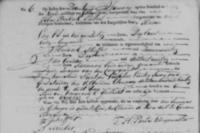
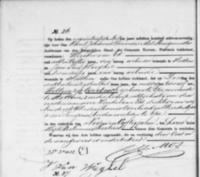
Aktenr. 41
- Profession: Arbeider.
- He died on March 4, 1965 in Oldebroek, Gelderland, Nederland, he was 86 years old.
- A child of Harmen van Es and Janna Wildeman
- This information was last updated on January 16, 2011.
Household of Willem van Es
He is married to Hendrikjen Kinket.
They got married on June 13, 1901 at Hattem, Gelderland, Nederland, he was 23 years old.
Child(ren):
- Harmen van Es 1901-1902
- Derk van Es 1902-
- Johanna van Es 1905-1917
- Geertje van Es 1906-1996
- Janna van Es 1911-1926
- Johannes van Es 1913-1997
- Willempje van Es 1914-1952
- Hendrikus van Es 1916-1919
- Willem van Es 1918-1976
- Hendrikus van Es 1920-1993
- Wichert van Es 1923-1981
- (Not public)
Timeline Willem van Es
This functionality is only available in Javascript supporting browsers.
Click on the names for more info.
Symbols used:  grandparents
 parents
 brothers/sisters
 children
grandparents
parents
brothers/sisters
children
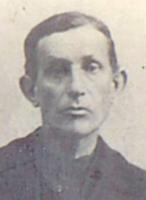

The data shown has no sources.
Historical events
Birthday March 23, 1878
- The temperature on March 23, 1878 was about 3.4 °C. There was 1 mm of rain. The air pressure was 1 kgf/m2 and came mainly from the west-northwest. The airpressure was 75 cm mercury. The atmospheric humidity was 74%. Source: KNMI
- Koning Willem III (Huis van Oranje-Nassau) was from 1849 till 1890 sovereign of the Netherlands (also known as Koninkrijk der Nederlanden)
- In The Netherlands , there was from November 3, 1877 to August 20, 1879 the cabinet Kappeijne van de Coppello, with Mr. J. Kappeijne van de Coppello (liberaal) as prime minister.
- In the year 1878: Source: Wikipedia
- The Netherlands had about 4.0 million citizens.
- February 19 » Thomas Edison patents the phonograph.
- March 15 » Restoration of the Scottish Catholic hierarchy, broken off back in 1603.
- May 14 » The last witchcraft trial held in the United States begins in Salem, Massachusetts, after Lucretia Brown, an adherent of Christian Science, accused Daniel Spofford of attempting to harm her through his mental powers.
- June 15 » Eadweard Muybridge takes a series of photographs to prove that all four feet of a horse leave the ground when it runs; the study becomes the basis of motion pictures.
- July 13 » Treaty of Berlin: The European powers redraw the map of the Balkans. Serbia, Montenegro and Romania become completely independent of the Ottoman Empire.
- December 31 » Karl Benz, working in Mannheim, Germany, filed for a patent on his first reliable two-stroke gas engine, and he was granted the patent in 1879.
Day of marriage June 13, 1901
- The temperature on June 13, 1901 was between 6.4 °C and 14.9 °C and averaged 10.1 °C. There was 7.8 hours of sunshine (47%). Source: KNMI
- Koningin Wilhelmina (Huis van Oranje-Nassau) was from 1890 till 1948 sovereign of the Netherlands (also known as Koninkrijk der Nederlanden)
- In The Netherlands , there was from July 27, 1897 to August 1, 1901 the cabinet Pierson, with Mr. N.G. Pierson (unie-liberaal) as prime minister.
- In The Netherlands , there was from August 1, 1901 to August 16, 1905 the cabinet Kuijper, with Dr. A. Kuijper (AR) as prime minister.
- In the year 1901: Source: Wikipedia
- The Netherlands had about 5.2 million citizens.
- January 1 » The British colonies of New South Wales, Queensland, Victoria, South Australia, Tasmania, and Western Australia federate as the Commonwealth of Australia; Edmund Barton is appointed the first Prime Minister.
- February 2 » Funeral of Queen Victoria.
- March 2 » The U.S. Congress passes the Platt Amendment limiting the autonomy of Cuba, as a condition of the withdrawal of American troops.
- May 9 » Australia opens its first national parliament in Melbourne.
- August 28 » Silliman University is founded in the Philippines. It is the first American private school in the country.
- November 8 » Gospel riots: Bloody clashes take place in Athens following the translation of the Gospels into demotic Greek.
Day of death March 4, 1965
- The temperature on March 4, 1965 was between -9.0 °C and 2.0 °C and averaged -3.0 °C. There was 5.2 hours of sunshine (47%). The partly clouded was. The average windspeed was 2 Bft (weak wind) and was prevailing from the east-northeast. Source: KNMI
- Koningin Juliana (Huis van Oranje-Nassau) was from September 4, 1948 till April 30, 1980 sovereign of the Netherlands (also known as Koninkrijk der Nederlanden)
- In The Netherlands , there was from July 24, 1963 to April 14, 1965 the cabinet Marijnen, with Mr. V.G.M. Marijnen (KVP) as prime minister.
- In The Netherlands , there was from April 14, 1965 to November 22, 1966 the cabinet Cals, with Mr. J.M.L.Th. Cals (KVP) as prime minister.
- In the year 1965: Source: Wikipedia
- The Netherlands had about 12.2 million citizens.
- January 9 » The Mirzapur Cadet College formally opens for academic activities in East Pakistan (now Bangladesh).
- March 19 » The wreck of the SSGeorgiana, valued at over $50,000,000 and said to have been the most powerful Confederate cruiser, is discovered by teenage diver and pioneer underwater archaeologist E. Lee Spence, exactly 102 years after its destruction.
- August 11 » Race riots (the Watts Riots) begin in the Watts area of Los Angeles, California.
- October 4 » Pope Paul VI begins the first papal visit to the Americas.
- November 9 » Several U.S. states and parts of Canada are hit by a series of blackouts lasting up to 13 hours in the Northeast blackout of 1965.
- November 14 » Vietnam War: The Battle of Ia Drang begins: The first major engagement between regular American and North Vietnamese forces.
Same birth/death day
- 1876 » Thakin Kodaw Hmaing, Burmese poet, writer and political leader († 1964)
- 1876 » Ziya Gökalp, Turkish sociologist, poet and activist († 1924)
- 1878 » Franz Schreker, Austrian composer and conductor († 1934)
- 1880 » Heikki Ritavuori, Finnish lawyer and politician, Finnish Minister of the Interior († 1922)
- 1881 » Lacey Hearn, American sprinter († 1969)
- 1881 » Roger Martin du Gard, French novelist and paleographer, Nobel Prize laureate († 1958)
- 1960 » Herbert O'Conor, American soldier, lawyer, and politician, 51st Governor of Maryland (b. 1896)
- 1963 » William Carlos Williams, American poet, short story writer, and essayist (b. 1883)
- 1969 » Nicholas Schenck, Russian-American businessman (b. 1881)
- 1972 » Charles Biro, American author and illustrator (b. 1911)
- 1972 » Harold Barrowclough, New Zealand general, lawyer, and politician, 8th Chief Justice of New Zealand (b. 1894)
- 1974 » Adolph Gottlieb, American painter and sculptor (b. 1903)
About the surname Van Es
- View the information that Genealogie Online has about the surname Van Es.
- Check the information Open Archives has about Van Es.
- Check the Wie (onder)zoekt wie? register to see who is (re)searching Van Es.
The Family tree Van Dijk publication was prepared by wijlen Jan van Dijk (contact is not possible).
When copying data from this family tree, please include a reference to the origin:
wijlen Jan van Dijk, "Family tree Van Dijk", database, Genealogy Online (https://www.genealogieonline.nl/stamboom-van-dijk/I1816.php : accessed February 16, 2026), "Willem van Es (1878-1965)".
wijlen Jan van Dijk, "Family tree Van Dijk", database, Genealogy Online (https://www.genealogieonline.nl/stamboom-van-dijk/I1816.php : accessed February 16, 2026), "Willem van Es (1878-1965)".