Family tree Van Dijk » Barend Nijhuis (1880-1956)
Personal data Barend Nijhuis
- He was born on October 18, 1880 in Hengelo, Overijssel, Nederland.
- He died on December 4, 1956 in Hengelo, Overijssel, Nederland, he was 76 years old.
- A child of Gerhardus Nijhuis and Jenneken Wilmink
- This information was last updated on March 2, 2013.
Household of Barend Nijhuis
He is married to Geertjen Anna Koers.
They got married on February 20, 1904 at Hengelo, Overijssel, Nederland, he was 23 years old.
Timeline Barend Nijhuis
This functionality is only available in Javascript supporting browsers.
Click on the names for more info.
Symbols used:  grandparents
 parents
 brothers/sisters
 children
grandparents
parents
brothers/sisters
children
Ancestors (and descendant) of Barend Nijhuis
Barend Nijhuis | ||||||||||||||||||
1904 | ||||||||||||||||||
Geertjen Anna Koers | ||||||||||||||||||
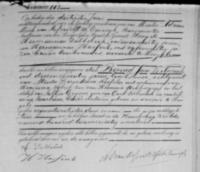
The data shown has no sources.
Historical events
Birthday October 18, 1880
- The temperature on October 18, 1880 was about 10.1 °C. The air pressure was 1 kgf/m2 and came mainly from the southwest. The airpressure was 76 cm mercury. The atmospheric humidity was 92%. Source: KNMI
- Koning Willem III (Huis van Oranje-Nassau) was from 1849 till 1890 sovereign of the Netherlands (also known as Koninkrijk der Nederlanden)
- In The Netherlands , there was from August 20, 1879 to April 23, 1883 the cabinet Van Lijnden van Sandenburg, with Mr. C.Th. baron Van Lijnden van Sandenburg (conservatief-AR) as prime minister.
- In the year 1880: Source: Wikipedia
- The Netherlands had about 4.0 million citizens.
- May 13 » In Menlo Park, New Jersey, Thomas Edison performs the first test of his electric railway.
- June 29 » France annexes Tahiti, renaming the independent Kingdom of Tahiti as "Etablissements de français de l'Océanie".
- August 14 » Construction of Cologne Cathedral, the most famous landmark in Cologne, Germany, is completed.
- September 1 » The army of Mohammad Ayub Khan is routed by the British at the Battle of Kandahar, ending the Second Anglo-Afghan War.
- September 16 » The Cornell Daily Sun prints its first issue in Ithaca, New York. The Sun is the United States' oldest, continuously-independent college daily.
- November 11 » Australian bushranger Ned Kelly is hanged at Melbourne Gaol.
Day of marriage February 20, 1904
- The temperature on February 20, 1904 was between 0.9 °C and 9.7 °C and averaged 6.2 °C. The average windspeed was 5 Bft (very strong wind) and was prevailing from the southwest. Source: KNMI
- Koningin Wilhelmina (Huis van Oranje-Nassau) was from 1890 till 1948 sovereign of the Netherlands (also known as Koninkrijk der Nederlanden)
- In The Netherlands , there was from August 1, 1901 to August 16, 1905 the cabinet Kuijper, with Dr. A. Kuijper (AR) as prime minister.
- In the year 1904: Source: Wikipedia
- The Netherlands had about 5.4 million citizens.
- February 7 » A fire begins in Baltimore, Maryland; it destroys over 1,500 buildings in 30 hours.
- May 5 » Pitching against the Philadelphia Athletics at the Huntington Avenue Grounds, Cy Young of the Boston Americans throws the first perfect game in the modern era of baseball.
- June 28 » The SSNorge runs aground on Hasselwood Rock in the North Atlantic 430 kilometres (270mi) northwest of Ireland. More than 635 people die during the sinking.
- October 4 » The IFK Göteborg football club is founded in Sweden.
- October 27 » The first underground New York City Subway line opens, later designated as the IRT Broadway–Seventh Avenue Line.
- December 7 » Comparative fuel trials begin between warships HMSSpiteful and HMSPeterel: Spiteful was the first warship powered solely by fuel oil, and the trials led to the obsolescence of coal in ships of the Royal Navy.
Day of death December 4, 1956
- The temperature on December 4, 1956 was between 8.6 °C and 10.2 °C and averaged 9.5 °C. The almost completely overcast was. The average windspeed was 4 Bft (moderate breeze) and was prevailing from the west. Source: KNMI
- Koningin Juliana (Huis van Oranje-Nassau) was from September 4, 1948 till April 30, 1980 sovereign of the Netherlands (also known as Koninkrijk der Nederlanden)
- In The Netherlands , there was from September 2, 1952 to October 13, 1956 the cabinet Drees II, with Dr. W. Drees (PvdA) as prime minister.
- In The Netherlands , there was from October 13, 1956 to December 22, 1957 the cabinet Drees III, with Dr. W. Drees (PvdA) as prime minister.
- In the year 1956: Source: Wikipedia
- The Netherlands had about 10.8 million citizens.
- January 8 » Operation Auca: Five U.S. missionaries are killed by the Huaorani of Ecuador shortly after making contact with them.
- January 28 » Elvis Presley makes his first national television appearance.
- January 30 » African-American civil rights leader Martin Luther King, Jr.'s home is bombed in retaliation for the Montgomery Bus Boycott.
- September 13 » The IBM 305 RAMAC is introduced, the first commercial computer to use disk storage.
- December 9 » Trans-Canada Air Lines Flight 810, a Canadair North Star, crashes near Hope, British Columbia, Canada, killing all 62 people on board.
- December 19 » Irish-born physician John Bodkin Adams is arrested in connection with the suspicious deaths of more than 160 patients. Eventually he is convicted only of minor charges.
Same birth/death day
- 1873 » Ivanoe Bonomi, Italian lawyer and politician, 25th Prime Minister of Italy († 1951)
- 1875 » Len Braund, English cricketer, coach, and umpire († 1955)
- 1878 » James Truslow Adams, American historian and author († 1949)
- 1880 » Ze'ev Jabotinsky, Ukrainian-Russian general, journalist, and theorist († 1940)
- 1881 » Max Gerson, German-born American physician († 1959)
- 1882 » Lucien Petit-Breton, French cyclist († 1917)
- 1945 » Thomas Hunt Morgan, American geneticist and biologist, Nobel Prize laureate (b. 1866)
- 1948 » Frank Benford, American physicist and engineer (b. 1883)
- 1954 » George Shepherd, 1st Baron Shepherd (b. 1881)
- 1955 » József Galamb, Hungarian-American engineer (b. 1881)
- 1963 » Constance Davey, Australian psychologist (b. 1882)
- 1967 » Bert Lahr, American actor (b. 1895)
About the surname Nijhuis
- View the information that Genealogie Online has about the surname Nijhuis.
- Check the information Open Archives has about Nijhuis.
- Check the Wie (onder)zoekt wie? register to see who is (re)searching Nijhuis.
The Family tree Van Dijk publication was prepared by wijlen Jan van Dijk (contact is not possible).
When copying data from this family tree, please include a reference to the origin:
wijlen Jan van Dijk, "Family tree Van Dijk", database, Genealogy Online (https://www.genealogieonline.nl/stamboom-van-dijk/I16650.php : accessed February 15, 2026), "Barend Nijhuis (1880-1956)".
wijlen Jan van Dijk, "Family tree Van Dijk", database, Genealogy Online (https://www.genealogieonline.nl/stamboom-van-dijk/I16650.php : accessed February 15, 2026), "Barend Nijhuis (1880-1956)".