Family tree Van Dijk » Hendrikje Kluinhaar (1875-1956)
Personal data Hendrikje Kluinhaar
- She was born on September 8, 1875 in Zwollerkerspel, Overijssel, Nederland.
- She died on April 5, 1956 in Heino, Overijssel, Nederland, she was 80 years old.
- A child of Reindert Kluinhaar and Reintje Bomhof
- This information was last updated on April 27, 2014.
Household of Hendrikje Kluinhaar
She is married to Berend Jan Schipper.
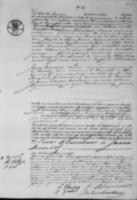
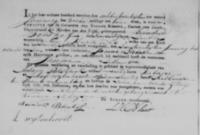
They got married on March 11, 1897 at Zwollerkerspel, Overijssel, Nederland, she was 21 years old.
Timeline Hendrikje Kluinhaar
This functionality is only available in Javascript supporting browsers.
Click on the names for more info.
Symbols used:  grandparents
 parents
 brothers/sisters
 children
grandparents
parents
brothers/sisters
children
Ancestors (and descendant) of Hendrikje Kluinhaar
Hendrikje Kluinhaar | ||||||||||||||||||
1897 | ||||||||||||||||||
Berend Jan Schipper | ||||||||||||||||||
The data shown has no sources.
Historical events
Birthday September 8, 1875
- The temperature on September 8, 1875 was about 22.9 °C. The air pressure was 3 kgf/m2 and came mainly from the east-southeast. The airpressure was 76 cm mercury. The atmospheric humidity was 53%. Source: KNMI
- Koning Willem III (Huis van Oranje-Nassau) was from 1849 till 1890 sovereign of the Netherlands (also known as Koninkrijk der Nederlanden)
- From August 27, 1874 till November 3, 1877 the Netherlands had a cabinet Heemskerk - Van Lijnden van Sandenburg with the prime ministers Mr. J. Heemskerk Azn. (conservatief) and Mr. C.Th. baron Van Lijnden van Sandenburg (AR).
- In the year 1875: Source: Wikipedia
- The Netherlands had about 4.0 million citizens.
- February 25 » Guangxu Emperor of Qing dynasty China begins his reign, under Empress Dowager Cixi's regency.
- March 15 » Archbishop of New York John McCloskey is named the first cardinal in the United States.
- April 4 » Vltava, composed by Czech composer Bedřich Smetana and also known by its German name Die Moldau, premiered in Prague.
- May 1 » Alexandra Palace reopens after being burned down in a fire in 1873.
- August 25 » Captain Matthew Webb becomes the first person to swim across the English Channel, traveling from Dover, England, to Calais, France, in 21 hours and 45 minutes.
- December 4 » Notorious New York City politician Boss Tweed escapes from prison; he is later recaptured in Spain.
Day of marriage March 11, 1897
- The temperature on March 11, 1897 was about 1.8 °C. The airpressure was 76 cm mercury. The atmospheric humidity was 100%. Source: KNMI
- Koningin Wilhelmina (Huis van Oranje-Nassau) was from 1890 till 1948 sovereign of the Netherlands (also known as Koninkrijk der Nederlanden)
- Regentes Emma (Huis van Oranje-Nassau) was from 1890 till 1898 sovereign of the Netherlands (also known as Koninkrijk der Nederlanden)
- In The Netherlands , there was from May 9, 1894 to July 27, 1897 the cabinet Roëll, with Jonkheer mr. J. Roëll (oud-liberaal) as prime minister.
- In The Netherlands , there was from July 27, 1897 to August 1, 1901 the cabinet Pierson, with Mr. N.G. Pierson (unie-liberaal) as prime minister.
- In the year 1897: Source: Wikipedia
- The Netherlands had about 5.1 million citizens.
- February 1 » Shinhan Bank, the oldest bank in South Korea, opens in Seoul.
- July 2 » British-Italian engineer Guglielmo Marconi obtains a patent for radio in London.
- July 11 » Salomon August Andrée leaves Spitsbergen to attempt to reach the North Pole by balloon. He later crashes and dies.
- July 26 » Anglo-Afghan War: The Pashtun fakir Saidullah leads an army of more than 10,000 to begin a siege of the British garrison in the Malakand Agency of the North West Frontier Province of India.
- August 31 » Thomas Edison patents the Kinetoscope, the first movie projector.
- November 1 » The first Library of Congress building opens its doors to the public; the library had previously been housed in the Congressional Reading Room in the U.S. Capitol.
Day of death April 5, 1956
- The temperature on April 5, 1956 was between -1.2 °C and 5.9 °C and averaged 2.1 °C. There was 4.9 mm of rain during 9.6 hours. There was 1.1 hours of sunshine (8%). The heavily clouded was. The average windspeed was 3 Bft (moderate breeze) and was prevailing from the west. Source: KNMI
- Koningin Juliana (Huis van Oranje-Nassau) was from September 4, 1948 till April 30, 1980 sovereign of the Netherlands (also known as Koninkrijk der Nederlanden)
- In The Netherlands , there was from September 2, 1952 to October 13, 1956 the cabinet Drees II, with Dr. W. Drees (PvdA) as prime minister.
- In The Netherlands , there was from October 13, 1956 to December 22, 1957 the cabinet Drees III, with Dr. W. Drees (PvdA) as prime minister.
- In the year 1956: Source: Wikipedia
- The Netherlands had about 10.8 million citizens.
- March 20 » Tunisia gains independence from France.
- April 26 » SSIdeal X, the world's first successful container ship, leaves Port Newark, New Jersey, for Houston, Texas.
- May 1 » A doctor in Japan reports an "epidemic of an unknown disease of the central nervous system", marking the official discovery of Minamata disease.
- July 26 » Following the World Bank's refusal to fund building the Aswan Dam, Egyptian leader Gamal Abdel Nasser nationalizes the Suez Canal, sparking international condemnation.
- October 31 » Suez Crisis: The United Kingdom and France begin bombing Egypt to force the reopening of the Suez Canal.
- December 9 » Trans-Canada Air Lines Flight 810, a Canadair North Star, crashes near Hope, British Columbia, Canada, killing all 62 people on board.
Same birth/death day
- 1869 » José María Pino Suárez, Mexican politician, Vice President of Mexico, murdered in a military coup († 1913)
- 1871 » Samuel McLaughlin, Canadian businessman and philanthropist, founded the McLaughlin Carriage Company († 1972)
- 1872 » James William McCarthy, American judge († 1939)
- 1873 » Alfred Jarry, French author and playwright († 1907)
- 1873 » David O. McKay, American religious leader, 9th President of The Church of Jesus Christ of Latter-day Saints († 1970)
- 1876 » Inez Knight Allen, Mormon missionary and Utah politician († 1937)
- 1954 » Claude Delvincourt, French pianist and composer (b. 1888)
- 1954 » Princess Märtha of Sweden, (b. 1901)
- 1956 » William Titt, British gymnast (b. 1881)
- 1958 » Ásgrímur Jónsson, Icelandic painter (b. 1876)
- 1958 » Isidora Sekulić, Serbian writer (b. 1877)
- 1958 » Prince Ferdinand of Bavaria, (b. 1884)
About the surname Kluinhaar
- View the information that Genealogie Online has about the surname Kluinhaar.
- Check the information Open Archives has about Kluinhaar.
- Check the Wie (onder)zoekt wie? register to see who is (re)searching Kluinhaar.
The Family tree Van Dijk publication was prepared by wijlen Jan van Dijk (contact is not possible).
When copying data from this family tree, please include a reference to the origin:
wijlen Jan van Dijk, "Family tree Van Dijk", database, Genealogy Online (https://www.genealogieonline.nl/stamboom-van-dijk/I15482.php : accessed January 31, 2026), "Hendrikje Kluinhaar (1875-1956)".
wijlen Jan van Dijk, "Family tree Van Dijk", database, Genealogy Online (https://www.genealogieonline.nl/stamboom-van-dijk/I15482.php : accessed January 31, 2026), "Hendrikje Kluinhaar (1875-1956)".