Family tree Van Dijk » Lubbigje van Dijk (1869-1947)
Personal data Lubbigje van Dijk
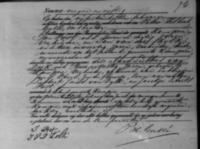
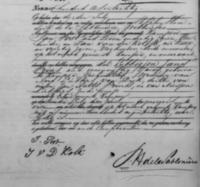
- She was born on June 26, 1869 in Kampen, Overijssel, Nederland.
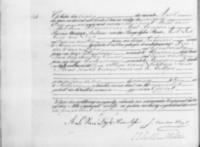
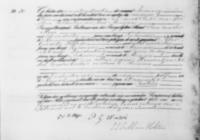
Aktenr. 243
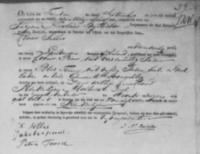
- She died on January 24, 1947 in Kamperveen, Overijssel, Nederland, she was 77 years old.
- A child of Gerrit Aarts van Dijk and Jentien van de Stege
- This information was last updated on December 16, 2010.
Household of Lubbigje van Dijk
She is married to Hendrik Schoonhoven.
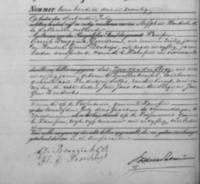
They got married on June 9, 1898 at Kamperveen, Overijssel, Nederland, she was 28 years old.
Child(ren):
- Albertus Schoonhoven 1903-1995
Timeline Lubbigje van Dijk
This functionality is only available in Javascript supporting browsers.
Click on the names for more info.
Symbols used:  grandparents
 parents
 brothers/sisters
 children
grandparents
parents
brothers/sisters
children
Ancestors (and descendant) of Lubbigje van Dijk
Lubbigje van Dijk | ||||||||||||||||||||||||||||||||||
1898 | ||||||||||||||||||||||||||||||||||
Hendrik Schoonhoven | ||||||||||||||||||||||||||||||||||
The data shown has no sources.
Matches in other publications
This person also appears in the publication: View all
- Genealogy Keijzer
- Stamboom Morseld-Ten Cate
- Stamboom Van Weeghel, one author has confirmed this is the same person
Historical events
Birthday June 26, 1869
- The temperature on June 26, 1869 was about 12.2 °C. The air pressure was 1 kgf/m2 and came mainly from the north-northeast. The airpressure was 76 cm mercury. The atmospheric humidity was 86%. Source: KNMI
- Koning Willem III (Huis van Oranje-Nassau) was from 1849 till 1890 sovereign of the Netherlands (also known as Koninkrijk der Nederlanden)
- From June 4, 1868 till January 4, 1871 the Netherlands had a cabinet Van Bosse - Fock with the prime ministers Mr. P.P. van Bosse (liberaal) and Mr. C. Fock (liberaal).
- In the year 1869: Source: Wikipedia
- The Netherlands had about 3.6 million citizens.
- February 5 » The largest alluvial gold nugget in history, called the "Welcome Stranger", is found in Moliagul, Victoria, Australia.
- March 24 » The last of Titokowaru's forces surrendered to the New Zealand government, ending his uprising.
- April 28 » Chinese and Irish laborers for the Central Pacific Railroad working on the First Transcontinental Railroad lay ten miles of track in one day, a feat which has never been matched.
- May 4 » The Naval Battle of Hakodate is fought in Japan.
- August 2 » Japan's Edo society class system is abolished as part of the Meiji Restoration reforms.
- November 22 » In Dumbarton, Scotland, the clipper Cutty Sark is launched
Day of marriage June 9, 1898
- The temperature on June 9, 1898 was about 22.4 °C. The airpressure was 76 cm mercury. The atmospheric humidity was 63%. Source: KNMI
- Koningin Wilhelmina (Huis van Oranje-Nassau) was from 1890 till 1948 sovereign of the Netherlands (also known as Koninkrijk der Nederlanden)
- Regentes Emma (Huis van Oranje-Nassau) was from 1890 till 1898 sovereign of the Netherlands (also known as Koninkrijk der Nederlanden)
- In The Netherlands , there was from July 27, 1897 to August 1, 1901 the cabinet Pierson, with Mr. N.G. Pierson (unie-liberaal) as prime minister.
- In the year 1898: Source: Wikipedia
- The Netherlands had about 5.1 million citizens.
- June 22 » Spanish–American War: In a chaotic operation, 6,000 men of the U.S. Fifth Army Corps begins landing at Daiquirí, Cuba, about 16 miles (26km) east of Santiago de Cuba. Lt. Gen. Arsenio Linares y Pombo of the Spanish Army outnumbers them two-to-one, but does not oppose the landings.
- July 3 » A Spanish squadron, led by Pascual Cervera y Topete, is defeated by an American squadron under William T. Sampson in the Battle of Santiago de Cuba.
- August 13 » Spanish–American War: Spanish and American forces engage in a mock battle for Manila, after which the Spanish commander surrendered in order to keep the city out of Filipino rebel hands.
- August 24 » Count Muravyov, Foreign Minister of Russia presents a rescript that convoked the First Hague Peace Conference.
- August 25 » Seven hundred Greek civilians, 17 British guards and the British Consul of Crete are killed by a Turkish mob in Heraklion, Greece.
- October 18 » The United States takes possession of Puerto Rico from Spain.
Day of death January 24, 1947
- The temperature on January 24, 1947 was between -8.0 °C and -2.2 °C and averaged -5.2 °C. There was 0.1 mm of rain. There was 6.1 hours of sunshine (71%). The average windspeed was 3 Bft (moderate breeze) and was prevailing from the northeast. Source: KNMI
- Koningin Wilhelmina (Huis van Oranje-Nassau) was from 1890 till 1948 sovereign of the Netherlands (also known as Koninkrijk der Nederlanden)
- In The Netherlands , there was from July 3, 1946 to August 7, 1948 the cabinet Beel I, with Dr. L.J.M. Beel (KVP) as prime minister.
- In the year 1947: Source: Wikipedia
- The Netherlands had about 9.5 million citizens.
- January 15 » The Black Dahlia murder: the dismembered corpse of Elizabeth Short was found in Los Angeles.
- April 15 » Jackie Robinson debuts for the Brooklyn Dodgers, breaking baseball's color line.
- July 6 » Referendum held in Sylhet to decide its fate in the Partition of India.
- October 26 » Kashmir conflict: The Maharaja of Kashmir and Jammu signs the Instrument of Accession with India.
- November 17 » The Screen Actors Guild implements an anti-Communist loyalty oath.
- November 18 » The Ballantyne's Department Store fire in Christchurch, New Zealand, kills 41; it is the worst fire disaster in the history of New Zealand.
Same birth/death day
- 1865 » Bernard Berenson, Lithuanian-American historian and author († 1959)
- 1866 » George Herbert, 5th Earl of Carnarvon, English archaeologist and banker († 1923)
- 1869 » Martin Andersen Nexø, Danish journalist and author († 1954)
- 1878 » Leopold Löwenheim, German mathematician and logician († 1957)
- 1880 » Mitchell Lewis, American actor († 1956)
- 1881 » Ya'akov Cohen, Israeli linguist, poet, and playwright († 1960)
- 1939 » Maximilian Bircher-Benner, Swiss physician, created Muesli (b. 1867)
- 1943 » John Burns, English trade union leader and politician, Secretary of State for Business, Innovation and Skills (b. 1858)
- 1960 » Edwin Fischer, Swiss pianist and conductor (b. 1886)
- 1961 » Alfred Carlton Gilbert, American pole vaulter and businessman, founded the A. C. Gilbert Company (b. 1884)
- 1962 » André Lhote, French sculptor and painter (b. 1885)
- 1962 » Stanley Lord, English naval captain (b. 1877)
About the surname Van Dijk
- View the information that Genealogie Online has about the surname Van Dijk.
- Check the information Open Archives has about Van Dijk.
- Check the Wie (onder)zoekt wie? register to see who is (re)searching Van Dijk.
The Family tree Van Dijk publication was prepared by wijlen Jan van Dijk (contact is not possible).
When copying data from this family tree, please include a reference to the origin:
wijlen Jan van Dijk, "Family tree Van Dijk", database, Genealogy Online (https://www.genealogieonline.nl/stamboom-van-dijk/I1318.php : accessed February 17, 2026), "Lubbigje van Dijk (1869-1947)".
wijlen Jan van Dijk, "Family tree Van Dijk", database, Genealogy Online (https://www.genealogieonline.nl/stamboom-van-dijk/I1318.php : accessed February 17, 2026), "Lubbigje van Dijk (1869-1947)".