Family tree Uriot » Cornelis Wilhelm Hissink (1883-1946)
Personal data Cornelis Wilhelm Hissink
- He was born on November 26, 1883 in Batavia Nederlands Indie.
- Profession: Directeur van een N.V..
- He died on October 26, 1946 in Amsterdam, he was 62 years old.Source 1
- He is buried on October 30, 1946 in Nieuwe Ooster begraafplaats Amsterdam. Grafnummer:59-1-0027.
- A child of Henri Hissink and Catharina Suzanne Meijer
- This information was last updated on January 28, 2009.
Household of Cornelis Wilhelm Hissink
He is married to Christina Charlotte Uriot.
They got married on November 7, 1922 at Amsterdam, he was 38 years old.Source 2
Child(ren):
The couple were divorced on November 3, 1932.Source 3
Oorzaak: Scheiding
Timeline Cornelis Wilhelm Hissink
This functionality is only available in Javascript supporting browsers.
Click on the names for more info.
Symbols used:  grandparents
 parents
 brothers/sisters
 children
grandparents
parents
brothers/sisters
children
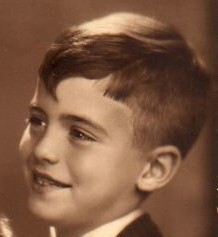
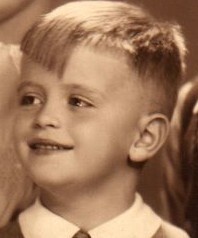
Image(s) Cornelis Wilhelm Hissink

Ancestors (and descendant) of Cornelis Wilhelm Hissink
Cornelis Wilhelm Hissink | ||||||||||||||||||||||||||||||||||||
1922 | ||||||||||||||||||||||||||||||||||||
Christina Charlotte Uriot | ||||||||||||||||||||||||||||||||||||
Sources
Matches in other publications
This person also appears in the publication: View all
Historical events
Birthday November 26, 1883
- The temperature on November 26, 1883 was about 10.2 °C. There was 3 mm of rain. The air pressure was 12 kgf/m2 and came mainly from the south-southwest. The airpressure was 74 cm mercury. The atmospheric humidity was 79%. Source: KNMI
- Koning Willem III (Huis van Oranje-Nassau) was from 1849 till 1890 sovereign of the Netherlands (also known as Koninkrijk der Nederlanden)
- In The Netherlands , there was from August 20, 1879 to April 23, 1883 the cabinet Van Lijnden van Sandenburg, with Mr. C.Th. baron Van Lijnden van Sandenburg (conservatief-AR) as prime minister.
- In The Netherlands , there was from April 23, 1884 to April 21, 1888 the cabinet Heemskerk, with Mr. J. Heemskerk Azn. (conservatief) as prime minister.
- In the year 1883: Source: Wikipedia
- The Netherlands had about 4.5 million citizens.
- January 19 » The first electric lighting system employing overhead wires, built by Thomas Edison, begins service at Roselle, New Jersey.
- July 10 » War of the Pacific: Chileans led by Alejandro Gorostiaga defeat Andrés Avelino Cáceres's Peruvuan army at the Battle of Huamachuco, hastening the end of the war.
- August 25 » France and Viet Nam sign the Treaty of Huế, recognizing a French protectorate over Annam and Tonkin.
- August 26 » The 1883 eruption of Krakatoa begins its final, paroxysmal, stage.
- September 8 » The Northern Pacific Railway (reporting mark NP) was completed in a ceremony at Gold Creek, Montana. Former president Ulysses S. Grant drove in the final "golden spike" in an event attended by rail and political luminaries.
- December 21 » The Royal Canadian Dragoons and The Royal Canadian Regiment, the first Permanent Force cavalry and infantry regiments of the Canadian Army, are formed.
Day of marriage November 7, 1922
- The temperature on November 7, 1922 was between 4.2 °C and 9.5 °C and averaged 7.6 °C. There was 4.3 mm of rain. There was 0.4 hours of sunshine (4%). The average windspeed was 4 Bft (moderate breeze) and was prevailing from the southwest. Source: KNMI
- Koningin Wilhelmina (Huis van Oranje-Nassau) was from 1890 till 1948 sovereign of the Netherlands (also known as Koninkrijk der Nederlanden)
- In The Netherlands , there was from September 9, 1918 to September 18, 1922 the cabinet Ruys de Beerenbrouck I, with Jonkheer mr. Ch.J.M. Ruys de Beerenbrouck (RKSP) as prime minister.
- In The Netherlands , there was from September 19, 1922 to August 4, 1925 the cabinet Ruys de Beerenbrouck II, with Jonkheer mr. Ch.J.M. Ruys de Beerenbrouck (RKSP) as prime minister.
- In the year 1922: Source: Wikipedia
- The Netherlands had about 7.0 million citizens.
- April 5 » The American Birth Control League, forerunner of Planned Parenthood, is incorporated.
- July 15 » Japanese Communist Party is established in Japan.
- October 18 » The British Broadcasting Company (later Corporation) is founded by a consortium, to establish a nationwide network of radio transmitters to provide a national broadcasting service.
- October 29 » King Victor Emmanuel III of Italy appoints Benito Mussolini as Prime Minister.
- October 31 » Benito Mussolini is made Prime Minister of Italy
- November 14 » The British Broadcasting Company begins radio service in the United Kingdom.
Day of death October 26, 1946
- The temperature on October 26, 1946 was between -0.9 °C and 7.8 °C and averaged 3.4 °C. There was 2.8 mm of rain during 2.7 hours. There was 2.0 hours of sunshine (20%). The average windspeed was 4 Bft (moderate breeze) and was prevailing from the south east. Source: KNMI
- Koningin Wilhelmina (Huis van Oranje-Nassau) was from 1890 till 1948 sovereign of the Netherlands (also known as Koninkrijk der Nederlanden)
- From June 24, 1945 till July 3, 1946 the Netherlands had a cabinet Schermerhorn - Drees with the prime ministers Prof. ir. W. Schermerhorn (VDB) and W. Drees (PvdA).
- In The Netherlands , there was from July 3, 1946 to August 7, 1948 the cabinet Beel I, with Dr. L.J.M. Beel (KVP) as prime minister.
- In the year 1946: Source: Wikipedia
- The Netherlands had about 9.3 million citizens.
- February 12 » African American United States Army veteran Isaac Woodard is severely beaten by a South Carolina police officer to the point where he loses his vision in both eyes. The incident later galvanizes the civil rights movement and partially inspires Orson Welles' film Touch of Evil.
- February 15 » ENIAC, the first electronic general-purpose computer, is formally dedicated at the University of Pennsylvania in Philadelphia.
- March 5 » Cold War: Winston Churchill coins the phrase "Iron Curtain" in his speech at Westminster College, Missouri.
- April 29 » The International Military Tribunal for the Far East convenes and indicts former Prime Minister of Japan Hideki Tojo and 28 former Japanese leaders for war crimes.
- May 25 » The parliament of Transjordan makes Abdullah I of Jordan their Emir.
- August 4 » An earthquake of magnitude 8.0 hits northern Dominican Republic. One hundred are killed and 20,000 are left homeless.
Day of burial October 30, 1946
- The temperature on October 30, 1946 was between 1.5 °C and 9.5 °C and averaged 5.0 °C. There was 4.3 hours of sunshine (44%). The average windspeed was 3 Bft (moderate breeze) and was prevailing from the northeast. Source: KNMI
- Koningin Wilhelmina (Huis van Oranje-Nassau) was from 1890 till 1948 sovereign of the Netherlands (also known as Koninkrijk der Nederlanden)
- From June 24, 1945 till July 3, 1946 the Netherlands had a cabinet Schermerhorn - Drees with the prime ministers Prof. ir. W. Schermerhorn (VDB) and W. Drees (PvdA).
- In The Netherlands , there was from July 3, 1946 to August 7, 1948 the cabinet Beel I, with Dr. L.J.M. Beel (KVP) as prime minister.
- In the year 1946: Source: Wikipedia
- The Netherlands had about 9.3 million citizens.
- January 25 » United Nations Security Council Resolution 1 relating to Military Staff Committee is adopted.
- April 20 » The League of Nations officially dissolves, giving most of its power to the United Nations.
- May 7 » Tokyo Telecommunications Engineering (later renamed Sony) is founded.
- June 2 » Birth of the Italian Republic: In a referendum, Italians vote to turn Italy from a monarchy into a Republic. After the referendum, King Umberto II of Italy is exiled.
- June 27 » In the Canadian Citizenship Act, the Parliament of Canada establishes the definition of Canadian citizenship.
- December 12 » United Nations Security Council Resolution 13 relating to acceptance of Siam to United Nations is adopted.
Same birth/death day
- 1876 » Willis Carrier, American engineer, invented air conditioning († 1950)
- 1878 » Major Taylor, American cyclist († 1932)
- 1885 » Heinrich Brüning, German lieutenant, economist, and politician, Chancellor of Germany († 1970)
- 1888 » Ford Beebe, American director and screenwriter († 1978)
- 1889 » Albert Dieudonné, French actor, director, and screenwriter († 1976)
- 1891 » Scott Bradley, American pianist, composer, and conductor († 1977)
- 1944 » Hiroyoshi Nishizawa, Japanese lieutenant and pilot (b. 1920)
- 1944 » Princess Beatrice of the United Kingdom (b. 1857)
- 1945 » Aleksey Krylov, Russian mathematician and engineer (b. 1863)
- 1945 » Paul Pelliot, French sinologist and explorer (b. 1878)
- 1946 » Ioannis Rallis, Greek lawyer and politician, Prime Minister of Greece (b. 1878)
- 1947 » Edwin Savage, English priest and author (b. 1862)
About the surname Hissink
- View the information that Genealogie Online has about the surname Hissink.
- Check the information Open Archives has about Hissink.
- Check the Wie (onder)zoekt wie? register to see who is (re)searching Hissink.
The Family tree Uriot publication was prepared by L. Uriot.
When copying data from this family tree, please include a reference to the origin:
L. Uriot, "Family tree Uriot", database, Genealogy Online (https://www.genealogieonline.nl/stamboom-uriot/I983.php : accessed March 3, 2026), "Cornelis Wilhelm Hissink (1883-1946)".
L. Uriot, "Family tree Uriot", database, Genealogy Online (https://www.genealogieonline.nl/stamboom-uriot/I983.php : accessed March 3, 2026), "Cornelis Wilhelm Hissink (1883-1946)".