Family tree Smith » Jan van Eck (1906-1970)
Personal data Jan van Eck
- He was born on September 19, 1906 in Semarang.Source 1
 Attention: Was younger than 16 years (13) when child (Louis Johan van Eck) was born (October 18, 1919). Attention: Age at marriage (February 26, 1919) below 16 years (12).
 - Resident:
- from 1933 till 1934: Berkelschelaan 112, Rotterdam.
- starting 1934: Dortschestraatweg 25, Ijsselmonde.
- He died on June 27, 1970 in Rotterdam, he was 63 years old.
- This information was last updated on February 1, 2024.
Household of Jan van Eck
He is married to Fetty de Boer.
They got married on February 26, 1919 at Soerabaja, he was 12 years old.Source 2
Child(ren):
Image(s) Jan van Eck

Ancestors (and descendant) of Jan van Eck
Jan van Eck | ||||||||||||||||||||||||||||||||||||
1919 | ||||||||||||||||||||||||||||||||||||
Fetty de Boer 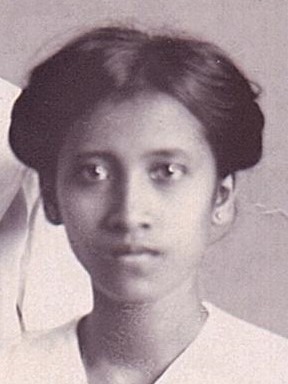 | ||||||||||||||||||||||||||||||||||||
Sources
Historical events
Birthday September 19, 1906
- The temperature on September 19, 1906 was between 9.8 °C and 14.6 °C and averaged 11.9 °C. There was 1.4 mm of rain. The average windspeed was 2 Bft (weak wind) and was prevailing from the east-northeast. Source: KNMI
- Koningin Wilhelmina (Huis van Oranje-Nassau) was from 1890 till 1948 sovereign of the Netherlands (also known as Koninkrijk der Nederlanden)
- In The Netherlands , there was from August 17, 1905 to February 11, 1908 the cabinet De Meester, with Mr. Th. de Meester (unie-liberaal) as prime minister.
- In the year 1906: Source: Wikipedia
- The Netherlands had about 5.5 million citizens.
- February 18 » Édouard de Laveleye forms the Belgian Olympic Committee in Brussels.
- June 25 » Pittsburgh, Pennsylvania millionaire Harry Thaw shoots and kills prominent architect Stanford White.
- July 11 » Murder of Grace Brown by Chester Gillette in the United States, inspiration for Theodore Dreiser's An American Tragedy.
- September 7 » Alberto Santos-Dumont flies his 14-bis aircraft at Bagatelle, France for the first time successfully.
- September 13 » The Santos-Dumont 14-bis makes a short hop, the first flight of a fixed-wing aircraft in Europe.
- December 10 » U.S. President Theodore Roosevelt wins the Nobel Peace Prize for his role in the mediation of the Russo-Japanese War, becoming the first American to win a Nobel Prize.
Day of marriage February 26, 1919
- The temperature on February 26, 1919 was between -1.5 °C and 7.1 °C and averaged 2.4 °C. There was 1.4 mm of rain. There was 2.9 hours of sunshine (27%). The average windspeed was 3 Bft (moderate breeze) and was prevailing from the south east. Source: KNMI
- Koningin Wilhelmina (Huis van Oranje-Nassau) was from 1890 till 1948 sovereign of the Netherlands (also known as Koninkrijk der Nederlanden)
- In The Netherlands , there was from September 9, 1918 to September 18, 1922 the cabinet Ruys de Beerenbrouck I, with Jonkheer mr. Ch.J.M. Ruys de Beerenbrouck (RKSP) as prime minister.
- In the year 1919: Source: Wikipedia
- The Netherlands had about 6.7 million citizens.
- March 2 » The first Communist International meets in Moscow.
- April 10 » Mexican Revolution leader Emiliano Zapata is ambushed and shot dead by government forces in Morelos.
- May 15 » The Winnipeg general strike begins. By 11:00, almost the whole working population of Winnipeg had walked off the job.
- June 2 » Anarchists simultaneously set off bombs in eight separate U.S. cities.
- July 11 » The eight-hour day and free Sunday become law for workers in the Netherlands.
- August 8 » The Anglo-Afghan Treaty of 1919 is signed. It establishes peaceful relations between Afghanistan and the UK, and confirms the Durand line as the mutual border. In return, the UK is no longer obligated to subsidize the Afghan government.
Day of death June 27, 1970
- The temperature on June 27, 1970 was between 14.6 °C and 29.1 °C and averaged 20.7 °C. There was 27.4 mm of rain during 3.8 hours. There was 6.4 hours of sunshine (38%). The partly or heavily clouded was. The average windspeed was 2 Bft (weak wind) and was prevailing from the south. Source: KNMI
- Koningin Juliana (Huis van Oranje-Nassau) was from September 4, 1948 till April 30, 1980 sovereign of the Netherlands (also known as Koninkrijk der Nederlanden)
- In The Netherlands , there was from April 5, 1967 to Tuesday, July 6, 1971 the cabinet De Jong, with P.J.S. de Jong (KVP) as prime minister.
- In the year 1970: Source: Wikipedia
- The Netherlands had about 13.0 million citizens.
- March 4 » French submarine Eurydice explodes underwater, resulting in the loss of the entire 57-man crew.
- April 24 » The Gambia becomes a republic within the Commonwealth of Nations, with Dawda Jawara as its first President.
- May 14 » Andreas Baader is freed from custody by Ulrike Meinhof, Gudrun Ensslin and others, a pivotal moment in the formation of the Red Army Faction.
- May 26 » The Soviet Tupolev Tu-144 becomes the first commercial transport to exceed Mach 2.
- August 24 » Vietnam War protesters bomb Sterling Hall at the University of Wisconsin–Madison, leading to an international manhunt for the perpetrators.
- October 9 » The Khmer Republic is proclaimed in Cambodia.
Same birth/death day
- 1905 » Judith Auer, German World War II resistance fighter († 1944)
- 1905 » Leon Jaworski, American lawyer, co-founded Fulbright & Jaworski († 1982)
- 1907 » Lewis F. Powell, Jr., American lawyer and jurist († 1998)
- 1908 » Paul Bénichou, French historian, author, and critic († 2001)
- 1908 » Robert Lecourt, French lawyer, judge, and politician, Lord Chancellor of France († 2004)
- 1908 » Tatsuo Shimabuku, Japanese martial artist, founded Isshin-ryū († 1975)
- 1957 » Hermann Buhl, Austrian soldier and mountaineer (b. 1924)
- 1960 » Lottie Dod, English tennis player, golfer, and archer (b. 1871)
- 1962 » Paul Viiding, Estonian author, poet, and critic (b. 1904)
- 1967 » Jaan Lattik, Estonian pastor and politician, 9th Minister of Foreign Affairs of Estonia (b. 1878)
- 1970 » Daniel Kinsey, American hurdler and scholar (b. 1902)
- 1975 » G.I. Taylor, English mathematician and physicist (b. 1886)
About the surname Van Eck
- View the information that Genealogie Online has about the surname Van Eck.
- Check the information Open Archives has about Van Eck.
- Check the Wie (onder)zoekt wie? register to see who is (re)searching Van Eck.
The Family tree Smith publication was prepared by Bob Smith.
When copying data from this family tree, please include a reference to the origin:
Bob Smith, "Family tree Smith", database, Genealogy Online (https://www.genealogieonline.nl/stamboom-smith/I611.php : accessed January 6, 2026), "Jan van Eck (1906-1970)".
Bob Smith, "Family tree Smith", database, Genealogy Online (https://www.genealogieonline.nl/stamboom-smith/I611.php : accessed January 6, 2026), "Jan van Eck (1906-1970)".