Family tree Severijn » Helena Maria Krenning (1886-1932)
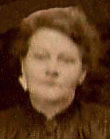
Personal data Helena Maria Krenning
- She was born on June 22, 1886 in Abcoude-Bambrugge.
- She died on May 21, 1932 in Zeist, she was 45 years old.
- A child of Willem Krenning and Jacoba Cornelia Severijn
Household of Helena Maria Krenning
She is married to Jan Johannes van Straalen.
They got married on August 4, 1909 at Abcoude-Baambrugge, she was 23 years old.
Child(ren):
- Dirk Willem van Straalen 1913-
Timeline Helena Maria Krenning
This functionality is only available in Javascript supporting browsers.
Click on the names for more info.
Symbols used:  grandparents
 parents
 brothers/sisters
 children
grandparents
parents
brothers/sisters
children
Ancestors (and descendant) of Helena Maria Krenning
Helena Maria Krenning | ||||||||||||||||||||||||||||||||||||
1909 | ||||||||||||||||||||||||||||||||||||
Jan Johannes van Straalen | ||||||||||||||||||||||||||||||||||||
The data shown has no sources.
Matches in other publications
This person also appears in the publication: View all
Historical events
Birthday June 22, 1886
- The temperature on June 22, 1886 was about 12.5 °C. There was 0.8 mm of rain. The air pressure was 2 kgf/m2 and came mainly from the west-southwest. The airpressure was 76 cm mercury. The atmospheric humidity was 95%. Source: KNMI
- Koning Willem III (Huis van Oranje-Nassau) was from 1849 till 1890 sovereign of the Netherlands (also known as Koninkrijk der Nederlanden)
- In The Netherlands , there was from April 23, 1884 to April 21, 1888 the cabinet Heemskerk, with Mr. J. Heemskerk Azn. (conservatief) as prime minister.
- In the year 1886: Source: Wikipedia
- The Netherlands had about 4.5 million citizens.
- January 29 » Karl Benz patents the first successful gasoline-driven automobile.
- May 8 » Pharmacist John Pemberton first sells a carbonated beverage named "Coca-Cola" as a patent medicine.
- June 26 » Henri Moissan isolated elemental Fluorine for the first time.
- June 30 » The first transcontinental train trip across Canada departs from Montreal, Quebec. It arrives in Port Moody, British Columbia on July 4.
- July 3 » Karl Benz officially unveils the Benz Patent-Motorwagen, the first purpose-built automobile.
- August 31 » The 7.0 Mw Charleston earthquake affects southeastern South Carolina with a maximum Mercalli intensity of X (Extreme). Sixty people killed with damage estimated at $5–6 million.
Day of marriage August 4, 1909
- The temperature on August 4, 1909 was between 10.9 °C and 18.6 °C and averaged 14.2 °C. There was 5.1 hours of sunshine (33%). The average windspeed was 2 Bft (weak wind) and was prevailing from the west. Source: KNMI
- Koningin Wilhelmina (Huis van Oranje-Nassau) was from 1890 till 1948 sovereign of the Netherlands (also known as Koninkrijk der Nederlanden)
- In The Netherlands , there was from February 12, 1908 to August 29, 1913 the cabinet Heemskerk, with Mr. Th. Heemskerk (AR) as prime minister.
- In the year 1909: Source: Wikipedia
- The Netherlands had about 5.8 million citizens.
- January 9 » Ernest Shackleton, leading the Nimrod Expedition to the South Pole, plants the British flag 97 nautical miles (180km; 112mi) from the South Pole, the farthest anyone had ever reached at that time.
- January 23 » RMSRepublic, a passenger ship of the White Star Line, becomes the first ship to use the CQD distress signal after colliding with another ship, the SS Florida, off the Massachusetts coastline, an event that kills six people. The Republic sinks the next day.
- January 28 » United States troops leave Cuba with the exception of Guantanamo Bay Naval Base after being there since the Spanish–American War.
- September 30 » The Cunard Line's RMS Mauretania makes a record-breaking westbound crossing of the Atlantic, that will not be bettered for 20 years.
- October 26 » An Jung-geun assassinates Japan's Resident-General of Korea.
- December 10 » Selma Lagerlöf becomes the first female writer to win the Nobel Prize in Literature.
Day of death May 21, 1932
- The temperature on May 21, 1932 was between 14.6 °C and 25.4 °C and averaged 19.6 °C. There was 8.7 hours of sunshine (55%). The average windspeed was 4 Bft (moderate breeze) and was prevailing from the south. Source: KNMI
- Koningin Wilhelmina (Huis van Oranje-Nassau) was from 1890 till 1948 sovereign of the Netherlands (also known as Koninkrijk der Nederlanden)
- In The Netherlands , there was from August 10, 1929 to May 26, 1933 the cabinet Ruys de Beerenbrouck III, with Jonkheer mr. Ch.J.M. Ruys de Beerenbrouck (RKSP) as prime minister.
- In the year 1932: Source: Wikipedia
- The Netherlands had about 8.1 million citizens.
- March 19 » The Sydney Harbour Bridge is opened.
- June 4 » Marmaduke Grove and other Chilean military officers lead a coup d'état establishing the short-lived Socialist Republic of Chile.
- June 17 » Bonus Army: Around a thousand World War I veterans amass at the United States Capitol as the U.S. Senate considers a bill that would give them certain benefits.
- August 10 » A 5.1 kilograms (11lb) chondrite-type meteorite breaks into at least seven pieces and lands near the town of Archie in Cass County, Missouri.
- October 15 » Tata Airlines (later to become Air India) makes its first flight.
- November 8 » Franklin D. Roosevelt is elected as the 32nd President of the United States, defeating incumbent president Herbert Hoover.
Same birth/death day
- 1884 » James Rector, American sprinter and lawyer († 1949)
- 1885 » Milan Vidmar, Slovenian engineer and chess player († 1962)
- 1887 » Julian Huxley, English biologist and academic († 1975)
- 1888 » Harold Hitz Burton, American lawyer and politician, 45th Mayor of Cleveland († 1964)
- 1890 » Aleksander Warma, Estonian commander and politician, 4th Prime Minister of Estonia in exile († 1970)
- 1891 » Franz Alexander, Hungarian psychoanalyst and physician († 1964)
- 1925 » Hidesaburō Ueno, Japanese agriculturalist, guardian of Hachikō (b. 1871)
- 1926 » Ronald Firbank, English-Italian author (b. 1886)
- 1929 » Archibald Primrose, 5th Earl of Rosebery, English politician, Prime Minister of the United Kingdom (b. 1847)
- 1932 » Marcel Boulenger, French fencer and author (b. 1873)
- 1935 » Hugo de Vries, Dutch botanist and geneticist (b. 1848)
- 1935 » Jane Addams, American activist and author, co-founded Hull House, Nobel Prize laureate (b. 1860)
About the surname Krenning
- View the information that Genealogie Online has about the surname Krenning.
- Check the information Open Archives has about Krenning.
- Check the Wie (onder)zoekt wie? register to see who is (re)searching Krenning.
The Family tree Severijn publication was prepared by Gijsbertus Cornelis (Bert) Severijn.
When copying data from this family tree, please include a reference to the origin:
Gijsbertus Cornelis (Bert) Severijn, "Family tree Severijn", database, Genealogy Online (https://www.genealogieonline.nl/stamboom-severijn/I573.php : accessed March 5, 2026), "Helena Maria Krenning (1886-1932)".
Gijsbertus Cornelis (Bert) Severijn, "Family tree Severijn", database, Genealogy Online (https://www.genealogieonline.nl/stamboom-severijn/I573.php : accessed March 5, 2026), "Helena Maria Krenning (1886-1932)".