Family tree Seekles, vd Burgt, vd Ende, Janssen en Kwartiestaat van Petra van de Burgt » Hendricus Willem van der Burgt (1880-1942)
Personal data Hendricus Willem van der Burgt
- He was born on February 19, 1880 in Escharen, Noord-Brabant, Nederland.
- He died on June 26, 1942 in Wanroy, Noord-Brabant, Nederland, he was 62 years old.
- A child of Mathijs Marianus van der Burgt and Petronella Jans
- This information was last updated on January 6, 2010.
Household of Hendricus Willem van der Burgt
He is married to Antonetta Johanna Cruijsen.
They got married on June 26, 1906 at Escharen, Noord-Brabant, Nederland, he was 26 years old.
Child(ren):
- Francisca Petronella van der Burgt 1907-1989
- Petronella Geertuda van der Burgt 1908-1996
- Gertruda Johanna van der Burgt 1910-1998
- Johanna Maria van der Burgt 1911-1992
- Constantius Albertus Maria van der Burgt 1918-1999
- Alberta Cornelia Maria van der Burgt 1919-2013
Timeline Hendricus Willem van der Burgt
This functionality is only available in Javascript supporting browsers.
Click on the names for more info.
Symbols used:  grandparents
 parents
 brothers/sisters
 children
grandparents
parents
brothers/sisters
children
Ancestors (and descendant) of Hendricus Willem van der Burgt
Hendricus Willem van der Burgt 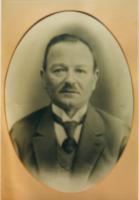 | |||||||||||||||||||||||||||||||||||||||||||||||||||||||||||||||||||||||||
1906 | |||||||||||||||||||||||||||||||||||||||||||||||||||||||||||||||||||||||||
Antonetta Johanna Cruijsen 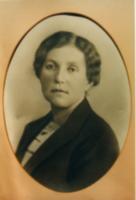 | |||||||||||||||||||||||||||||||||||||||||||||||||||||||||||||||||||||||||
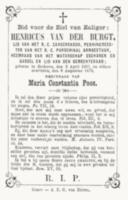
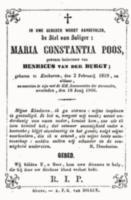

The data shown has no sources.
Historical events
Birthday February 19, 1880
- The temperature on February 19, 1880 was about 11.1 °C. There was 0.7 mm of rain. The air pressure was 27 kgf/m2 and came mainly from the south-southwest. The airpressure was 75 cm mercury. The atmospheric humidity was 87%. Source: KNMI
- Koning Willem III (Huis van Oranje-Nassau) was from 1849 till 1890 sovereign of the Netherlands (also known as Koninkrijk der Nederlanden)
- In The Netherlands , there was from August 20, 1879 to April 23, 1883 the cabinet Van Lijnden van Sandenburg, with Mr. C.Th. baron Van Lijnden van Sandenburg (conservatief-AR) as prime minister.
- In the year 1880: Source: Wikipedia
- The Netherlands had about 4.0 million citizens.
- January 27 » Thomas Edison receives a patent for his incandescent lamp.
- February 13 » Thomas Edison observes Thermionic emission.
- May 13 » In Menlo Park, New Jersey, Thomas Edison performs the first test of his electric railway.
- June 29 » France annexes Tahiti, renaming the independent Kingdom of Tahiti as "Etablissements de français de l'Océanie".
- July 27 » Second Anglo-Afghan War: Battle of Maiwand: Afghan forces led by Mohammad Ayub Khan defeat the British Army in battle near Maiwand, Afghanistan.
- December 16 » Outbreak of the First Boer War between the Boer South African Republic and the British Empire.
Day of marriage June 26, 1906
- The temperature on June 26, 1906 was between 13.3 °C and 22.1 °C and averaged 17.2 °C. There was 8.1 hours of sunshine (48%). The average windspeed was 3 Bft (moderate breeze) and was prevailing from the southwest. Source: KNMI
- Koningin Wilhelmina (Huis van Oranje-Nassau) was from 1890 till 1948 sovereign of the Netherlands (also known as Koninkrijk der Nederlanden)
- In The Netherlands , there was from August 17, 1905 to February 11, 1908 the cabinet De Meester, with Mr. Th. de Meester (unie-liberaal) as prime minister.
- In the year 1906: Source: Wikipedia
- The Netherlands had about 5.5 million citizens.
- May 22 » The Wright brothers are granted U.S. patent number 821,393 for their "Flying-Machine".
- August 16 » The 8.2 Mw Valparaíso earthquake hits central Chile, killing 3,882 people.
- September 1 » The International Federation of Intellectual Property Attorneys is established.
- December 15 » The London Underground's Great Northern, Piccadilly and Brompton Railway opens.
- December 30 » The All-India Muslim League is founded in Dacca, East Bengal, British India (later Dhaka, Bangladesh).
- December 31 » Mozaffar ad-Din Shah Qajar signs the Persian Constitution of 1906.
Day of death June 26, 1942
- The temperature on June 26, 1942 was between 7.7 °C and 17.0 °C and averaged 12.2 °C. There was 7.1 hours of sunshine (42%). The average windspeed was 3 Bft (moderate breeze) and was prevailing from the northwest. Source: KNMI
- Koningin Wilhelmina (Huis van Oranje-Nassau) was from 1890 till 1948 sovereign of the Netherlands (also known as Koninkrijk der Nederlanden)
- In The Netherlands , there was from July 27, 1941 to February 23, 1945 the cabinet Gerbrandy II, with Prof. dr. P.S. Gerbrandy (ARP) as prime minister.
- In the year 1942: Source: Wikipedia
- The Netherlands had about 9.0 million citizens.
- February 22 » World War II: President Franklin D. Roosevelt orders General Douglas MacArthur out of the Philippines as the Japanese victory becomes inevitable.
- April 8 » World War II: Siege of Leningrad: Soviet forces open a much-needed railway link to Leningrad.
- May 8 » World War II: The Battle of the Coral Sea comes to an end with Imperial Japanese Navy aircraft carrier aircraft attacking and sinking the United States Navy aircraft carrier USSLexington.
- June 4 » World War II: The Battle of Midway begins. The Japanese Admiral Chūichi Nagumo orders a strike on Midway Island by much of the Imperial Japanese Navy.
- August 13 » Major General Eugene Reybold of the U.S. Army Corps of Engineers authorizes the construction of facilities that would house the "Development of Substitute Materials" project, better known as the Manhattan Project.
- November 26 » World War II: Yugoslav Partisans convene the first meeting of the Anti-Fascist Council for the National Liberation of Yugoslavia at Bihać in northwestern Bosnia.
Same birth/death day
- 1872 » Johan Pitka, Estonian admiral († 1944)
- 1876 » Constantin Brâncuși, Romanian-French sculptor, painter, and photographer († 1957)
- 1877 » Gabriele Münter, German painter († 1962)
- 1878 » Harriet Bosse, Swedish–Norwegian actress († 1961)
- 1880 » Álvaro Obregón, Mexican general and politician, 39th President of Mexico († 1928)
- 1886 » José Abad Santos, Filipino lawyer and jurist, 5th Chief Justice of the Supreme Court of the Philippines († 1942)
- 1938 » Daria Pratt, American golfer (b. 1859)
- 1938 » James Weldon Johnson, American poet, lawyer and politician (b. 1871)
- 1939 » Ford Madox Ford, English novelist, poet, and critic (b. 1873)
- 1943 » Karl Landsteiner, Austrian biologist and physician, Nobel Prize laureate (b. 1868)
- 1945 » Emil Hácha, Czech lawyer and politician, 3rd President of Czechoslovakia (b. 1872)
- 1946 » Max Kögel, German SS officer (b. 1895)
About the surname Van der Burgt
- View the information that Genealogie Online has about the surname Van der Burgt.
- Check the information Open Archives has about Van der Burgt.
- Check the Wie (onder)zoekt wie? register to see who is (re)searching Van der Burgt.
The Family tree Seekles, vd Burgt, vd Ende, Janssen en Kwartiestaat van Petra van de Burgt publication was prepared by P.J. van de Burgt.
When copying data from this family tree, please include a reference to the origin:
P.J. van de Burgt, "Family tree Seekles, vd Burgt, vd Ende, Janssen en Kwartiestaat van Petra van de Burgt", database, Genealogy Online (https://www.genealogieonline.nl/stamboom-seekles/I8564.php : accessed March 17, 2026), "Hendricus Willem van der Burgt (1880-1942)".
P.J. van de Burgt, "Family tree Seekles, vd Burgt, vd Ende, Janssen en Kwartiestaat van Petra van de Burgt", database, Genealogy Online (https://www.genealogieonline.nl/stamboom-seekles/I8564.php : accessed March 17, 2026), "Hendricus Willem van der Burgt (1880-1942)".