Family tree Scheers » Johan Willem SCHEERS (1917-2002)
Personal data Johan Willem SCHEERS
- He was born on October 14, 1917 in Zelhem.
- He died on August 6, 2002 in Doetinchem, he was 84 years old.
- A child of Albert SCHEERS and Mathilde Henriette WEITENBERG
Household of Johan Willem SCHEERS
He is married to Gerendina Wilhelmina WEIKAMP.
They got married on July 11, 1946 at Zelhem, he was 28 years old.
Child(ren):
- (Not public)
- (Not public)
Timeline Johan Willem SCHEERS
This functionality is only available in Javascript supporting browsers.
Click on the names for more info.
Symbols used:  grandparents
 parents
 brothers/sisters
 children
grandparents
parents
brothers/sisters
children
Ancestors (and descendant) of Johan Willem SCHEERS
Johan Willem SCHEERS | |||||||||||||||||||||||||||||||||||
1946 | |||||||||||||||||||||||||||||||||||
Gerendina Wilhelmina WEIKAMP | |||||||||||||||||||||||||||||||||||
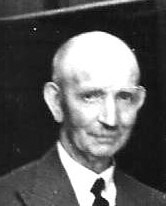
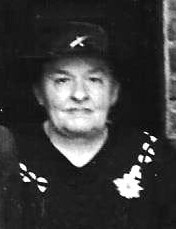
The data shown has no sources.
Historical events
Birthday October 14, 1917
- The temperature on October 14, 1917 was between 1.8 °C and 10.8 °C and averaged 6.6 °C. There was 7.9 mm of rain. There was 1.4 hours of sunshine (13%). The average windspeed was 3 Bft (moderate breeze) and was prevailing from the southwest. Source: KNMI
- Koningin Wilhelmina (Huis van Oranje-Nassau) was from 1890 till 1948 sovereign of the Netherlands (also known as Koninkrijk der Nederlanden)
- In The Netherlands , there was from August 29, 1913 to September 9, 1918 the cabinet Cort van der Linden, with Mr. P.W.A. Cort van der Linden (liberaal) as prime minister.
- In the year 1917: Source: Wikipedia
- The Netherlands had about 6.5 million citizens.
- January 22 » World War I: President Woodrow Wilson of the still-neutral United States calls for "peace without victory" in Europe.
- February 5 » The current constitution of Mexico is adopted, establishing a federal republic with powers separated into independent executive, legislative, and judicial branches.
- June 5 » World War I: Conscription begins in the United States as "Army registration day".
- July 6 » World War I: Arabian troops led by T. E. Lawrence ("Lawrence of Arabia") and Auda ibu Tayi capture Aqaba from the Ottoman Empire during the Arab Revolt.
- July 28 » The Silent Parade took place in New York City, in protest to murders, lynchings, and other violence directed towards African Americans.
- November 28 » The Estonian Provincial Assembly declares itself the sovereign power of Estonia.
Day of marriage July 11, 1946
- The temperature on July 11, 1946 was between 8.4 °C and 22.7 °C and averaged 16.3 °C. There was 10.1 hours of sunshine (61%). The average windspeed was 2 Bft (weak wind) and was prevailing from the northeast. Source: KNMI
- Koningin Wilhelmina (Huis van Oranje-Nassau) was from 1890 till 1948 sovereign of the Netherlands (also known as Koninkrijk der Nederlanden)
- From June 24, 1945 till July 3, 1946 the Netherlands had a cabinet Schermerhorn - Drees with the prime ministers Prof. ir. W. Schermerhorn (VDB) and W. Drees (PvdA).
- In The Netherlands , there was from July 3, 1946 to August 7, 1948 the cabinet Beel I, with Dr. L.J.M. Beel (KVP) as prime minister.
- In the year 1946: Source: Wikipedia
- The Netherlands had about 9.3 million citizens.
- February 8 » The first portion of the Revised Standard Version of the Bible, the first serious challenge to the popularity of the Authorized King James Version, is published.
- March 28 » Cold War: The United States Department of State releases the Acheson–Lilienthal Report, outlining a plan for the international control of nuclear power.
- August 8 » First flight of the Convair B-36, the world's first mass-produced nuclear weapon delivery vehicle, the heaviest mass-produced piston-engined aircraft, with the longest wingspan of any military aircraft, and the first bomber with intercontinental range.
- September 6 » United States Secretary of State James F. Byrnes announces that the U.S. will follow a policy of economic reconstruction in postwar Germany.
- December 19 » Start of the First Indochina War.
- December 21 » An 8.1 Mw earthquake and subsequent tsunami in Nankaidō, Japan, kills over 1,300 people and destroys over 38,000 homes.
Day of death August 6, 2002
- The temperature on August 6, 2002 was between 14.2 °C and 22.0 °C and averaged 17.7 °C. There was 7.6 mm of rain during 6.9 hours. There was 2.8 hours of sunshine (18%). The heavily clouded was. The average windspeed was 2 Bft (weak wind) and was prevailing from the south. Source: KNMI
- Koningin Beatrix (Huis van Oranje-Nassau) was from April 30, 1980 till April 30, 2013 sovereign of the Netherlands (also known as Koninkrijk der Nederlanden)
- In The Netherlands , there was from Monday, August 3, 1998 to Monday, July 22, 2002 the cabinet Kok II, with W. Kok (PvdA) as prime minister.
- In The Netherlands , there was from Monday, July 22, 2002 to Tuesday, May 27, 2003 the cabinet Balkenende I, with Mr.dr. J.P. Balkenende (CDA) as prime minister.
- In the year 2002: Source: Wikipedia
- The Netherlands had about 16.1 million citizens.
- January 18 » The Sierra Leone Civil War is declared over.
- April 14 » Venezuelan President Hugo Chávez returns to office two days after being ousted and arrested by the country's military.
- May 23 » The "55 parties" clause of the Kyoto Protocol is reached after its ratification by Iceland.
- May 24 » Russia and the United States sign the Moscow Treaty.
- June 11 » Antonio Meucci is acknowledged as the first inventor of the telephone by the United States Congress.
- September 9 » The Rafiganj train wreck happened in Bihar, India.
Same birth/death day
- 1914 » Harry Brecheen, American baseball player and coach († 2004)
- 1915 » Loris Francesco Capovilla, Italian cardinal († 2016)
- 1916 » C. Everett Koop, American admiral and surgeon, 13th United States Surgeon General († 2013)
- 1918 » Doug Ring, Australian cricketer and sportscaster († 2003)
- 1918 » Marcel Chaput, Canadian biochemist, journalist, and politician († 1991)
- 1918 » Thelma Coyne Long, Australian tennis player and captain († 2015)
- 2001 » Adhar Kumar Chatterji, Indian Naval officer (b. 1914)
- 2001 » Dorothy Tutin, English actress (b. 1930)
- 2001 » Jorge Amado, Brazilian novelist and poet (b. 1912)
- 2001 » Shan Ratnam, Sri Lankan physician and academic (b. 1928)
- 2001 » Wilhelm Mohnke, German general (b. 1911)
- 2002 » Edsger W. Dijkstra, Dutch physicist, computer scientist, and academic (b. 1930)
About the surname SCHEERS
- View the information that Genealogie Online has about the surname SCHEERS.
- Check the information Open Archives has about SCHEERS.
- Check the Wie (onder)zoekt wie? register to see who is (re)searching SCHEERS.
The Family tree Scheers publication was prepared by Martin Scheers.
When copying data from this family tree, please include a reference to the origin:
Martin Scheers, "Family tree Scheers", database, Genealogy Online (https://www.genealogieonline.nl/stamboom-scheers/I280.php : accessed March 11, 2026), "Johan Willem SCHEERS (1917-2002)".
Martin Scheers, "Family tree Scheers", database, Genealogy Online (https://www.genealogieonline.nl/stamboom-scheers/I280.php : accessed March 11, 2026), "Johan Willem SCHEERS (1917-2002)".