Family tree Pranger » Egbert Pranger (1910-1957)
Personal data Egbert Pranger
- He was born on April 8, 1910 in Valthermond.
- Profession: Glasblazer.
- He died on February 20, 1957 in Nieuw-Buinen, he was 46 years old.
Oorzaak: Hartaanval
- He is buried in Stadskanaal.
- A child of Johannes Pranger and Jantje Greven
Household of Egbert Pranger
He is married to Lammechien Hoving.
They got married on August 27, 1932 at Gemeente Borger-Odoorn, Drenthe, Nederland, he was 22 years old.
Child(ren):
Timeline Egbert Pranger
This functionality is only available in Javascript supporting browsers.
Click on the names for more info.
Symbols used:  grandparents
 parents
 brothers/sisters
 children
grandparents
parents
brothers/sisters
children
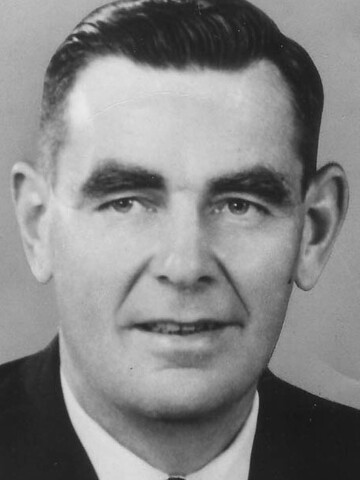
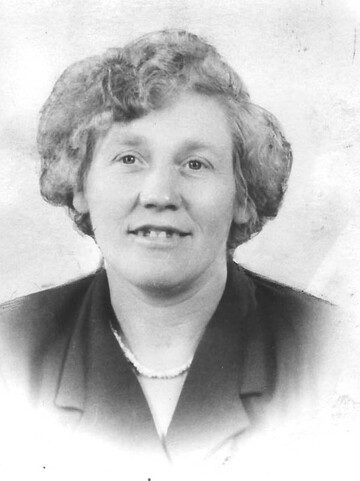
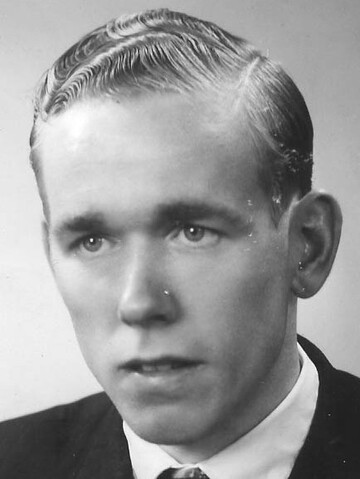
Image(s) Egbert Pranger




Relationship Egbert Pranger
- Egbert Pranger is the 3rd great grandson of Geert (Gert) Prenger:
The data shown has no sources.
Matches in other publications
This person also appears in the publication: View all
Historical events
Birthday April 8, 1910
- The temperature on April 8, 1910 was between 3.8 °C and 11.2 °C and averaged 7.0 °C. There was 1.0 mm of rain. There was 1.6 hours of sunshine (12%). The average windspeed was 3 Bft (moderate breeze) and was prevailing from the north-northwest. Source: KNMI
- Koningin Wilhelmina (Huis van Oranje-Nassau) was from 1890 till 1948 sovereign of the Netherlands (also known as Koninkrijk der Nederlanden)
- In The Netherlands , there was from February 12, 1908 to August 29, 1913 the cabinet Heemskerk, with Mr. Th. Heemskerk (AR) as prime minister.
- In the year 1910: Source: Wikipedia
- The Netherlands had about 5.9 million citizens.
- March 28 » Henri Fabre becomes the first person to fly a seaplane, the Fabre Hydravion, after taking off from a water runway near Martigues, France.
- April 12 » SMSZrínyi, one of the last pre-dreadnought battleships built by the Austro-Hungarian Navy, is launched.
- May 6 » George V becomes King of Great Britain, Ireland, and many overseas territories, on the death of his father, Edward VII.
- July 16 » John Robertson Duigan makes the first flight of the Duigan pusher biplane, the first aircraft built in Australia.
- November 10 » The date of Thomas A. Davis' opening of the San Diego Army and Navy Academy, although the official founding date is November 23, 1910.
- December 21 » An underground explosion at the Hulton Bank Colliery No. 3 Pit in Over Hulton, Westhoughton, England, kills 344 miners.
Day of marriage August 27, 1932
- The temperature on August 27, 1932 was between 13.0 °C and 24.1 °C and averaged 18.8 °C. There was 7.3 mm of rain during 1.3 hours. There was 8.7 hours of sunshine (62%). The average windspeed was 3 Bft (moderate breeze) and was prevailing from the west. Source: KNMI
- Koningin Wilhelmina (Huis van Oranje-Nassau) was from 1890 till 1948 sovereign of the Netherlands (also known as Koninkrijk der Nederlanden)
- In The Netherlands , there was from August 10, 1929 to May 26, 1933 the cabinet Ruys de Beerenbrouck III, with Jonkheer mr. Ch.J.M. Ruys de Beerenbrouck (RKSP) as prime minister.
- In the year 1932: Source: Wikipedia
- The Netherlands had about 8.1 million citizens.
- February 25 » Hitler, having been stateless for seven years, obtains German citizenship when he is appointed a Brunswick state official by Dietrich Klagges, a fellow Nazi. As a result, Hitler is able to run for Reichspräsident in the 1932 election.
- March 1 » Charles Lindbergh's son is kidnapped.
- May 29 » World War I veterans begin to assemble in Washington, D.C., in the Bonus Army to request cash bonuses promised to them to be paid in 1945.
- July 28 » U.S. President Herbert Hoover orders the United States Army to forcibly evict the "Bonus Army" of World War I veterans gathered in Washington, D.C.
- September 10 » The New York City Subway's third competing subway system, the municipally-owned IND, is opened.
- November 3 » Panagis Tsaldaris becomes the 142nd Prime Minister of Greece.
Day of death February 20, 1957
- The temperature on February 20, 1957 was between -0.3 °C and 2.0 °C and averaged 0.8 °C. There was 8.3 mm of rain during 10.1 hours. The almost completely overcast was. The average windspeed was 4 Bft (moderate breeze) and was prevailing from the north-northeast. Source: KNMI
- Koningin Juliana (Huis van Oranje-Nassau) was from September 4, 1948 till April 30, 1980 sovereign of the Netherlands (also known as Koninkrijk der Nederlanden)
- In The Netherlands , there was from October 13, 1956 to December 22, 1957 the cabinet Drees III, with Dr. W. Drees (PvdA) as prime minister.
- In the year 1957: Source: Wikipedia
- The Netherlands had about 11.0 million citizens.
- May 1 » Thirty-four people are killed when a Vickers Viking airliner crashes in Hampshire, England.
- May 15 » At Malden Island in the Pacific Ocean, Britain tests its first hydrogen bomb in Operation Grapple.
- May 22 » South Africa's government approves of racial separation in universities.
- June 21 » Ellen Fairclough is sworn in as Canada's first female Cabinet Minister.
- October 3 » The California State Superior Court rules that the book Howl and Other Poems is not obscene.
- December 17 » The United States successfully launches the first Atlas intercontinental ballistic missile at Cape Canaveral, Florida.
Same birth/death day
- 1908 » Hugo Fregonese, Argentinian director and screenwriter († 1987)
- 1909 » John Fante, American author and screenwriter († 1983)
- 1910 » George Musso, American football player and police officer († 2000)
- 1911 » Emil Cioran, Romanian-French philosopher and academic († 1995)
- 1911 » Melvin Calvin, American chemist and academic, Nobel Prize laureate († 1997)
- 1912 » Alois Brunner, Austrian-German SS officer (d. 2001 or 2010)
- 1957 » Sadri Maksudi Arsal, Turkish scholar and politician (b. 1878)
- 1961 » Percy Grainger, Australian-American pianist and composer (b. 1882)
- 1963 » Jacob Gade, Danish violinist and composer(b. 1879)
- 1966 » Chester W. Nimitz, American admiral (b. 1885)
- 1968 » Anthony Asquith, English director and screenwriter (b. 1902)
- 1969 » Ernest Ansermet, Swiss conductor (b. 1883)
About the surname Pranger
- View the information that Genealogie Online has about the surname Pranger.
- Check the information Open Archives has about Pranger.
- Check the Wie (onder)zoekt wie? register to see who is (re)searching Pranger.
The Family tree Pranger publication was prepared by Bert Pranger.
When copying data from this family tree, please include a reference to the origin:
Bert Pranger, "Family tree Pranger", database, Genealogy Online (https://www.genealogieonline.nl/stamboom-pranger/R7.php : accessed February 26, 2026), "Egbert Pranger (1910-1957)".
Bert Pranger, "Family tree Pranger", database, Genealogy Online (https://www.genealogieonline.nl/stamboom-pranger/R7.php : accessed February 26, 2026), "Egbert Pranger (1910-1957)".