Family tree Lobé en verwanten. » Anna Maria (Aleida) Bentlage (1879-1952)
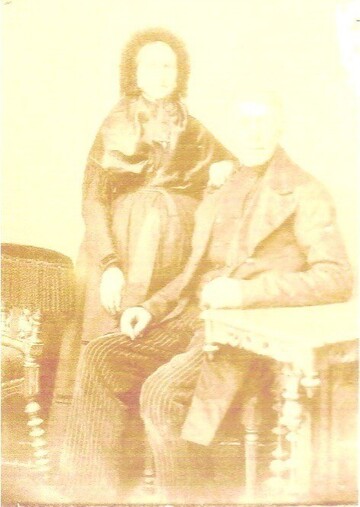
Personal data Anna Maria (Aleida) Bentlage
- She was born on March 28, 1879 in Smeulveen Emmen.
- She died on June 21, 1952 in Barger-Compascuum, she was 73 years old.
- She is buried in Barger-Compascuum.
- A child of Jan Berend Johan Bentlage and Maria Helena Koop
Household of Anna Maria (Aleida) Bentlage
She is married to Frans Arling.
They got married on December 6, 1898 at Emmen, she was 19 years old.
Child(ren):
- Frans Arling 1903-
- Hendrik Arling 1906-1907
- Gerardus Hendrik Arling 1908-1982
- Herman Heinrich Arling 1911-1972
Timeline Anna Maria (Aleida) Bentlage
This functionality is only available in Javascript supporting browsers.
Click on the names for more info.
Symbols used:  grandparents
 parents
 brothers/sisters
 children
grandparents
parents
brothers/sisters
children
Ancestors (and descendant) of Anna Maria (Aleida) Bentlage
Anna Maria (Aleida) Bentlage | |||||||||||||||||||||||||||||||||||||||
1898 | |||||||||||||||||||||||||||||||||||||||
Frans Arling | |||||||||||||||||||||||||||||||||||||||
The data shown has no sources.
Matches in other publications
This person also appears in the publication: View all
Historical events
Birthday March 28, 1879
- The temperature on March 28, 1879 was about 3.7 °C. The air pressure was 6 kgf/m2 and came mainly from the east-southeast. The airpressure was 75 cm mercury. The atmospheric humidity was 74%. Source: KNMI
- Koning Willem III (Huis van Oranje-Nassau) was from 1849 till 1890 sovereign of the Netherlands (also known as Koninkrijk der Nederlanden)
- In The Netherlands , there was from November 3, 1877 to August 20, 1879 the cabinet Kappeijne van de Coppello, with Mr. J. Kappeijne van de Coppello (liberaal) as prime minister.
- In The Netherlands , there was from August 20, 1879 to April 23, 1883 the cabinet Van Lijnden van Sandenburg, with Mr. C.Th. baron Van Lijnden van Sandenburg (conservatief-AR) as prime minister.
- In the year 1879: Source: Wikipedia
- The Netherlands had about 4.0 million citizens.
- February 14 » The War of the Pacific breaks out when the Chilean Army occupies the Bolivian port city of Antofagasta.
- April 23 » Fire burns down the second main building and dome of the University of Notre Dame, which prompts the construction of the third, and current, Main Building with its golden dome.
- May 21 » War of the Pacific: Two Chilean ships blocking the harbor of Iquique (then belonging to Peru) battle two Peruvian vessels in the Battle of Iquique.
- May 31 » Gilmore's Garden in New York City is renamed Madison Square Garden by William Henry Vanderbilt and is opened to the public at 26th Street and Madison Avenue.
- August 28 » Cetshwayo, last king of the Zulus, is captured by the British.
- December 21 » World premiere of Henrik Ibsen's A Doll's House at the Royal Theatre in Copenhagen, Denmark.
Day of marriage December 6, 1898
- The temperature on December 6, 1898 was about 6.3 °C. The airpressure was 76 cm mercury. The atmospheric humidity was 94%. Source: KNMI
- Koningin Wilhelmina (Huis van Oranje-Nassau) was from 1890 till 1948 sovereign of the Netherlands (also known as Koninkrijk der Nederlanden)
- Regentes Emma (Huis van Oranje-Nassau) was from 1890 till 1898 sovereign of the Netherlands (also known as Koninkrijk der Nederlanden)
- In The Netherlands , there was from July 27, 1897 to August 1, 1901 the cabinet Pierson, with Mr. N.G. Pierson (unie-liberaal) as prime minister.
- In the year 1898: Source: Wikipedia
- The Netherlands had about 5.1 million citizens.
- April 25 » Spanish–American War: The United States declares war on Spain.
- August 13 » Carl Gustav Witt discovers 433 Eros, the first near-Earth asteroid to be found.
- September 21 » Empress Dowager Cixi seizes power and ends the Hundred Days' Reform in China.
- October 6 » Phi Mu Alpha Sinfonia, the largest American music fraternity, is founded at the New England Conservatory of Music.
- November 5 » Negrese nationalists revolt against Spanish rule and establish the short-lived Republic of Negros.
- November 10 » Beginning of the Wilmington insurrection of 1898, the only instance of a municipal government being overthrown in United States history.
Day of death June 21, 1952
- The temperature on June 21, 1952 was between 11.2 °C and 16.2 °C and averaged 13.1 °C. There was 3.8 mm of rain during 4.5 hours. There was 2.1 hours of sunshine (13%). The heavily clouded was. The average windspeed was 3 Bft (moderate breeze) and was prevailing from the southwest. Source: KNMI
- Koningin Juliana (Huis van Oranje-Nassau) was from September 4, 1948 till April 30, 1980 sovereign of the Netherlands (also known as Koninkrijk der Nederlanden)
- In The Netherlands , there was from March 15, 1951 to September 2, 1952 the cabinet Drees I, with Dr. W. Drees (PvdA) as prime minister.
- In The Netherlands , there was from September 2, 1952 to October 13, 1956 the cabinet Drees II, with Dr. W. Drees (PvdA) as prime minister.
- In the year 1952: Source: Wikipedia
- The Netherlands had about 10.3 million citizens.
- February 20 » Emmett Ashford becomes the first African-American umpire in organized baseball by being authorized to be a substitute umpire in the Southwestern International League.
- February 26 » Vincent Massey is sworn in as the first Canadian-born Governor General of Canada.
- April 9 » Hugo Ballivián's government is overthrown by the Bolivian National Revolution, starting a period of agrarian reform, universal suffrage and the nationalization of tin mines
- July 3 » The Constitution of Puerto Rico is approved by the United States Congress.
- October 20 » The Governor of Kenya declares a state of emergency and begins arresting hundreds of suspected leaders of the Mau Mau Uprising.
- December 20 » A United States Air Force C-124 crashes and burns in Moses Lake, Washington killing 87.
Same birth/death day
- 1873 » John Geiger, American rower († 1956)
- 1878 » Abraham Walkowitz, Russian-American painter († 1965)
- 1879 » Terence MacSwiney, Irish republican politician and hunger striker; Lord Mayor of Cork († 1920)
- 1881 » Martin Sheridan, Irish-American discus thrower and jumper († 1918)
- 1884 » Angelos Sikelianos, Greek poet and playwright († 1951)
- 1886 » Gustave Mesny, French general († 1945)
- 1951 » Charles Dillon Perrine, American astronomer (b. 1867)
- 1951 » Gustave Sandras, French gymnast (b. 1872)
- 1952 » Wop May, Canadian captain and pilot (b. 1896)
- 1954 » Gideon Sundback, Swedish-American engineer, developed the zipper (b. 1880)
- 1957 » Claude Farrère, French captain and author (b. 1876)
- 1957 » Johannes Stark, German physicist and academic, Nobel Prize laureate (b. 1874)
About the surname Bentlage
- View the information that Genealogie Online has about the surname Bentlage.
- Check the information Open Archives has about Bentlage.
- Check the Wie (onder)zoekt wie? register to see who is (re)searching Bentlage.
The Family tree Lobé en verwanten. publication was prepared by Gé Lobé.
When copying data from this family tree, please include a reference to the origin:
Gé Lobé, "Family tree Lobé en verwanten.", database, Genealogy Online (https://www.genealogieonline.nl/stamboom-lobe/I3167.php : accessed March 5, 2026), "Anna Maria (Aleida) Bentlage (1879-1952)".
Gé Lobé, "Family tree Lobé en verwanten.", database, Genealogy Online (https://www.genealogieonline.nl/stamboom-lobe/I3167.php : accessed March 5, 2026), "Anna Maria (Aleida) Bentlage (1879-1952)".