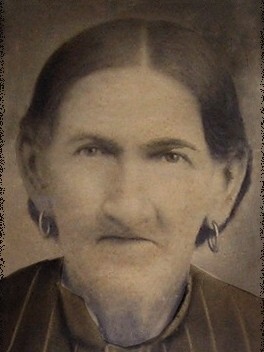
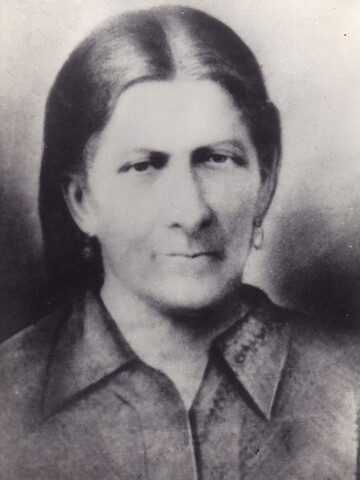
Family tree Lobé en verwanten. » Felicia Thijssen OR Thijsen (1881-1945)
Personal data Felicia Thijssen OR Thijsen
Sources 1, 2- She was born on July 3, 1881 in Aruba.
- Profession: NAAISTER.
- She died on March 20, 1945 in Oranjestad, Aruba, she was 63 years old.
- A child of Bernardin (Bernard) Thijssen and Dorothea de Cuba
Household of Felicia Thijssen OR Thijsen
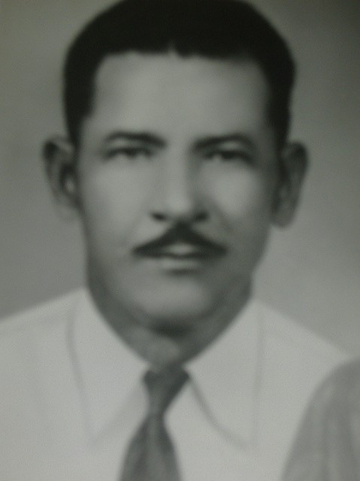
She is married to Zenor/Zenon Croes.
They got married on May 14, 1902 at Aruba, she was 20 years old.
Echtgeno(o)t(e) of partner: Zenon Croes
Child(ren):
- Bertha Croes 1907-1962
- Supriano Croes 1912-1984
- Roman Croes 1917-1968
- Coleta Croes 1920-1980
- Alejandrina Croes 1922-2002
Timeline Felicia Thijssen OR Thijsen
This functionality is only available in Javascript supporting browsers.
Click on the names for more info.
Symbols used:  grandparents
 parents
 brothers/sisters
 children
grandparents
parents
brothers/sisters
children
Ancestors (and descendant) of Felicia Thijssen OR Thijsen
Felicia Thijssen OR Thijsen | |||||||||||||||||||||||||||||||||||||||||||||||||||||||||||||||||||||||
1902 | |||||||||||||||||||||||||||||||||||||||||||||||||||||||||||||||||||||||
Zenor/Zenon Croes | |||||||||||||||||||||||||||||||||||||||||||||||||||||||||||||||||||||||

Sources
- (Not public)
- (Not public)
Historical events
Birthday July 3, 1881
- The temperature on July 3, 1881 was about 18.4 °C. The air pressure was 1 kgf/m2 and came mainly from the west-northwest. The airpressure was 76 cm mercury. The atmospheric humidity was 84%. Source: KNMI
- Koning Willem III (Huis van Oranje-Nassau) was from 1849 till 1890 sovereign of the Netherlands (also known as Koninkrijk der Nederlanden)
- In The Netherlands , there was from August 20, 1879 to April 23, 1883 the cabinet Van Lijnden van Sandenburg, with Mr. C.Th. baron Van Lijnden van Sandenburg (conservatief-AR) as prime minister.
- In the year 1881: Source: Wikipedia
- The Netherlands had about 4.5 million citizens.
- February 27 » First Boer War: The Battle of Majuba Hill takes place.
- May 10 » Carol I is crowned the King of the Romanian Kingdom.
- May 12 » In North Africa, Tunisia becomes a French protectorate.
- June 29 » In Sudan, Muhammad Ahmad declares himself to be the Mahdi, the messianic redeemer of Islam.
- September 19 » U.S. President James A. Garfield dies of wounds suffered in a July 2 shooting. Vice President Chester A. Arthur becomes President upon Garfield's death.
- December 4 » The first edition of the Los Angeles Times is published.
Day of marriage May 14, 1902
- The temperature on May 14, 1902 was between -0.4 °C and 8.6 °C and averaged 4.0 °C. There was 7.9 hours of sunshine (51%). Source: KNMI
- Koningin Wilhelmina (Huis van Oranje-Nassau) was from 1890 till 1948 sovereign of the Netherlands (also known as Koninkrijk der Nederlanden)
- In The Netherlands , there was from August 1, 1901 to August 16, 1905 the cabinet Kuijper, with Dr. A. Kuijper (AR) as prime minister.
- In the year 1902: Source: Wikipedia
- The Netherlands had about 5.2 million citizens.
- January 1 » The first American college football bowl game, the Rose Bowl between Michigan and Stanford, is held in Pasadena, California.
- March 7 » Second Boer War: Boers, led by Koos de la Rey, inflict the biggest defeat upon the British since the beginning of the war, at Tweebosch.
- April 14 » James Cash Penney opens his first store in Kemmerer, Wyoming.
- May 31 » Second Boer War: The Treaty of Vereeniging ends the war and ensures British control of South Africa.
- August 9 » Edward VII and Alexandra of Denmark are crowned King and Queen of the United Kingdom of Great Britain and Ireland.
- November 21 » The Philadelphia Football Athletics defeated the Kanaweola Athletic Club of Elmira, New York, 39–0, in the first ever professional American football night game.
Day of death March 20, 1945
- The temperature on March 20, 1945 was between 5.9 °C and 12.0 °C and averaged 9.4 °C. There was 7.7 hours of sunshine (64%). The average windspeed was 5 Bft (very strong wind) and was prevailing from the west. Source: KNMI
- Koningin Wilhelmina (Huis van Oranje-Nassau) was from 1890 till 1948 sovereign of the Netherlands (also known as Koninkrijk der Nederlanden)
- In The Netherlands , there was from July 27, 1941 to February 23, 1945 the cabinet Gerbrandy II, with Prof. dr. P.S. Gerbrandy (ARP) as prime minister.
- In The Netherlands , there was from February 23, 1945 to June 24, 1945 the cabinet Gerbrandy III, with Prof. dr. P.S. Gerbrandy (ARP) as prime minister.
- From June 24, 1945 till July 3, 1946 the Netherlands had a cabinet Schermerhorn - Drees with the prime ministers Prof. ir. W. Schermerhorn (VDB) and W. Drees (PvdA).
- In the year 1945: Source: Wikipedia
- The Netherlands had about 9.2 million citizens.
- February 4 » World War II: The Yalta Conference between the "Big Three" (Churchill, Roosevelt, and Stalin) opens at the Livadia Palace in the Crimea.
- April 16 » The United States Army liberates Nazi Sonderlager (high security) prisoner-of-war camp Oflag IV-C (better known as Colditz).
- April 25 » Elbe Day: United States and Soviet troops meet in Torgau along the River Elbe, cutting the Wehrmacht of Nazi Germany in two.
- April 29 » World War II: The Captain-class frigate HMS Goodall (K479) is torpedoed by U-286 outside the Kola Inlet becoming the last Royal Navy ship to be sunk in the European theatre of World War II.
- May 1 » World War II: Yugoslav Partisans liberate Trieste.
- May 9 » World War II: The German occupation of the Channel Islands comes to an end.
Same birth/death day
- 1876 » Ralph Barton Perry, American philosopher and academic († 1957)
- 1878 » George M. Cohan, American songwriter, actor, singer, and dancer († 1942)
- 1879 » Alfred Korzybski, Polish-American mathematician, linguist, and philosopher († 1950)
- 1880 » Carl Schuricht, Polish-German conductor († 1967)
- 1883 » Franz Kafka, Czech-Austrian author († 1924)
- 1886 » Raymond A. Spruance, American admiral and diplomat, United States Ambassador to the Philippines († 1969)
- 1933 » Giuseppe Zangara, Italian-American assassin of Anton Cermak (b. 1900; executed)
- 1940 » Alfred Ploetz, German physician, biologist, and eugenicist (b. 1860)
- 1945 » Dorothy Campbell, Scottish-American golfer (b. 1883)
- 1946 » Amadeus William Grabau, American-Chinese geologist, paleontologist, and academic (b. 1870)
- 1947 » Sigurd Wallén, Swedish actor and director (b. 1884)
- 1952 » Hjalmar Väre, Finnish cyclist (b. 1892)
About the surname Thijssen OR Thijsen
- View the information that Genealogie Online has about the surname Thijssen OR Thijsen.
- Check the information Open Archives has about Thijssen OR Thijsen.
- Check the Wie (onder)zoekt wie? register to see who is (re)searching Thijssen OR Thijsen.
The Family tree Lobé en verwanten. publication was prepared by Gé Lobé.
When copying data from this family tree, please include a reference to the origin:
Gé Lobé, "Family tree Lobé en verwanten.", database, Genealogy Online (https://www.genealogieonline.nl/stamboom-lobe/I1702.php : accessed February 25, 2026), "Felicia Thijssen OR Thijsen (1881-1945)".
Gé Lobé, "Family tree Lobé en verwanten.", database, Genealogy Online (https://www.genealogieonline.nl/stamboom-lobe/I1702.php : accessed February 25, 2026), "Felicia Thijssen OR Thijsen (1881-1945)".