Family tree Kroef » Elizabeth Anna GALLAS (1830-1913)
Personal data Elizabeth Anna GALLAS
- She was born on February 15, 1830 in Brielle.
- She died on June 18, 1913 in Tiel, she was 83 years old.
- A child of Eduard GALLAS and Jannetje GROESBEEK
Household of Elizabeth Anna GALLAS
She is married to Adrianus Johannes KROEF.
They got married on December 21, 1854 at Hellevoetssluis, she was 24 years old.
Child(ren):
- Elisabeth Anna KROEF 1861-1862
- Maria Wilhelmina KROEF 1864-1937
- Jeanette KROEF 1866-1922
- Adrienne Gertrude KROEF 1871-1943
- Elisabeth Anna KROEF 1877-1897
Timeline Elizabeth Anna GALLAS
This functionality is only available in Javascript supporting browsers.
Click on the names for more info.
Symbols used:  grandparents
 parents
 brothers/sisters
 children
grandparents
parents
brothers/sisters
children
Image(s) Elizabeth Anna GALLAS

Ancestors (and descendant) of Elizabeth Anna GALLAS
Elizabeth Anna GALLAS | ||||||||||||||||||||||||||||||||||||||||||||||||||||||||||||||||||||||
1854 | ||||||||||||||||||||||||||||||||||||||||||||||||||||||||||||||||||||||
Adrianus Johannes KROEF 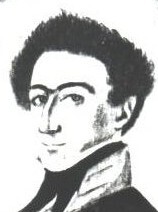 | ||||||||||||||||||||||||||||||||||||||||||||||||||||||||||||||||||||||
The data shown has no sources.
Matches in other publications
This person also appears in the publication: View all
Historical events
Birthday February 15, 1830
- The temperature on February 15, 1830 was about 2.0 °C. Wind direction mainly north-northwest. Weather type: omtrent betrokken dampig. Source: KNMI
- This page is only available in Dutch.De Republiek der Verenigde Nederlanden werd in 1794-1795 door de Fransen veroverd onder leiding van bevelhebber Charles Pichegru (geholpen door de Nederlander Herman Willem Daendels); de verovering werd vergemakkelijkt door het dichtvriezen van de Waterlinie; Willem V moest op 18 januari 1795 uitwijken naar Engeland (en van daaruit in 1801 naar Duitsland); de patriotten namen de macht over van de aristocratische regenten en proclameerden de Bataafsche Republiek; op 16 mei 1795 werd het Haags Verdrag gesloten, waarmee ons land een vazalstaat werd van Frankrijk; in 3.1796 kwam er een Nationale Vergadering; in 1798 pleegde Daendels een staatsgreep, die de unitarissen aan de macht bracht; er kwam een nieuwe grondwet, die een Vertegenwoordigend Lichaam (met een Eerste en Tweede Kamer) instelde en als regering een Directoire; in 1799 sloeg Daendels bij Castricum een Brits-Russische invasie af; in 1801 kwam er een nieuwe grondwet; bij de Vrede van Amiens (1802) kreeg ons land van Engeland zijn koloniën terug (behalve Ceylon); na de grondwetswijziging van 1805 kwam er een raadpensionaris als eenhoofdig gezag, namelijk Rutger Jan Schimmelpenninck (van 31 oktober 1761 tot 25 maart 1825).
- In the year 1830: Source: Wikipedia
- The Netherlands had about 2.6 million citizens.
- February 3 » The London Protocol of 1830 establishes the full independence and sovereignty of Greece from the Ottoman Empire as the final result of the Greek War of Independence.
- March 26 » The Book of Mormon is published in Palmyra, New York.
- May 13 » Ecuador gains its independence from Gran Colombia.
- August 28 » The Baltimore and Ohio Railroad's new Tom Thumb steam locomotive races a horse-drawn car, presaging steam's role in U.S. railroads.
- September 15 » The Liverpool to Manchester railway line opens; British MP William Huskisson becomes the first widely reported railway passenger fatality when he is struck and killed by the locomotive Rocket.
- November 27 » Saint Catherine Labouré experiences a Marian apparition.
Day of marriage December 21, 1854
- The temperature on December 21, 1854 was about 5.1 °C. There was 5 mm of rain. The air pressure was 4 kgf/m2 and came mainly from the west-southwest. The atmospheric humidity was 98%. Source: KNMI
- This page is only available in Dutch.De Republiek der Verenigde Nederlanden werd in 1794-1795 door de Fransen veroverd onder leiding van bevelhebber Charles Pichegru (geholpen door de Nederlander Herman Willem Daendels); de verovering werd vergemakkelijkt door het dichtvriezen van de Waterlinie; Willem V moest op 18 januari 1795 uitwijken naar Engeland (en van daaruit in 1801 naar Duitsland); de patriotten namen de macht over van de aristocratische regenten en proclameerden de Bataafsche Republiek; op 16 mei 1795 werd het Haags Verdrag gesloten, waarmee ons land een vazalstaat werd van Frankrijk; in 3.1796 kwam er een Nationale Vergadering; in 1798 pleegde Daendels een staatsgreep, die de unitarissen aan de macht bracht; er kwam een nieuwe grondwet, die een Vertegenwoordigend Lichaam (met een Eerste en Tweede Kamer) instelde en als regering een Directoire; in 1799 sloeg Daendels bij Castricum een Brits-Russische invasie af; in 1801 kwam er een nieuwe grondwet; bij de Vrede van Amiens (1802) kreeg ons land van Engeland zijn koloniën terug (behalve Ceylon); na de grondwetswijziging van 1805 kwam er een raadpensionaris als eenhoofdig gezag, namelijk Rutger Jan Schimmelpenninck (van 31 oktober 1761 tot 25 maart 1825).
- From April 19, 1853 till July 1, 1856 the Netherlands had a cabinet Van Hall - Donker Curtius with the prime ministers Mr. F.A. baron Van Hall (conservatief-liberaal) and Mr. D. Donker Curtius (conservatief-liberaal).
- In the year 1854: Source: Wikipedia
- The Netherlands had about 3.3 million citizens.
- February 23 » The official independence of the Orange Free State is declared.
- February 24 » A Penny Red with perforations was the first perforated postage stamp to be officially issued for distribution.
- June 10 » The United States Naval Academy graduates its first class of students.
- September 27 » The steamship SSArctic sinks with 300 people on board.
- October 21 » Florence Nightingale and a staff of 38 nurses are sent to the Crimean War.
- December 8 » In his Apostolic constitution Ineffabilis Deus, Pope Pius IX proclaims the dogmatic definition of Immaculate Conception, which holds that the Blessed Virgin Mary was conceived free of Original Sin.
Day of death June 18, 1913
- The temperature on June 18, 1913 was between 13.8 °C and 25.0 °C and averaged 18.5 °C. There was 9.8 hours of sunshine (59%). The average windspeed was 2 Bft (weak wind) and was prevailing from the west-southwest. Source: KNMI
- Koningin Wilhelmina (Huis van Oranje-Nassau) was from 1890 till 1948 sovereign of the Netherlands (also known as Koninkrijk der Nederlanden)
- In The Netherlands , there was from February 12, 1908 to August 29, 1913 the cabinet Heemskerk, with Mr. Th. Heemskerk (AR) as prime minister.
- In The Netherlands , there was from August 29, 1913 to September 9, 1918 the cabinet Cort van der Linden, with Mr. P.W.A. Cort van der Linden (liberaal) as prime minister.
- In the year 1913: Source: Wikipedia
- The Netherlands had about 6.1 million citizens.
- February 9 » A group of meteors is visible across much of the eastern seaboard of North and South America, leading astronomers to conclude the source had been a small, short-lived natural satellite of the Earth.
- February 19 » Pedro Lascuráin becomes President of Mexico for 45 minutes; this is the shortest term to date of any person as president of any country.
- May 30 » The Treaty of London is signed, ending the First Balkan War; Albania becomes an independent nation.
- June 1 » The Greek–Serbian Treaty of Alliance is signed, paving the way for the Second Balkan War.
- July 4 » President Woodrow Wilson addresses American Civil War veterans at the Great Reunion of 1913.
- October 14 » Senghenydd colliery disaster, the United Kingdom's worst coal mining accident, claims the lives of 439 miners.
Same birth/death day
- 1820 » Susan B. Anthony, American suffragist and activist († 1906)
- 1825 » Carter Harrison, Sr., American lawyer and politician, 29th Mayor of Chicago († 1893)
- 1834 » V. A. Urechia, Moldavian-Romanian historian, author, and playwright († 1901)
- 1835 » Demetrius Vikelas, Greek businessman and philanthropist († 1908)
- 1840 » Titu Maiorescu, Romanian philosopher, academic, and politician, 23rd Prime Minister of Romania († 1917)
- 1841 » Manuel Ferraz de Campos Sales, Brazilian lawyer and politician, 4th President of Brazil († 1913)
- 1902 » Samuel Butler, English novelist, satirist, and critic (b. 1835)
- 1905 » Carmine Crocco, Italian soldier (b. 1830)
- 1916 » Max Immelmann, German lieutenant and pilot (b. 1890)
- 1917 » Titu Maiorescu, Romanian critic and politician, 23rd Prime Minister of Romania (b. 1840)
- 1922 » Jacobus Kapteyn, Dutch astronomer and academic (b. 1851)
- 1928 » Roald Amundsen, Norwegian pilot and explorer (b. 1872)
About the surname GALLAS
- View the information that Genealogie Online has about the surname GALLAS.
- Check the information Open Archives has about GALLAS.
- Check the Wie (onder)zoekt wie? register to see who is (re)searching GALLAS.
The Family tree Kroef publication was prepared by Edo Kroef.
When copying data from this family tree, please include a reference to the origin:
Edo Kroef, "Family tree Kroef", database, Genealogy Online (https://www.genealogieonline.nl/stamboom-kroef/I209.php : accessed February 7, 2026), "Elizabeth Anna GALLAS (1830-1913)".
Edo Kroef, "Family tree Kroef", database, Genealogy Online (https://www.genealogieonline.nl/stamboom-kroef/I209.php : accessed February 7, 2026), "Elizabeth Anna GALLAS (1830-1913)".