Family tree Heuts en Heije » Maria "Marie" Hermans (1904-1976)
Personal data Maria "Marie" Hermans
- Nickname is Marie.
- She was born on October 29, 1904 in Meerssen, Nederland.
- She died on March 13, 1976 in Maastricht, Limburg, Nederland, she was 71 years oldziekenhuis St. Annadal.
- A child of Hubert Hermans and Maria Barbara Ubachs
- This information was last updated on October 21, 2023.
Household of Maria "Marie" Hermans
She is married to Mathijs Hubertus Nelissen.
They got married on April 20, 1923 at Maastricht, Limburg, Nederland, she was 18 years old.
Child(ren):
- Laurents Nelissen 1923-1992
- Maria Nelissen 1924-2014
- Theodorus Gerardus Nelissen 1926-1926
- Albertus Nelissen 1928-1973
- Cornelia Nelissen 1932-2018
- (Not public)
- (Not public)
Timeline Maria "Marie" Hermans
This functionality is only available in Javascript supporting browsers.
Click on the names for more info.
Symbols used:  grandparents
 parents
 brothers/sisters
 children
grandparents
parents
brothers/sisters
children
Image(s) Maria "Marie" Hermans

Ancestors (and descendant) of Maria Hermans
Maria Hermans  | ||||||||||||||||||||||||||||||||||||||||||||||||||||||||||||||||||||||||
1923 | ||||||||||||||||||||||||||||||||||||||||||||||||||||||||||||||||||||||||
Mathijs Hubertus Nelissen 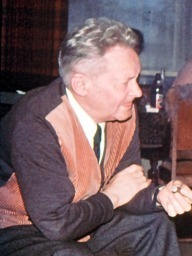 | ||||||||||||||||||||||||||||||||||||||||||||||||||||||||||||||||||||||||
Relationship Maria "Marie" Hermans
- Maria Hermans is the great grandmother of XY Heuts:
The data shown has no sources.
Historical events
Birthday October 29, 1904
- The temperature on October 29, 1904 was between 1.4 °C and 12.1 °C and averaged 6.8 °C. There was 8.6 hours of sunshine (87%). The average windspeed was 4 Bft (moderate breeze) and was prevailing from the northeast. Source: KNMI
- Koningin Wilhelmina (Huis van Oranje-Nassau) was from 1890 till 1948 sovereign of the Netherlands (also known as Koninkrijk der Nederlanden)
- In The Netherlands , there was from August 1, 1901 to August 16, 1905 the cabinet Kuijper, with Dr. A. Kuijper (AR) as prime minister.
- In the year 1904: Source: Wikipedia
- The Netherlands had about 5.4 million citizens.
- April 5 » The first international rugby league match is played between England and an Other Nationalities team (Welsh and Scottish players) in Central Park, Wigan, England.
- May 4 » The United States begins construction of the Panama Canal.
- June 28 » The SSNorge runs aground on Hasselwood Rock in the North Atlantic 430 kilometres (270mi) northwest of Ireland. More than 635 people die during the sinking.
- July 31 » Russo-Japanese War: Battle of Hsimucheng: Units of the Imperial Japanese Army defeat units of the Imperial Russian Army in a strategic confrontation.
- October 27 » The first underground New York City Subway line opens, later designated as the IRT Broadway–Seventh Avenue Line.
- November 16 » English engineer John Ambrose Fleming receives a patent for the thermionic valve (vacuum tube).
Day of marriage April 20, 1923
- The temperature on April 20, 1923 was between 2.6 °C and 14.0 °C and averaged 9.0 °C. There was 4.5 hours of sunshine (32%). The average windspeed was 3 Bft (moderate breeze) and was prevailing from the east-northeast. Source: KNMI
- Koningin Wilhelmina (Huis van Oranje-Nassau) was from 1890 till 1948 sovereign of the Netherlands (also known as Koninkrijk der Nederlanden)
- In The Netherlands , there was from September 19, 1922 to August 4, 1925 the cabinet Ruys de Beerenbrouck II, with Jonkheer mr. Ch.J.M. Ruys de Beerenbrouck (RKSP) as prime minister.
- In the year 1923: Source: Wikipedia
- The Netherlands had about 7.1 million citizens.
- February 10 » Texas Tech University is founded as Texas Technological College in Lubbock, Texas
- April 28 » Wembley Stadium is opened, named initially as the Empire Stadium.
- August 18 » First British Track and Field championships for women, London.
- September 7 » The International Criminal Police Organization (INTERPOL) is formed.
- September 29 » The British Mandate for Palestine takes effect, creating Mandatory Palestine.
- October 29 » Turkey becomes a republic following the dissolution of the Ottoman Empire.
Day of death March 13, 1976
- The temperature on March 13, 1976 was between 0.9 °C and 9.6 °C and averaged 5.4 °C. There was 6.0 mm of rain during 6.8 hours. There was 1.9 hours of sunshine (16%). The heavily clouded was. The average windspeed was 3 Bft (moderate breeze) and was prevailing from the south-southeast. Source: KNMI
- Koningin Juliana (Huis van Oranje-Nassau) was from September 4, 1948 till April 30, 1980 sovereign of the Netherlands (also known as Koninkrijk der Nederlanden)
- In The Netherlands , there was from Friday, May 11, 1973 to Monday, December 19, 1977 the cabinet Den Uyl, with Drs. J.M. den Uyl (PvdA) as prime minister.
- In the year 1976: Source: Wikipedia
- The Netherlands had about 13.7 million citizens.
- January 5 » The Khmer Rouge proclaim the Constitution of Democratic Kampuchea.
- February 6 » In testimony before a United States Senate subcommittee, Lockheed Corporation president Carl Kotchian admits that the company had paid out approximately $3 million in bribes to the office of Japanese Prime Minister Kakuei Tanaka.
- July 1 » Portugal grants autonomy to Madeira.
- July 19 » Sagarmatha National Park in Nepal is created.
- September 11 » A bomb planted by a Croatian terrorist, Zvonko Bušić, is found at New York's Grand Central Terminal; one NYPD officer is killed trying to defuse it.
- November 26 » "Anarchy in the U.K.", the debut single of the Sex Pistols, is released, heralding the arrival of punk rock
Same birth/death day
- 1898 » Alan Barker, English soldier († 1984)
- 1899 » Akim Tamiroff, Georgian-American actor († 1972)
- 1905 » Henry Green, English author († 1973)
- 1906 » Fredric Brown, American author († 1972)
- 1907 » Edwige Feuillère, French actress († 1998)
- 1910 » A. J. Ayer, English philosopher and author († 1989)
- 1965 » Vittorio Jano, Italian engineer (b. 1891)
- 1971 » Rockwell Kent, American painter and illustrator (b. 1882)
- 1972 » Tony Ray-Jones, English photographer (b. 1941)
- 1975 » Ivo Andrić, Yugoslav novelist, poet, and short story writer, Nobel Prize laureate (b. 1892)
- 1976 » Ole Haugsrud, American sports executive (b. 1900)
- 1983 » Paul Citroen, German-Dutch illustrator and educator (b. 1896)
About the surname Hermans
- View the information that Genealogie Online has about the surname Hermans.
- Check the information Open Archives has about Hermans.
- Check the Wie (onder)zoekt wie? register to see who is (re)searching Hermans.
The Family tree Heuts en Heije publication was prepared by Heuts.
When copying data from this family tree, please include a reference to the origin:
Heuts, "Family tree Heuts en Heije", database, Genealogy Online (https://www.genealogieonline.nl/stamboom-heuts/I72.php : accessed March 8, 2026), "Maria "Marie" Hermans (1904-1976)".
Heuts, "Family tree Heuts en Heije", database, Genealogy Online (https://www.genealogieonline.nl/stamboom-heuts/I72.php : accessed March 8, 2026), "Maria "Marie" Hermans (1904-1976)".