Family tree Grin » Roelf Schrik (1915-1984)
Personal data Roelf Schrik
- He was born on March 3, 1915 in Sappemeer (Gr).
- He died on January 17, 1984 in Amsterdam (Nh), he was 68 years old.
Household of Roelf Schrik
He is married to Cornelia Langereis.
They got married on July 17, 1941 at Andijk, Noord-Holland, Nederland, he was 26 years old.
Child(ren):
- Antje Klasina Schrik 1941-2018
- (Not public)
- (Not public)
Ancestors (and descendant) of Roelf Schrik
Roelf Schrik | ||||||||||||||||||||||||||||||||||||
1941 | ||||||||||||||||||||||||||||||||||||
Cornelia Langereis 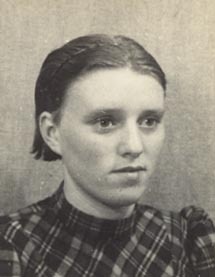 | ||||||||||||||||||||||||||||||||||||
The data shown has no sources.
Matches in other publications
This person also appears in the publication: View all
Historical events
Birthday March 3, 1915
- The temperature on March 3, 1915 was between 0.9 °C and 6.6 °C and averaged 3.1 °C. There was 12.7 mm of rain. The average windspeed was 3 Bft (moderate breeze) and was prevailing from the south-southwest. Source: KNMI
- Koningin Wilhelmina (Huis van Oranje-Nassau) was from 1890 till 1948 sovereign of the Netherlands (also known as Koninkrijk der Nederlanden)
- In The Netherlands , there was from August 29, 1913 to September 9, 1918 the cabinet Cort van der Linden, with Mr. P.W.A. Cort van der Linden (liberaal) as prime minister.
- In the year 1915: Source: Wikipedia
- The Netherlands had about 6.3 million citizens.
- January 31 » World War I: Germany is the first to make large-scale use of poison gas in warfare in the Battle of Bolimów against Russia.
- March 18 » World War I: During the Battle of Gallipoli, three battleships are sunk during a failed British and French naval attack on the Dardanelles.
- April 5 » Boxing challenger Jess Willard knocks out Jack Johnson in Havana, Cuba to become the Heavyweight Champion of the World.
- July 28 » The United States begins a 19-year occupation of Haiti.
- September 5 » The pacifist Zimmerwald Conference begins.
- September 15 » The Empire Picture Theatre (now The New Empire Cinema), the oldest running cinema in mainland Australia, opens in Bowral, New South Wales.
Day of marriage July 17, 1941
- The temperature on July 17, 1941 was between 9.7 °C and 21.6 °C and averaged 16.0 °C. There was 5.3 hours of sunshine (33%). The average windspeed was 2 Bft (weak wind) and was prevailing from the west-northwest. Source: KNMI
- Koningin Wilhelmina (Huis van Oranje-Nassau) was from 1890 till 1948 sovereign of the Netherlands (also known as Koninkrijk der Nederlanden)
- In The Netherlands , there was from September 3, 1940 to July 27, 1941 the cabinet Gerbrandy I, with Prof. dr. P.S. Gerbrandy (ARP) as prime minister.
- In The Netherlands , there was from July 27, 1941 to February 23, 1945 the cabinet Gerbrandy II, with Prof. dr. P.S. Gerbrandy (ARP) as prime minister.
- In the year 1941: Source: Wikipedia
- The Netherlands had about 8.9 million citizens.
- June 1 » World War II: The Battle of Crete ends as Crete capitulates to Germany.
- July 20 » Soviet leader Joseph Stalin consolidates the Commissariats of Home Affairs and National Security to form the NKVD and names Lavrentiy Beria its chief.
- September 29 » World War II: German forces, with the aid of local Ukrainian collaborators, begin the two-day Babi Yar massacre.
- November 12 » World War II: The Soviet cruiserChervona Ukraina is destroyed during the Battle of Sevastopol.
- November 14 » World War II: In Slonim, German forces engaged in Operation Barbarossa murder 9,000 Jews in a single day.
- December 5 » World War II: Great Britain declares war on Finland, Hungary and Romania.
Day of death January 17, 1984
- The temperature on January 17, 1984 was between 1.7 °C and 9.0 °C and averaged 5.5 °C. There was 0.3 mm of rain during 0.2 hours. There was 1.5 hours of sunshine (18%). The partly or heavily clouded was. The average windspeed was 4 Bft (moderate breeze) and was prevailing from the west-southwest. Source: KNMI
- Koningin Beatrix (Huis van Oranje-Nassau) was from April 30, 1980 till April 30, 2013 sovereign of the Netherlands (also known as Koninkrijk der Nederlanden)
- In The Netherlands , there was from Thursday, November 4, 1982 to Monday, July 14, 1986 the cabinet Lubbers I, with Drs. R.F.M. Lubbers (CDA) as prime minister.
- In the year 1984: Source: Wikipedia
- The Netherlands had about 14.4 million citizens.
- May 8 » The Thames Barrier is officially opened, preventing the floodplain of most of Greater London from being flooded except under extreme circumstances.
- July 17 » The national drinking age in the United States was changed from 18 to 21.
- August 4 » The Republic of Upper Volta changes its name to Burkina Faso.
- September 7 » An explosion on board a Maltese patrol boat disposing of illegal fireworks at sea off Gozo kills seven soldiers and policemen.
- October 11 » Aboard the Space Shuttle Challenger, astronaut Kathryn D. Sullivan becomes the first American woman to perform a space walk.
- October 16 » Desmond Tutu is awarded the Nobel Peace Prize.
Same birth/death day
- 1913 » Harold J. Stone, American actor († 2005)
- 1913 » Margaret Bonds, American pianist and composer († 1972)
- 1914 » Asger Jorn, Danish painter and sculptor († 1973)
- 1916 » Paul Halmos, Hungarian-American mathematician († 2006)
- 1917 » Sameera Moussa, Egyptian physicist and academic († 1952)
- 1918 » Arthur Kornberg, American biochemist and academic, Nobel Prize laureate († 2007)
- 1977 » Dougal Haston, Scottish mountaineer (b. 1940)
- 1977 » Gary Gilmore, American murderer (b. 1940)
- 1981 » Loukas Panourgias, Greek footballer and lawyer (b. 1899)
- 1984 » Kostas Giannidis, Greek pianist, composer, and conductor (b. 1903)
- 1987 » Hugo Fregonese, Argentinian director and screenwriter (b. 1908)
- 1988 » Percy Qoboza, South African journalist and author (b. 1938)
About the surname Schrik
- View the information that Genealogie Online has about the surname Schrik.
- Check the information Open Archives has about Schrik.
- Check the Wie (onder)zoekt wie? register to see who is (re)searching Schrik.
The Family tree Grin publication was prepared by Roelf Schrik.
When copying data from this family tree, please include a reference to the origin:
Roelf Schrik, "Family tree Grin", database, Genealogy Online (https://www.genealogieonline.nl/stamboom-grin/I672.php : accessed February 26, 2026), "Roelf Schrik (1915-1984)".
Roelf Schrik, "Family tree Grin", database, Genealogy Online (https://www.genealogieonline.nl/stamboom-grin/I672.php : accessed February 26, 2026), "Roelf Schrik (1915-1984)".