Family tree Grin » Reintje de Waal (1892-1950)
Personal data Reintje de Waal
- She was born on September 13, 1892 in Anna Paulowna (Nh).
- She died on December 2, 1950 in Alkmaar (Nh), she was 58 years old.
- A child of Cornelis de Waal and Antje Dirks(d) Grin
- This information was last updated on January 24, 2008.
Household of Reintje de Waal
She is married to Arie Grin.
They got married on March 13, 1915 at Zijpe (Nh), she was 22 years old.
Child(ren):
- Cornelis Grin 1917-1993
- The couple has common ancestors.
Notes about Reintje de Waal
Beroep: Dienstbode, landbouwersche
Timeline Reintje de Waal
This functionality is only available in Javascript supporting browsers.
Click on the names for more info.
Symbols used:  grandparents
 parents
 brothers/sisters
 children
grandparents
parents
brothers/sisters
children
Image(s) Reintje de Waal


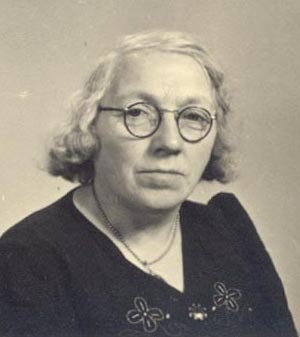
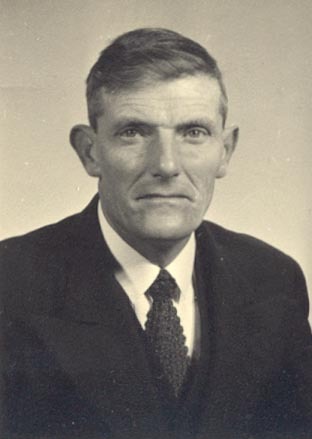
The data shown has no sources.
Historical events
Birthday September 13, 1892
- The temperature on September 13, 1892 was about 18.1 °C. The airpressure was 76 cm mercury. The atmospheric humidity was 84%. Source: KNMI
- Koningin Wilhelmina (Huis van Oranje-Nassau) was from 1890 till 1948 sovereign of the Netherlands (also known as Koninkrijk der Nederlanden)
- Regentes Emma (Huis van Oranje-Nassau) was from 1890 till 1898 sovereign of the Netherlands (also known as Koninkrijk der Nederlanden)
- In The Netherlands , there was from August 21, 1891 to May 9, 1894 the cabinet Van Tienhoven, with Mr. G. van Tienhoven (unie-liberaal) as prime minister.
- In the year 1892: Source: Wikipedia
- The Netherlands had about 5.1 million citizens.
- January 15 » James Naismith publishes the rules of basketball.
- June 11 » The Limelight Department, one of the world's first film studios, is officially established in Melbourne, Australia.
- July 4 » Western Samoa changes the International Date Line, causing Monday (July 4) to occur twice, resulting in a year with 367 days.
- July 6 » Three thousand eight hundred striking steelworkers engage in a day-long battle with Pinkerton agents during the Homestead Strike, leaving ten dead and dozens wounded.
- October 13 » Edward Emerson Barnard discovers first comet discovered by photographic means.
- November 12 » Pudge Heffelfinger becomes the first professional American football player on record, participating in his first paid game for the Allegheny Athletic Association.
Day of marriage March 13, 1915
- The temperature on March 13, 1915 was between 4.6 °C and 9.9 °C and averaged 6.8 °C. There was 0.3 mm of rain. There was 2.8 hours of sunshine (24%). The average windspeed was 4 Bft (moderate breeze) and was prevailing from the west-northwest. Source: KNMI
- Koningin Wilhelmina (Huis van Oranje-Nassau) was from 1890 till 1948 sovereign of the Netherlands (also known as Koninkrijk der Nederlanden)
- In The Netherlands , there was from August 29, 1913 to September 9, 1918 the cabinet Cort van der Linden, with Mr. P.W.A. Cort van der Linden (liberaal) as prime minister.
- In the year 1915: Source: Wikipedia
- The Netherlands had about 6.3 million citizens.
- January 17 » Russia defeats Ottoman Turkey in the Battle of Sarikamish during the Caucasus Campaign of World War I.
- January 19 » Georges Claude patents the neon discharge tube for use in advertising.
- March 18 » World War I: During the Battle of Gallipoli, three battleships are sunk during a failed British and French naval attack on the Dardanelles.
- March 27 » Typhoid Mary, the first healthy carrier of disease ever identified in the United States is put in quarantine for the second time, where she would remain for the rest of her life.
- April 24 » The arrest of 250 Armenian intellectuals and community leaders in Istanbul marks the beginning of the Armenian Genocide.
- August 15 » A story in New York World newspaper reveals that the Imperial German government had purchased excess phenol from Thomas Edison that could be used to make explosives for the war effort and diverted it to Bayer for aspirin production.
Day of death December 2, 1950
- The temperature on December 2, 1950 was between 2.6 °C and 7.7 °C and averaged 5.5 °C. There was 0.2 mm of rain during 0.1 hours. There was 1.2 hours of sunshine (15%). The average windspeed was 4 Bft (moderate breeze) and was prevailing from the west-southwest. Source: KNMI
- Koningin Juliana (Huis van Oranje-Nassau) was from September 4, 1948 till April 30, 1980 sovereign of the Netherlands (also known as Koninkrijk der Nederlanden)
- From August 7, 1948 till March 15, 1951 the Netherlands had a cabinet Drees - Van Schaik with the prime ministers Dr. W. Drees (PvdA) and Mr. J.R.H. van Schaik (KVP).
- In the year 1950: Source: Wikipedia
- The Netherlands had about 10.0 million citizens.
- June 1 » The Chinchaga fire ignites. By September, it would become the largest single fire on record in North America.
- June 24 » Apartheid: In South Africa, the Group Areas Act is passed, formally segregating races.
- July 29 » Korean War: After four days, the No Gun Ri Massacre ends when the US Army 7th Cavalry Regiment is withdrawn.
- October 19 » China defeats the Tibetan Army at Chambo.
- October 19 » Iran becomes the first country to accept technical assistance from the United States under the Point Four Program.
- November 25 » The Great Appalachian Storm of November 1950 impacts 22 American states, killing 353 people, injuring over 160, and causing US$66.7 million in damages (1950 dollars).
Same birth/death day
- 1890 » Antony Noghès, French-Monegasque businessman, founded the Monaco Grand Prix († 1978)
- 1891 » Max Pruss, German captain and pilot († 1960)
- 1893 » Larry Shields, American clarinet player († 1953)
- 1894 » J. B. Priestley, English novelist and playwright († 1984)
- 1894 » Julian Tuwim, Polish poet, playwright, and director († 1953)
- 1895 » Morris Kirksey, American rugby player and sprinter († 1981)
- 1944 » Eiji Sawamura, Japanese baseball player and soldier (b. 1917)
- 1944 » Filippo Tommaso Marinetti, Egyptian-Italian poet and composer (b. 1876)
- 1944 » Josef Lhévinne, Russian pianist and educator (b. 1874)
- 1950 » Dinu Lipatti, Romanian pianist and composer (b. 1917)
- 1953 » Reginald Baker, Australian rugby player (b. 1884)
- 1953 » Trần Trọng Kim, Vietnamese historian, scholar, and politician, Prime Minister of Vietnam (b. 1883)
About the surname De Waal
- View the information that Genealogie Online has about the surname De Waal.
- Check the information Open Archives has about De Waal.
- Check the Wie (onder)zoekt wie? register to see who is (re)searching De Waal.
The Family tree Grin publication was prepared by Roelf Schrik.
When copying data from this family tree, please include a reference to the origin:
Roelf Schrik, "Family tree Grin", database, Genealogy Online (https://www.genealogieonline.nl/stamboom-grin/I167.php : accessed February 26, 2026), "Reintje de Waal (1892-1950)".
Roelf Schrik, "Family tree Grin", database, Genealogy Online (https://www.genealogieonline.nl/stamboom-grin/I167.php : accessed February 26, 2026), "Reintje de Waal (1892-1950)".