Family tree Eijssink » Gerhardus Franciscus (Gerard) Eijssink (1922-1984)
Personal data Gerhardus Franciscus (Gerard) Eijssink
- Alternative name: Eyssink (variation)
- He was born on April 4, 1922 in Hengelo, Gemeente Hengelo, Overijssel, Nederland.
- Profession: Boekhouder.
- Religion: R.K..
- Resident:
- starting 1922: Hengelo (Ov).
- before 1984: Hengelo (Ov).
- He died on May 25, 1984 in Ennschede, Gemeente Enschede, Overijssel, Nederland, he was 62 years old.Source 1
de Stadsmaten
- He is cremated on May 30, 1984 in Usselo, Enschede.
- A child of Gerrit Johannes (Gerrit) Eijssink and Geertruida Hendrika (Riek) Peters
- This information was last updated on August 3, 2020.
Household of Gerhardus Franciscus (Gerard) Eijssink
He is married to Margaretha Aleida (Gretha) Kropman.
They got married on September 17, 1943 at Hengelo, Gemeente Hengelo, Overijssel, Nederland, he was 21 years old.
Child(ren):
- (Not public)
- (Not public)
Timeline Gerhardus Franciscus (Gerard) Eijssink
This functionality is only available in Javascript supporting browsers.
Click on the names for more info.
Symbols used:  grandparents
 parents
 brothers/sisters
 children
grandparents
parents
brothers/sisters
children
Image(s) Gerhardus Franciscus (Gerard) Eijssink

Ancestors (and descendant) of Gerhardus Franciscus (Gerard) Eijssink
Gerhardus Franciscus (Gerard) Eijssink 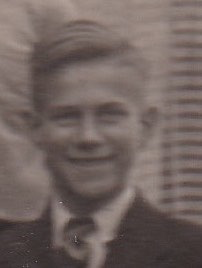 | |||||||||||||||||||||||||||||||||||
1943 | |||||||||||||||||||||||||||||||||||
Margaretha Aleida (Gretha) Kropman | |||||||||||||||||||||||||||||||||||
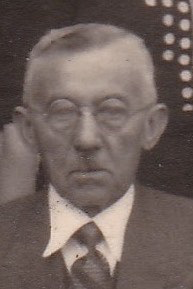
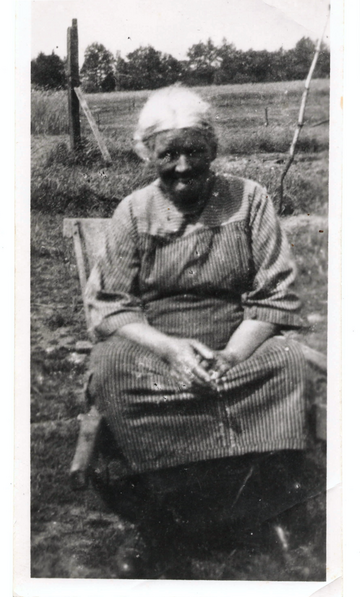
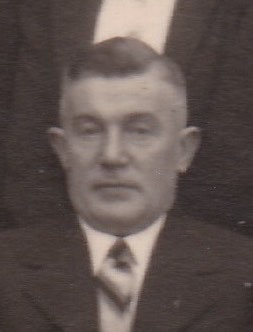
Relationship Gerhardus Franciscus (Gerard) Eijssink
- Gerhardus Franciscus (Gerard) Eijssink is the 7th great grandson of Hendrik Eijsink:
Sources
Matches in other publications
This person also appears in the publication: View all
- Henglias; de verzamelde gegevens van de Hengelose bevolking
- Stamboom Sonneveld en aanverwanten
- Stamboom Hofman-Uijttewaal, one author has confirmed this is the same person
Historical events
Birthday April 4, 1922
- The temperature on April 4, 1922 was between -0.2 °C and 6.6 °C and averaged 2.8 °C. There was 0.2 mm of rain. There was 0.8 hours of sunshine (6%). The average windspeed was 4 Bft (moderate breeze) and was prevailing from the north. Source: KNMI
- Koningin Wilhelmina (Huis van Oranje-Nassau) was from 1890 till 1948 sovereign of the Netherlands (also known as Koninkrijk der Nederlanden)
- In The Netherlands , there was from September 9, 1918 to September 18, 1922 the cabinet Ruys de Beerenbrouck I, with Jonkheer mr. Ch.J.M. Ruys de Beerenbrouck (RKSP) as prime minister.
- In The Netherlands , there was from September 19, 1922 to August 4, 1925 the cabinet Ruys de Beerenbrouck II, with Jonkheer mr. Ch.J.M. Ruys de Beerenbrouck (RKSP) as prime minister.
- In the year 1922: Source: Wikipedia
- The Netherlands had about 7.0 million citizens.
- July 24 » The draft of the British Mandate of Palestine was formally confirmed by the Council of the League of Nations; it came into effect on 26 September 1923.
- August 2 » A typhoon hits Shantou, Republic of China, killing more than 50,000 people.
- August 30 » Battle of Dumlupınar: The final battle in the Greco-Turkish War ("Turkish War of Independence").
- September 30 » The University of Alabama opens the American football season with a 110–0 victory over the Marion Military Institute, which still stands as Alabama's record for largest margin of victory and as their only 100 point game.
- November 15 » At least 300 are massacred during a general strike in Guayaquil, Ecuador.
- December 9 » Gabriel Narutowicz is elected the first president of Poland.
Day of marriage September 17, 1943
- The temperature on September 17, 1943 was between 9.0 °C and 21.9 °C and averaged 15.1 °C. There was 2.0 mm of rain during 2.0 hours. There was 3.7 hours of sunshine (29%). The average windspeed was 2 Bft (weak wind) and was prevailing from the south. Source: KNMI
- Koningin Wilhelmina (Huis van Oranje-Nassau) was from 1890 till 1948 sovereign of the Netherlands (also known as Koninkrijk der Nederlanden)
- In The Netherlands , there was from July 27, 1941 to February 23, 1945 the cabinet Gerbrandy II, with Prof. dr. P.S. Gerbrandy (ARP) as prime minister.
- In the year 1943: Source: Wikipedia
- The Netherlands had about 9.1 million citizens.
- January 17 » World War II: Greek submarine Papanikolis captures the 200-ton sailing vessel Agios Stefanos and mans her with part of her crew.
- March 4 » World War II: The Battle of Fardykambos, one of the first major battles between the Greek Resistance and the occupying Royal Italian Army, begins. It ends on 6 March with the surrender of an entire Italian battalion and the liberation of the town of Grevena.
- March 13 » German forces liquidate the Jewish ghetto in Kraków.
- March 22 » World War II: The entire village of Khatyn (in what is the present-day Republic of Belarus) is burnt alive by Schutzmannschaft Battalion 118.
- April 13 » The Jefferson Memorial is dedicated in Washington, D.C., on the 200th anniversary of President Thomas Jefferson's birth.
- July 19 » World War II: Rome is heavily bombed by more than 500 Allied aircraft, inflicting thousands of casualties.
Day of death May 25, 1984
- The temperature on May 25, 1984 was between 8.3 °C and 11.5 °C and averaged 9.5 °C. There was -0.1 mm of rain. There was -0.1 hours of sunshine (0%). The almost completely overcast was. The average windspeed was 2 Bft (weak wind) and was prevailing from the west. Source: KNMI
- Koningin Beatrix (Huis van Oranje-Nassau) was from April 30, 1980 till April 30, 2013 sovereign of the Netherlands (also known as Koninkrijk der Nederlanden)
- In The Netherlands , there was from Thursday, November 4, 1982 to Monday, July 14, 1986 the cabinet Lubbers I, with Drs. R.F.M. Lubbers (CDA) as prime minister.
- In the year 1984: Source: Wikipedia
- The Netherlands had about 14.4 million citizens.
- March 16 » William Buckley, the CIA station chief in Lebanon, is kidnapped by Hezbollah. (He later dies in captivity.)
- October 5 » Marc Garneau becomes the first Canadian in space.
- October 16 » Desmond Tutu is awarded the Nobel Peace Prize.
- October 31 » Indian Prime Minister Indira Gandhi is assassinated by two Sikh security guards. Riots break out in New Delhi and other cities and around 3,000 Sikhs are killed.
- November 1 » After the assassination of Indira Gandhi, Prime Minister of India on 31 October 1984, by two of her Sikh bodyguards, anti-Sikh riots erupt.
- November 27 » Under the Brussels Agreement signed between the governments of the United Kingdom and Spain, the former agreed to enter into discussions with Spain over Gibraltar, including sovereignty.
Day of cremation May 30, 1984
- The temperature on May 30, 1984 was between 10.2 °C and 18.1 °C and averaged 13.8 °C. There was -0.1 mm of rain. There was 3.0 hours of sunshine (18%). The heavily clouded was. The average windspeed was 3 Bft (moderate breeze) and was prevailing from the north-northwest. Source: KNMI
- Koningin Beatrix (Huis van Oranje-Nassau) was from April 30, 1980 till April 30, 2013 sovereign of the Netherlands (also known as Koninkrijk der Nederlanden)
- In The Netherlands , there was from Thursday, November 4, 1982 to Monday, July 14, 1986 the cabinet Lubbers I, with Drs. R.F.M. Lubbers (CDA) as prime minister.
- In the year 1984: Source: Wikipedia
- The Netherlands had about 14.4 million citizens.
- March 16 » William Buckley, the CIA station chief in Lebanon, is kidnapped by Hezbollah. (He later dies in captivity.)
- April 6 » Members of Cameroon's Republican Guard unsuccessfully attempt to overthrow the government headed by Paul Biya.
- April 19 » Advance Australia Fair is proclaimed as Australia's national anthem, and green and gold as the national colours.
- May 6 » One hundred three Korean Martyrs are canonized by Pope John Paul II in Seoul.
- August 11 » "We begin bombing in five minutes": United States President Ronald Reagan, while running for re-election, jokes while preparing to make his weekly Saturday address on National Public Radio.
- October 16 » Desmond Tutu is awarded the Nobel Peace Prize.
Same birth/death day
- 1920 » Ignatius IV of Antioch, Greek patriarch († 2012)
- 1920 » Orunamamu, American-Canadian author and educator († 2014)
- 1921 » Elizabeth Wilson, American actress († 2015)
- 1922 » Elmer Bernstein, American composer and conductor († 2004)
- 1923 » Gene Reynolds, American actor, director, producer and screenwriter († 2020)
- 1923 » Peter Vaughan, English actor († 2016)
- 1981 » Fredric Warburg, English author and publisher (b. 1898)
- 1981 » Ruby Payne-Scott, Australian physicist and astronomer (b. 1912)
- 1983 » Idris of Libya (b. 1889)
- 1983 » Jack Stewart, Canadian-American ice hockey player (b. 1917)
- 1983 » Necip Fazıl Kısakürek, Turkish author, poet, and playwright (b. 1904)
- 1986 » Chester Bowles, American journalist and politician, 22nd Under Secretary of State (b. 1901)
About the surname Eijssink
- View the information that Genealogie Online has about the surname Eijssink.
- Check the information Open Archives has about Eijssink.
- Check the Wie (onder)zoekt wie? register to see who is (re)searching Eijssink.
The Family tree Eijssink publication was prepared by A.G. Eijssink.
When copying data from this family tree, please include a reference to the origin:
A.G. Eijssink, "Family tree Eijssink", database, Genealogy Online (https://www.genealogieonline.nl/stamboom-eijssink/I633.php : accessed February 24, 2026), "Gerhardus Franciscus (Gerard) Eijssink (1922-1984)".
A.G. Eijssink, "Family tree Eijssink", database, Genealogy Online (https://www.genealogieonline.nl/stamboom-eijssink/I633.php : accessed February 24, 2026), "Gerhardus Franciscus (Gerard) Eijssink (1922-1984)".