Family tree Eijskoot » Dieuweke Maas (1886-1946)
Personal data Dieuweke Maas
- She was born on December 14, 1886 in Makkum.
- She died on July 16, 1946 in Arnhem, she was 59 years old.
- A child of Willem Maas and Tedde Tjebbes
Household of Dieuweke Maas
She is married to Jacobus Petri.
They got married on February 20, 1917 at Wonseradeel, she was 30 years old.
Child(ren):
- (Not public)
- Johannes Philip Laurens Petri 1919-1996
Timeline Dieuweke Maas
This functionality is only available in Javascript supporting browsers.
Click on the names for more info.
Symbols used:  grandparents
 parents
 brothers/sisters
 children
grandparents
parents
brothers/sisters
children
Ancestors (and descendant) of Dieuweke Maas
Dieuweke Maas  | |||||||||||||||||||||||||||||||||||
1917 | |||||||||||||||||||||||||||||||||||
Jacobus Petri  | |||||||||||||||||||||||||||||||||||
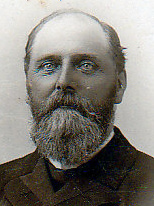
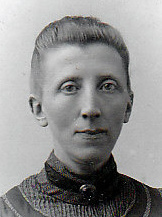

The data shown has no sources.
Matches in other publications
This person also appears in the publication: View all
Historical events
Birthday December 14, 1886
- The temperature on December 14, 1886 was about 4.3 °C. There was 0.5 mm of rain. The air pressure was 4 kgf/m2 and came mainly from the south-southwest. The airpressure was 75 cm mercury. The atmospheric humidity was 93%. Source: KNMI
- Koning Willem III (Huis van Oranje-Nassau) was from 1849 till 1890 sovereign of the Netherlands (also known as Koninkrijk der Nederlanden)
- In The Netherlands , there was from April 23, 1884 to April 21, 1888 the cabinet Heemskerk, with Mr. J. Heemskerk Azn. (conservatief) as prime minister.
- In the year 1886: Source: Wikipedia
- The Netherlands had about 4.5 million citizens.
- January 29 » Karl Benz patents the first successful gasoline-driven automobile.
- April 8 » William Ewart Gladstone introduces the first Irish Home Rule Bill into the British House of Commons.
- June 13 » A fire devastates much of Vancouver, British Columbia.
- July 3 » The New-York Tribune becomes the first newspaper to use a linotype machine, eliminating typesetting by hand.
- July 4 » The Canadian Pacific Railway's first scheduled train from Montreal arrives in Port Moody on the Pacific coast, after six days of travel.
- August 31 » The 7.0 Mw Charleston earthquake affects southeastern South Carolina with a maximum Mercalli intensity of X (Extreme). Sixty people killed with damage estimated at $5–6 million.
Day of marriage February 20, 1917
- The temperature on February 20, 1917 was between -0.1 °C and 4.9 °C and averaged 2.3 °C. There was 1.5 mm of rain. There was 0.1 hours of sunshine (1%). The average windspeed was 4 Bft (moderate breeze) and was prevailing from the south east. Source: KNMI
- Koningin Wilhelmina (Huis van Oranje-Nassau) was from 1890 till 1948 sovereign of the Netherlands (also known as Koninkrijk der Nederlanden)
- In The Netherlands , there was from August 29, 1913 to September 9, 1918 the cabinet Cort van der Linden, with Mr. P.W.A. Cort van der Linden (liberaal) as prime minister.
- In the year 1917: Source: Wikipedia
- The Netherlands had about 6.5 million citizens.
- March 31 » According to the terms of the Treaty of the Danish West Indies, the islands become American possessions.
- June 5 » World War I: Conscription begins in the United States as "Army registration day".
- July 6 » World War I: Arabian troops led by T. E. Lawrence ("Lawrence of Arabia") and Auda ibu Tayi capture Aqaba from the Ottoman Empire during the Arab Revolt.
- July 27 » World War I: The Allies reach the Yser Canal at the Battle of Passchendaele.
- November 25 » World War I: German forces defeat Portuguese army of about 1,200 at Negomano on the border of modern-day Mozambique and Tanzania.
- December 20 » Cheka, the first Soviet secret police force, is founded.
Day of death July 16, 1946
- The temperature on July 16, 1946 was between 8.0 °C and 18.7 °C and averaged 12.9 °C. There was 19.2 mm of rain during 9.8 hours. There was 1.7 hours of sunshine (10%). The average windspeed was 4 Bft (moderate breeze) and was prevailing from the south. Source: KNMI
- Koningin Wilhelmina (Huis van Oranje-Nassau) was from 1890 till 1948 sovereign of the Netherlands (also known as Koninkrijk der Nederlanden)
- From June 24, 1945 till July 3, 1946 the Netherlands had a cabinet Schermerhorn - Drees with the prime ministers Prof. ir. W. Schermerhorn (VDB) and W. Drees (PvdA).
- In The Netherlands , there was from July 3, 1946 to August 7, 1948 the cabinet Beel I, with Dr. L.J.M. Beel (KVP) as prime minister.
- In the year 1946: Source: Wikipedia
- The Netherlands had about 9.3 million citizens.
- January 11 » Enver Hoxha, Secretary General of the Communist Party of Albania, declares the People's Republic of Albania with himself as head of state.
- January 24 » The United Nations General Assembly passes its first resolution to establish the United Nations Atomic Energy Commission.
- March 28 » Cold War: The United States Department of State releases the Acheson–Lilienthal Report, outlining a plan for the international control of nuclear power.
- September 24 » The top-secret Clifford-Elsey Report on the Soviet Union is delivered to President Truman.
- October 13 » France adopts the constitution of the Fourth Republic.
- November 23 » French naval bombardment of Hai Phong, Vietnam, kills thousands of civilians.
Same birth/death day
- 1881 » Katherine MacDonald, American actress and producer († 1956)
- 1883 » Manolis Kalomiris, Greek pianist and composer († 1962)
- 1883 » Morihei Ueshiba, Japanese martial artist, developed aikido († 1969)
- 1884 » Jane Cowl, American actress and playwright († 1950)
- 1887 » Xul Solar, Argentinian painter and sculptor († 1963)
- 1894 » Alexander Nelke, Estonian-American painter and carpenter († 1974)
- 1939 » Bartholomeus Roodenburch, Dutch swimmer (b. 1866)
- 1949 » Vyacheslav Ivanov, Russian poet and playwright (b. 1866)
- 1953 » Hilaire Belloc, French-born British writer and historian (b. 1870)
- 1954 » Herms Niel, German soldier, trombonist, and composer (b. 1888)
- 1960 » Albert Kesselring, German field marshal (b. 1881)
- 1960 » John P. Marquand, American author (b. 1893)
About the surname Maas
- View the information that Genealogie Online has about the surname Maas.
- Check the information Open Archives has about Maas.
- Check the Wie (onder)zoekt wie? register to see who is (re)searching Maas.
The Family tree Eijskoot publication was prepared by Leo Eijskoot.
When copying data from this family tree, please include a reference to the origin:
Leo Eijskoot, "Family tree Eijskoot", database, Genealogy Online (https://www.genealogieonline.nl/stamboom-eijskoot/I502707.php : accessed February 5, 2026), "Dieuweke Maas (1886-1946)".
Leo Eijskoot, "Family tree Eijskoot", database, Genealogy Online (https://www.genealogieonline.nl/stamboom-eijskoot/I502707.php : accessed February 5, 2026), "Dieuweke Maas (1886-1946)".