Family tree Dijst » Petronella Elisabeth Wilhelmina Theodora Dijst (1913-1920)
Personal data Petronella Elisabeth Wilhelmina Theodora Dijst
- She was born on March 22, 1913 in Amsterdam.Source 1
- Resident on March 22, 1913: Ruijsdaelkade 135/hs, Amsterdam.
Geboorteadres
- She died on March 31, 1920 in Amsterdam, she was 7 years old.
De aangifte is gedaan door Frederik Kuijpers, aanspreker, 45 jaar en Karel Hendrik Kammeijer, zonder beroep, 74 jaar, beiden wonende te Amsterdam.
Tijdstip: 09:00:00
- Death registration on April 1, 1920.Source 2
- A child of Gerardus Dijst and Alida Maria Hoogeweg
- This information was last updated on July 11, 2011.
Household of Petronella Elisabeth Wilhelmina Theodora Dijst
Notes about Petronella Elisabeth Wilhelmina Theodora Dijst
Bij haar geboorte is haar vader werkeloos. Zeven maanden later komt haar vader te overlijden, terwijl haar moeder dan in verwachting is van een volgend kind, Petrus.
Timeline Petronella Elisabeth Wilhelmina Theodora Dijst
This functionality is only available in Javascript supporting browsers.
Click on the names for more info.
Symbols used:  grandparents
 parents
 brothers/sisters
 children
grandparents
parents
brothers/sisters
children
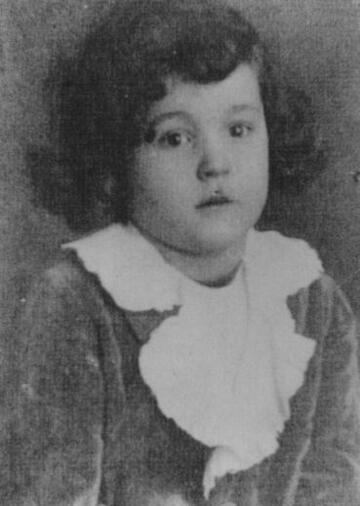
Image(s) Petronella Elisabeth Wilhelmina Theodora Dijst


Ancestors (and descendant) of Petronella Elisabeth Wilhelmina Theodora Dijst
Relationship Petronella Elisabeth Wilhelmina Theodora Dijst
- Petronella Elisabeth Wilhelmina Theodora Dijst is the 4th great granddaughter of Rudolphus Deijst:
Sources
Historical events
Birthday March 22, 1913
- The temperature on March 22, 1913 was between 6.4 °C and 14.8 °C and averaged 10.6 °C. There was 1.8 mm of rain. There was 6.7 hours of sunshine (55%). The average windspeed was 4 Bft (moderate breeze) and was prevailing from the south. Source: KNMI
- Koningin Wilhelmina (Huis van Oranje-Nassau) was from 1890 till 1948 sovereign of the Netherlands (also known as Koninkrijk der Nederlanden)
- In The Netherlands , there was from February 12, 1908 to August 29, 1913 the cabinet Heemskerk, with Mr. Th. Heemskerk (AR) as prime minister.
- In The Netherlands , there was from August 29, 1913 to September 9, 1918 the cabinet Cort van der Linden, with Mr. P.W.A. Cort van der Linden (liberaal) as prime minister.
- In the year 1913: Source: Wikipedia
- The Netherlands had about 6.1 million citizens.
- February 21 » Ioannina is incorporated into the Greek state after the Balkan Wars.
- June 1 » The Greek–Serbian Treaty of Alliance is signed, paving the way for the Second Balkan War.
- June 24 » Greece and Serbia annul their alliance with Bulgaria.
- June 25 » American Civil War veterans begin arriving at the Great Reunion of 1913.
- July 3 » Confederate veterans at the Great Reunion of 1913 reenact Pickett's Charge; upon reaching the high-water mark of the Confederacy they are met by the outstretched hands of friendship from Union survivors.
- August 10 » Second Balkan War: Delegates from Bulgaria, Romania, Serbia, Montenegro, and Greece sign the Treaty of Bucharest, ending the war.
Day of death March 31, 1920
- The temperature on March 31, 1920 was between 6.4 °C and 15.7 °C and averaged 10.5 °C. There was 4.4 hours of sunshine (34%). The average windspeed was 3 Bft (moderate breeze) and was prevailing from the east-northeast. Source: KNMI
- Koningin Wilhelmina (Huis van Oranje-Nassau) was from 1890 till 1948 sovereign of the Netherlands (also known as Koninkrijk der Nederlanden)
- In The Netherlands , there was from September 9, 1918 to September 18, 1922 the cabinet Ruys de Beerenbrouck I, with Jonkheer mr. Ch.J.M. Ruys de Beerenbrouck (RKSP) as prime minister.
- In the year 1920: Source: Wikipedia
- The Netherlands had about 6.8 million citizens.
- February 2 » The Tartu Peace Treaty is signed between Estonia and Russia.
- February 9 » Under the terms of the Svalbard Treaty, international diplomacy recognizes Norwegian sovereignty over Arctic archipelago Svalbard, and designates it as demilitarized.
- March 14 » In the second of the 1920 Schleswig plebiscites, about 80% of the population in Zone II votes to remain part of Weimar Germany.
- April 23 » The Grand National Assembly of Turkey (TBMM) is founded in Ankara. The assembly denounces the government of Sultan Mehmed VI and announces the preparation of a temporary constitution.
- November 12 » Italy and the Kingdom of Serbs, Croats and Slovenes sign the Treaty of Rapallo.
- December 24 » Gabriele D'Annunzio surrendered the Italian Regency of Carnaro in the city of Fiume to Italian armed forces.
Same birth/death day
- 1912 » Agnes Martin, Canadian-American painter and educator († 2004)
- 1912 » Karl Malden, American actor († 2009)
- 1912 » Wilfrid Brambell, Irish actor and performer († 1985)
- 1913 » James Westerfield, American actor († 1971)
- 1913 » Lew Wasserman, American businessman and talent agent († 2002)
- 1913 » Tom McCall, American journalist and politician, 30th Governor of Oregon († 1983)
- 1910 » Jean Moréas, Greek poet, essayist and art critic (b. 1856)
- 1913 » J. P. Morgan, American banker and financier (b. 1837)
- 1915 » Wyndham Halswelle, English-Scottish runner and captain (b. 1882)
- 1917 » Emil von Behring, German physiologist and immunologist, Nobel Prize laureate (b. 1854)
- 1924 » George Charles Haité, English painter and illustrator (b. 1855)
- 1927 » Kang Youwei, Chinese scholar and political reformer (b. 1858)
About the surname Dijst
- View the information that Genealogie Online has about the surname Dijst.
- Check the information Open Archives has about Dijst.
- Check the Wie (onder)zoekt wie? register to see who is (re)searching Dijst.
The Family tree Dijst publication was prepared by D. Dijst.
When copying data from this family tree, please include a reference to the origin:
D. Dijst, "Family tree Dijst", database, Genealogy Online (https://www.genealogieonline.nl/stamboom-dijst/I443.php : accessed January 28, 2026), "Petronella Elisabeth Wilhelmina Theodora Dijst (1913-1920)".
D. Dijst, "Family tree Dijst", database, Genealogy Online (https://www.genealogieonline.nl/stamboom-dijst/I443.php : accessed January 28, 2026), "Petronella Elisabeth Wilhelmina Theodora Dijst (1913-1920)".