Family tree Denneman » Diederik Adrianus van Duijn (1857-1945)
Personal data Diederik Adrianus van Duijn
- He was born on May 1, 1857 in Delft.
- He died on March 3, 1945 in Delft, he was 87 years old.
- A child of Jan van Duijn and Cornelia Poelman
- This information was last updated on November 17, 2008.
Household of Diederik Adrianus van Duijn
He is married to Johanna Catharina Antonia van den Berg.
They got married on December 1, 1880 at Delft, he was 23 years old.
Child(ren):
- Pieter Otto van Duijn 1888-1888
- Maria Dina Elisabeth van Duijn 1889-????
- Johanna Catharina Anthonia van Duijn 1890-????
- Catharina Cornelia Elisabeth van Duijn 1892-1892
- Wilhelmina Cornelia van Duijn 1894-1894
- Wilhelmus Josephus van Duijn 1896-1965
- Jacobus Hendricus van Duijn 1898-????
- Eva Hendrika van Duijn 1904-
Timeline Diederik Adrianus van Duijn
This functionality is only available in Javascript supporting browsers.
Click on the names for more info.
Symbols used:  grandparents
 parents
 brothers/sisters
 children
grandparents
parents
brothers/sisters
children
Image(s) Diederik Adrianus van Duijn

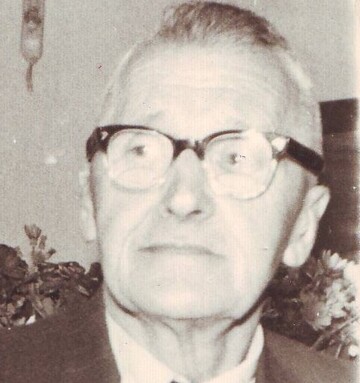
The data shown has no sources.
Matches in other publications
This person also appears in the publication: View all
- Stamboom Hoek, van Scherpenzeel, la Verge en van de Water, both authors confirmed that this is the same person
- Stamboom Ballijns (Wilain-Willin-Wellijn-Willijns-Willeijns) - van Munster - Louis - van Os(ch), one author has confirmed this is the same person
- Stamboom Van Haeringen Hoek
Historical events
Birthday May 1, 1857
- The temperature on May 1, 1857 was about 10.1 °C. The air pressure was 1.5 kgf/m2 and came mainly from the north-northwest. The atmospheric humidity was 65%. Source: KNMI
- This page is only available in Dutch.De Republiek der Verenigde Nederlanden werd in 1794-1795 door de Fransen veroverd onder leiding van bevelhebber Charles Pichegru (geholpen door de Nederlander Herman Willem Daendels); de verovering werd vergemakkelijkt door het dichtvriezen van de Waterlinie; Willem V moest op 18 januari 1795 uitwijken naar Engeland (en van daaruit in 1801 naar Duitsland); de patriotten namen de macht over van de aristocratische regenten en proclameerden de Bataafsche Republiek; op 16 mei 1795 werd het Haags Verdrag gesloten, waarmee ons land een vazalstaat werd van Frankrijk; in 3.1796 kwam er een Nationale Vergadering; in 1798 pleegde Daendels een staatsgreep, die de unitarissen aan de macht bracht; er kwam een nieuwe grondwet, die een Vertegenwoordigend Lichaam (met een Eerste en Tweede Kamer) instelde en als regering een Directoire; in 1799 sloeg Daendels bij Castricum een Brits-Russische invasie af; in 1801 kwam er een nieuwe grondwet; bij de Vrede van Amiens (1802) kreeg ons land van Engeland zijn koloniën terug (behalve Ceylon); na de grondwetswijziging van 1805 kwam er een raadpensionaris als eenhoofdig gezag, namelijk Rutger Jan Schimmelpenninck (van 31 oktober 1761 tot 25 maart 1825).
- In The Netherlands , there was from July 1, 1856 to March 18, 1858 the cabinet Van der Brugghen, with Mr. J.L.L. van der Brugghen (protestant) as prime minister.
- In the year 1857: Source: Wikipedia
- The Netherlands had about 3.3 million citizens.
- April 18 » "The Spirits Book" by Allan Kardec is published, marking the birth of Spiritualism in France.
- May 6 » The East India Company disbands the 34th Regiment of Bengal Native Infantry whose sepoy Mangal Pandey had earlier revolted against the British in the lead up to the War of Indian Independence.
- June 1 » Charles Baudelaire's Les Fleurs du mal is published.
- September 11 » The Mountain Meadows massacre: Mormon settlers and Paiutes massacre 120 pioneers at Mountain Meadows, Utah.
- September 22 » The Russian warship Lefort capsizes and sinks during a storm in the Gulf of Finland, killing all 826 aboard.
- October 24 » Sheffield F.C., the world's oldest association football club still in operation, is founded in England.
Day of marriage December 1, 1880
- The temperature on December 1, 1880 was about 4.0 °C. The air pressure was 3 kgf/m2 and came mainly from the south-southwest. The airpressure was 77 cm mercury. The atmospheric humidity was 97%. Source: KNMI
- Koning Willem III (Huis van Oranje-Nassau) was from 1849 till 1890 sovereign of the Netherlands (also known as Koninkrijk der Nederlanden)
- In The Netherlands , there was from August 20, 1879 to April 23, 1883 the cabinet Van Lijnden van Sandenburg, with Mr. C.Th. baron Van Lijnden van Sandenburg (conservatief-AR) as prime minister.
- In the year 1880: Source: Wikipedia
- The Netherlands had about 4.0 million citizens.
- February 13 » Thomas Edison observes Thermionic emission.
- June 7 » War of the Pacific: The Battle of Arica, the assault and capture of Morro de Arica (Arica Cape), ends the Campaña del Desierto (Desert Campaign).
- June 24 » First performance of O Canada at the Congrès national des Canadiens-Français. The song would later become the national anthem of Canada.
- June 28 » Australian bushranger Ned Kelly is captured at Glenrowan.
- June 29 » France annexes Tahiti, renaming the independent Kingdom of Tahiti as "Etablissements de français de l'Océanie".
- November 11 » Australian bushranger Ned Kelly is hanged at Melbourne Gaol.
Day of death March 3, 1945
- The temperature on March 3, 1945 was between 0.6 °C and 6.8 °C and averaged 3.1 °C. There was 0.1 mm of rain. There was 4.8 hours of sunshine (44%). The average windspeed was 4 Bft (moderate breeze) and was prevailing from the north-northwest. Source: KNMI
- Koningin Wilhelmina (Huis van Oranje-Nassau) was from 1890 till 1948 sovereign of the Netherlands (also known as Koninkrijk der Nederlanden)
- In The Netherlands , there was from July 27, 1941 to February 23, 1945 the cabinet Gerbrandy II, with Prof. dr. P.S. Gerbrandy (ARP) as prime minister.
- In The Netherlands , there was from February 23, 1945 to June 24, 1945 the cabinet Gerbrandy III, with Prof. dr. P.S. Gerbrandy (ARP) as prime minister.
- From June 24, 1945 till July 3, 1946 the Netherlands had a cabinet Schermerhorn - Drees with the prime ministers Prof. ir. W. Schermerhorn (VDB) and W. Drees (PvdA).
- In the year 1945: Source: Wikipedia
- The Netherlands had about 9.2 million citizens.
- January 1 » World War II: The German Luftwaffe launches Operation Bodenplatte, a massive, but failed attempt to knock out Allied air power in northern Europe in a single blow.
- February 13 » World War II: Royal Air Force bombers are dispatched to Dresden, Germany to attack the city with a massive aerial bombardment.
- February 14 » World War II: Navigational error leads to the mistaken bombing of Prague, Czechoslovakia by an American squadron of B-17s assisting in the Soviet's Vistula–Oder Offensive.
- August 17 » Sukarno and Mohammad Hatta proclaim the independence of Indonesia, igniting the Indonesian National Revolution against the Dutch Empire.
- August 30 » The Allied Control Council, governing Germany after World War II, comes into being.
- October 17 » A massive demonstration in Buenos Aires, Argentina, demands Juan Perón's release.
Same birth/death day
- 1852 » Calamity Jane, American frontierswoman and professional scout († 1903)
- 1852 » Santiago Ramón y Cajal, Spanish neuroscientist and pathologist, Nobel Prize laureate († 1934)
- 1853 » Jacob Mikhailovich Gordin, Jewish Ukrainian-American journalist, actor, and playwright († 1909)
- 1855 » Cecilia Beaux, American painter and academic († 1942)
- 1857 » Theo van Gogh, Dutch art dealer († 1891)
- 1859 » Jacqueline Comerre-Paton, French painter and sculptor († 1955)
- 1927 » Mikhail Artsybashev, Ukrainian author and playwright (b. 1878)
- 1929 » Katharine Wright, American educator (b. 1874)
- 1932 » Eugen d'Albert, Scottish-German pianist and composer (b. 1864)
- 1943 » George Thompson, English cricketer and umpire (b. 1877)
- 1959 » Lou Costello, American actor and comedian (b. 1906)
- 1961 » Paul Wittgenstein, Austrian-American pianist (b. 1887)
About the surname Van Duijn
- View the information that Genealogie Online has about the surname Van Duijn.
- Check the information Open Archives has about Van Duijn.
- Check the Wie (onder)zoekt wie? register to see who is (re)searching Van Duijn.
The Family tree Denneman publication was prepared by John Bart.
When copying data from this family tree, please include a reference to the origin:
John Bart, "Family tree Denneman", database, Genealogy Online (https://www.genealogieonline.nl/stamboom-denneman/I952.php : accessed March 15, 2026), "Diederik Adrianus van Duijn (1857-1945)".
John Bart, "Family tree Denneman", database, Genealogy Online (https://www.genealogieonline.nl/stamboom-denneman/I952.php : accessed March 15, 2026), "Diederik Adrianus van Duijn (1857-1945)".