Family tree Denneman » Hermanus Johannes Maria "Herman" Denneman (1914-1992)
Personal data Hermanus Johannes Maria "Herman" Denneman
- Nickname is Herman.
- He was born on May 14, 1914 in Heiloo.
- He died on November 3, 1992 in Ocean Grove, Victoria (Australië), he was 78 years old.
- A child of Laurentius Denneman and Anna Roobeek
- This information was last updated on January 16, 2017.
Household of Hermanus Johannes Maria "Herman" Denneman
He is married to Hiltje Baars.
They got married on January 7, 1942 at Heiloo, he was 27 years old.
Child(ren):
- (Not public)
- (Not public)
- (Not public)
- (Not public)
- (Not public)
- (Not public)
- (Not public)
Timeline Hermanus Johannes Maria "Herman" Denneman
This functionality is only available in Javascript supporting browsers.
Click on the names for more info.
Symbols used:  grandparents
 parents
 brothers/sisters
 children
grandparents
parents
brothers/sisters
children
Image(s) Hermanus Johannes Maria "Herman" Denneman

Ancestors (and descendant) of Hermanus Johannes Maria Denneman
Hermanus Johannes Maria Denneman 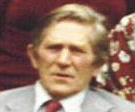 | ||||||||||||||||||||||||||||||||||||||||||||||||||||||||||||||||||||||
1942 | ||||||||||||||||||||||||||||||||||||||||||||||||||||||||||||||||||||||
Hiltje Baars 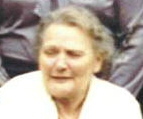 | ||||||||||||||||||||||||||||||||||||||||||||||||||||||||||||||||||||||
Relationship Hermanus Johannes Maria "Herman" Denneman
- Hermanus Johannes Maria Denneman is the 4th great grandson of Jan Jansz Denne (of Kraakman):
The data shown has no sources.
Matches in other publications
This person also appears in the publication: View all
- Stamboom Kaandorp, Bergen, one author has confirmed this is the same person
- Stamboom Kunnen/Karman, one author has confirmed this is the same person
Historical events
Birthday May 14, 1914
- The temperature on May 14, 1914 was between 8.9 °C and 14.0 °C and averaged 10.6 °C. There was 1.1 mm of rain. There was 0.1 hours of sunshine (1%). The average windspeed was 3 Bft (moderate breeze) and was prevailing from the north-northwest. Source: KNMI
- Koningin Wilhelmina (Huis van Oranje-Nassau) was from 1890 till 1948 sovereign of the Netherlands (also known as Koninkrijk der Nederlanden)
- In The Netherlands , there was from August 29, 1913 to September 9, 1918 the cabinet Cort van der Linden, with Mr. P.W.A. Cort van der Linden (liberaal) as prime minister.
- In the year 1914: Source: Wikipedia
- The Netherlands had about 6.2 million citizens.
- April 9 » Mexican Revolution: One of the world's first naval/air skirmishes takes place off the coast of western Mexico.
- April 21 » Ypiranga incident: A German arms shipment to Mexico is intercepted by the U.S. Navy near Veracruz.
- April 24 » The Franck–Hertz experiment, a pillar of quantum mechanics, is presented to the German Physical Society.
- July 29 » The Cape Cod Canal opened.
- August 27 » World War I: Battle of Étreux: A British rearguard action by the Royal Munster Fusiliers during the Great Retreat.
- September 17 » World War I: The Race to the Sea begins.
Day of marriage January 7, 1942
- The temperature on January 7, 1942 was between -3.1 °C and -1.4 °C and averaged -2.0 °C. There was 3.6 mm of rain during 2.5 hours. The average windspeed was 2 Bft (weak wind) and was prevailing from the south. Source: KNMI
- Koningin Wilhelmina (Huis van Oranje-Nassau) was from 1890 till 1948 sovereign of the Netherlands (also known as Koninkrijk der Nederlanden)
- In The Netherlands , there was from July 27, 1941 to February 23, 1945 the cabinet Gerbrandy II, with Prof. dr. P.S. Gerbrandy (ARP) as prime minister.
- In the year 1942: Source: Wikipedia
- The Netherlands had about 9.0 million citizens.
- February 8 » World War II: Dutch Colonial Army General Destruction Unit (AVC, Algemene Vernielings Corps) burns Banjarmasin, South Borneo to avoid Japanese capture.
- February 8 » World War II: Japan invades Singapore.
- February 9 » Year-round Daylight saving time (aka War Time) is re-instated in the United States as a wartime measure to help conserve energy resources.
- February 18 » World War II: The Imperial Japanese Army begins the systematic extermination of perceived hostile elements among the Chinese in Singapore.
- July 1 » World War II: First Battle of El Alamein.
- August 13 » Major General Eugene Reybold of the U.S. Army Corps of Engineers authorizes the construction of facilities that would house the "Development of Substitute Materials" project, better known as the Manhattan Project.
Day of death November 3, 1992
- The temperature on November 3, 1992 was between 5.6 °C and 11.1 °C and averaged 8.8 °C. There was 1.3 mm of rain during 1.7 hours. There was 3.9 hours of sunshine (41%). The partly clouded was. The average windspeed was 3 Bft (moderate breeze) and was prevailing from the west-southwest. Source: KNMI
- Koningin Beatrix (Huis van Oranje-Nassau) was from April 30, 1980 till April 30, 2013 sovereign of the Netherlands (also known as Koninkrijk der Nederlanden)
- In The Netherlands , there was from Tuesday, November 7, 1989 to Monday, August 22, 1994 the cabinet Lubbers III, with Drs. R.F.M. Lubbers (CDA) as prime minister.
- In the year 1992: Source: Wikipedia
- The Netherlands had about 15.1 million citizens.
- March 31 » The Treaty of Federation is signed in Moscow.
- June 8 » The first World Oceans Day is celebrated, coinciding with the Earth Summit held in Rio de Janeiro, Brazil.
- September 16 » Black Wednesday: The British pound is forced out of the European Exchange Rate Mechanism by currency speculators and is forced to devalue against the German mark.
- September 28 » A Pakistan International Airlines flight crashes into a hill in Nepal, killing all 167 passengers and crew.
- November 11 » The General Synod of the Church of England votes to allow women to become priests.
- December 4 » Somali Civil War: President George H. W. Bush orders 28,000 U.S. troops to Somalia in Northeast Africa.
Same birth/death day
- 1914 » Gul Khan Nasir, Pakistani journalist, poet, and politician († 1983)
- 1914 » William Thomas Tutte, British codebreaker and mathematician († 2002)
- 1916 » Lance Dossor, English-Australian pianist and educator († 2005)
- 1916 » Marco Zanuso, Italian architect and designer († 2001)
- 1916 » Robert F. Christy, Canadian-American physicist and astronomer († 2012)
- 1917 » Lou Harrison, American composer and critic († 2003)
- 1990 » Kenan Erim, Turkish archaeologist and academic (b. 1929)
- 1990 » Mary Martin, American actress and singer (b. 1913)
- 1990 » Nusret Fişek, Turkish physician and politician, Turkish Minister of Health (b. 1914)
- 1991 » Chris Bender, American singer (b. 1972)
- 1993 » Léon Theremin, Russian physicist and engineer, invented the Theremin (b. 1895)
- 1994 » Valter Palm, Estonian-American boxer (b. 1905)
About the surname Denneman
- View the information that Genealogie Online has about the surname Denneman.
- Check the information Open Archives has about Denneman.
- Check the Wie (onder)zoekt wie? register to see who is (re)searching Denneman.
The Family tree Denneman publication was prepared by John Bart.
When copying data from this family tree, please include a reference to the origin:
John Bart, "Family tree Denneman", database, Genealogy Online (https://www.genealogieonline.nl/stamboom-denneman/I116.php : accessed February 16, 2026), "Hermanus Johannes Maria "Herman" Denneman (1914-1992)".
John Bart, "Family tree Denneman", database, Genealogy Online (https://www.genealogieonline.nl/stamboom-denneman/I116.php : accessed February 16, 2026), "Hermanus Johannes Maria "Herman" Denneman (1914-1992)".