Family tree Buch » Wilhelm Joseph Maria Buch (1863-1949)
Personal data Wilhelm Joseph Maria Buch
- He was born on July 16, 1863 in Wewelsburg (Germany).
- He was christened on July 17, 1863 in Wewelsburg.
- He died on April 19, 1949 in Soest (NL), he was 85 years old.
- He is buried in Soest (NL).
- A child of Anton Buch and Theresia Segin
- This information was last updated on March 23, 2008.
Household of Wilhelm Joseph Maria Buch
He is married to Joanna Maria Elisabeth Hoogesteijn.
They got married on October 12, 1893 at Nieuwer Amstel, he was 30 years old.
Child(ren):
- Willem Joseph Maria Buch 1895-1975
- Franciscus Christinus Nicolaas Buch 1898-1970
Timeline Wilhelm Joseph Maria Buch
This functionality is only available in Javascript supporting browsers.
Click on the names for more info.
Symbols used:  grandparents
 parents
 brothers/sisters
 children
grandparents
parents
brothers/sisters
children
Image(s) Wilhelm Joseph Maria Buch


Ancestors (and descendant) of Wilhelm Joseph Maria Buch
Wilhelm Joseph Maria Buch | ||||||||||||||||||||||||||||||||||||
1893 | ||||||||||||||||||||||||||||||||||||
Joanna Maria Elisabeth Hoogesteijn 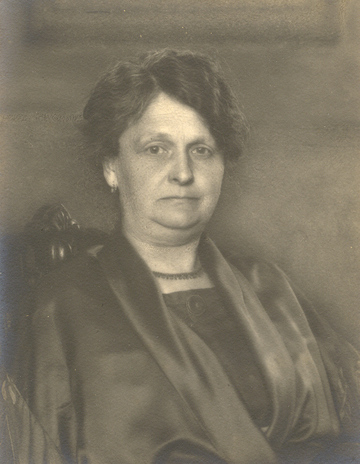 | ||||||||||||||||||||||||||||||||||||
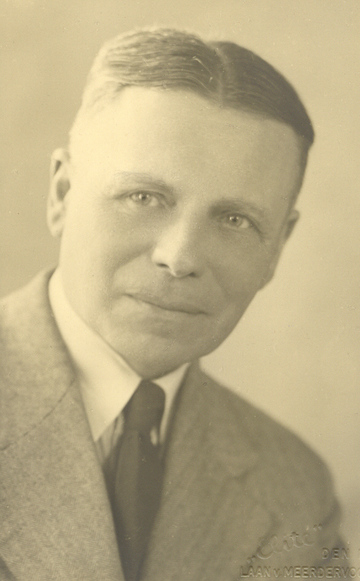
The data shown has no sources.
Historical events
Birthday July 16, 1863
- The temperature on July 16, 1863 was about 15.3 °C. The air pressure was 2 kgf/m2 and came mainly from the north-northwest. The airpressure was 77 cm mercury. The atmospheric humidity was 46%. Source: KNMI
- Koning Willem III (Huis van Oranje-Nassau) was from 1849 till 1890 sovereign of the Netherlands (also known as Koninkrijk der Nederlanden)
- In The Netherlands , there was from February 1, 1862 to February 10, 1866 the cabinet Thorbecke II, with Mr. J.R. Thorbecke (liberaal) as prime minister.
- In the year 1863: Source: Wikipedia
- The Netherlands had about 3.6 million citizens.
- April 2 » American Civil War: The largest in a series of Southern bread riots occurs in Richmond, Virginia.
- May 27 » American Civil War: First Assault on the Confederate works at the Siege of Port Hudson.
- June 7 » During the French intervention in Mexico, Mexico City is captured by French troops.
- July 3 » American Civil War: The final day of the Battle of Gettysburg culminates with Pickett's Charge.
- July 26 » American Civil War: Morgan's Raid ends; At Salineville, Ohio, Confederate cavalry leader John Hunt Morgan and 360 of his volunteers are captured by Union forces.
- November 25 » American Civil War: Battle of Missionary Ridge: At Missionary Ridge in Tennessee, Union forces led by General Ulysses S. Grant break the Siege of Chattanooga by routing Confederate troops under General Braxton Bragg.
Christening day July 17, 1863
- The temperature on July 17, 1863 was about 17.0 °C. The air pressure was 7.5 kgf/m2 and came mainly from the west-southwest. The airpressure was 76 cm mercury. The atmospheric humidity was 47%. Source: KNMI
- Koning Willem III (Huis van Oranje-Nassau) was from 1849 till 1890 sovereign of the Netherlands (also known as Koninkrijk der Nederlanden)
- In The Netherlands , there was from February 1, 1862 to February 10, 1866 the cabinet Thorbecke II, with Mr. J.R. Thorbecke (liberaal) as prime minister.
- In the year 1863: Source: Wikipedia
- The Netherlands had about 3.6 million citizens.
- June 14 » American Civil War: Second Battle of Winchester: A Union garrison is defeated by the Army of Northern Virginia in the Shenandoah Valley town of Winchester, Virginia.
- July 4 » American Civil War: The Army of Northern Virginia withdraws from the battlefield after losing the Battle of Gettysburg, signalling an end to the Confederate invasion of U.S. territory.
- September 7 » American Civil War: Union troops under Quincy A. Gillmore captures Fort Wagner in Morris Island after a 7-week siege.
- September 20 » American Civil War: The Battle of Chickamauga, in northwestern Georgia, ends in a Confederate victory.
- October 15 » American Civil War: The H. L. Hunley, the first submarine to sink a ship, sinks, killing its inventor.
- November 25 » American Civil War: Battle of Missionary Ridge: At Missionary Ridge in Tennessee, Union forces led by General Ulysses S. Grant break the Siege of Chattanooga by routing Confederate troops under General Braxton Bragg.
Day of marriage October 12, 1893
- The temperature on October 12, 1893 was about 10.4 °C. There was 2 mm of rain. The airpressure was 76 cm mercury. The atmospheric humidity was 96%. Source: KNMI
- Koningin Wilhelmina (Huis van Oranje-Nassau) was from 1890 till 1948 sovereign of the Netherlands (also known as Koninkrijk der Nederlanden)
- Regentes Emma (Huis van Oranje-Nassau) was from 1890 till 1898 sovereign of the Netherlands (also known as Koninkrijk der Nederlanden)
- In The Netherlands , there was from August 21, 1891 to May 9, 1894 the cabinet Van Tienhoven, with Mr. G. van Tienhoven (unie-liberaal) as prime minister.
- In the year 1893: Source: Wikipedia
- The Netherlands had about 5.1 million citizens.
- June 13 » Grover Cleveland notices a rough spot in his mouth and on July 1 undergoes secret, successful surgery to remove a large, cancerous portion of his jaw; the operation was not revealed to the public until 1917, nine years after the president's death.
- July 22 » Katharine Lee Bates writes "America the Beautiful" after admiring the view from the top of Pikes Peak near Colorado Springs, Colorado.
- August 14 » France becomes the first country to introduce motor vehicle registration.
- August 15 » Ibadan area becomes a British Protectorate after a treaty signed by Fijabi, the Baale of Ibadan with the British acting Governor of Lagos, George C. Denton.
- September 16 » Settlers make a land run for prime land in the Cherokee Strip in Oklahoma.
- October 28 » Tchaikovsky's Symphony No. 6 in B Minor, Pathétique receives its première performance only nine days before the composer's death.
Day of death April 19, 1949
- The temperature on April 19, 1949 was between 6.9 °C and 14.7 °C and averaged 11.4 °C. There was 7.4 hours of sunshine (52%). The average windspeed was 3 Bft (moderate breeze) and was prevailing from the west. Source: KNMI
- Koningin Juliana (Huis van Oranje-Nassau) was from September 4, 1948 till April 30, 1980 sovereign of the Netherlands (also known as Koninkrijk der Nederlanden)
- From August 7, 1948 till March 15, 1951 the Netherlands had a cabinet Drees - Van Schaik with the prime ministers Dr. W. Drees (PvdA) and Mr. J.R.H. van Schaik (KVP).
- In the year 1949: Source: Wikipedia
- The Netherlands had about 9.9 million citizens.
- July 27 » Initial flight of the de Havilland Comet, the first jet-powered airliner.
- September 21 » The People's Republic of China is proclaimed.
- October 3 » WERD, the first black-owned radio station in the United States, opens in Atlanta.
- November 18 » The Iva Valley Shooting occurs after the coal miners of Enugu in Nigeria go on strike over withheld wages; 21 miners are shot dead and 51 are wounded by police under the supervision of the British colonial administration of Nigeria.
- December 4 » Sir Duncan George Stewart was fatally stabbed by Rosli Dhobi, a member leader of the Rukun 13, in Sibu, Sarawak, Malaysia during the British crown colony era in that state.
- December 27 » Indonesian National Revolution: The Netherlands officially recognizes Indonesian independence. End of the Dutch East Indies.
Same birth/death day
- 1858 » Eugène Ysaÿe, Belgian violinist, composer, and conductor († 1931)
- 1862 » Ida B. Wells, American journalist and activist († 1931)
- 1863 » Anderson Dawson, Australian politician, 14th Premier of Queensland († 1910)
- 1870 » Lambert McKenna, Irish priest, lexicographer, and scholar († 1956)
- 1871 » John Maxwell, American golfer († 1906)
- 1872 » Roald Amundsen, Norwegian pilot and explorer († 1928)
- 1937 » Martin Conway, 1st Baron Conway of Allington, English cartographer and politician (b. 1856)
- 1941 » Johanna Müller-Hermann, Austrian composer (b. 1878)
- 1949 » Ulrich Salchow, Danish-Swedish figure skater (b. 1877)
- 1950 » Ernst Robert Curtius, French-German philologist and scholar (b. 1886)
- 1955 » Jim Corbett, British-Indian colonel, hunter, and author (b. 1875)
- 1960 » Beardsley Ruml, American economist and statistician (b. 1894)
About the surname Buch
- View the information that Genealogie Online has about the surname Buch.
- Check the information Open Archives has about Buch.
- Check the Wie (onder)zoekt wie? register to see who is (re)searching Buch.
The Family tree Buch publication was prepared by Tom Charles Buch.
When copying data from this family tree, please include a reference to the origin:
Tom Charles Buch, "Family tree Buch", database, Genealogy Online (https://www.genealogieonline.nl/stamboom-buch/I14.php : accessed March 16, 2026), "Wilhelm Joseph Maria Buch (1863-1949)".
Tom Charles Buch, "Family tree Buch", database, Genealogy Online (https://www.genealogieonline.nl/stamboom-buch/I14.php : accessed March 16, 2026), "Wilhelm Joseph Maria Buch (1863-1949)".