Family tree van de families Borggreve, Grijpma, de Nooijer en Dingemanse » Blaas Jacob Lievens de Nooijer (1880-1941)
Personal data Blaas Jacob Lievens de Nooijer
Source 1- He was born on September 23, 1880 in Arnemuiden, Zeeland, Nederland.
- He died on February 5, 1941 in Arnemuiden, Zeeland, Nederland, he was 60 years old.
- A child of Lieven Blaasz "Lieven van Wulst" de Nooijer and Adriana de Nooijer
Household of Blaas Jacob Lievens de Nooijer
He is married to Christina Johanna Mulder.
They got married on October 27, 1900 at Arnemuiden, Zeeland, Nederland, he was 20 years old.
Child(ren):
- Jannetje de Nooijer 1899-????
- Adriana de Nooijer 1901-
- Dina de Nooijer 1903-1976
- Bastiaan de Nooijer 1906-1907
- Lieven de Nooijer 1908-1909
- Bastiaan de Nooijer 1914-1916
- Bastiaan de Nooijer 1918-1919
- (Not public)
Timeline Blaas Jacob Lievens de Nooijer
This functionality is only available in Javascript supporting browsers.
Click on the names for more info.
Symbols used:  grandparents
 parents
 brothers/sisters
 children
grandparents
parents
brothers/sisters
children
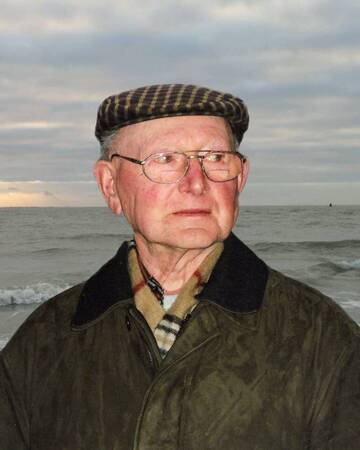
Image(s) Blaas Jacob Lievens de Nooijer


Ancestors (and descendant) of Blaas Jacob Lievens de Nooijer
Blaas Jacob Lievens de Nooijer  | ||||||||||||||||||||||||||||||||||||||||||||||||||||||||||||||||||||||||||||||||||||||||||||||||||||||||||||
1900 | ||||||||||||||||||||||||||||||||||||||||||||||||||||||||||||||||||||||||||||||||||||||||||||||||||||||||||||
Christina Johanna Mulder  | ||||||||||||||||||||||||||||||||||||||||||||||||||||||||||||||||||||||||||||||||||||||||||||||||||||||||||||


Sources
- (Not public)
Historical events
Birthday September 23, 1880
- The temperature on September 23, 1880 was about 17.9 °C. The airpressure was 76 cm mercury. The atmospheric humidity was 68%. Source: KNMI
- Koning Willem III (Huis van Oranje-Nassau) was from 1849 till 1890 sovereign of the Netherlands (also known as Koninkrijk der Nederlanden)
- In The Netherlands , there was from August 20, 1879 to April 23, 1883 the cabinet Van Lijnden van Sandenburg, with Mr. C.Th. baron Van Lijnden van Sandenburg (conservatief-AR) as prime minister.
- In the year 1880: Source: Wikipedia
- The Netherlands had about 4.0 million citizens.
- January 27 » Thomas Edison receives a patent for his incandescent lamp.
- May 13 » In Menlo Park, New Jersey, Thomas Edison performs the first test of his electric railway.
- June 7 » War of the Pacific: The Battle of Arica, the assault and capture of Morro de Arica (Arica Cape), ends the Campaña del Desierto (Desert Campaign).
- June 29 » France annexes Tahiti, renaming the independent Kingdom of Tahiti as "Etablissements de français de l'Océanie".
- July 27 » Second Anglo-Afghan War: Battle of Maiwand: Afghan forces led by Mohammad Ayub Khan defeat the British Army in battle near Maiwand, Afghanistan.
- August 14 » Construction of Cologne Cathedral, the most famous landmark in Cologne, Germany, is completed.
Day of marriage October 27, 1900
- The temperature on October 27, 1900 was about 8.2 °C. The airpressure was 75 cm mercury. The atmospheric humidity was 87%. Source: KNMI
- Koningin Wilhelmina (Huis van Oranje-Nassau) was from 1890 till 1948 sovereign of the Netherlands (also known as Koninkrijk der Nederlanden)
- In The Netherlands , there was from July 27, 1897 to August 1, 1901 the cabinet Pierson, with Mr. N.G. Pierson (unie-liberaal) as prime minister.
- In the year 1900: Source: Wikipedia
- The Netherlands had about 5.1 million citizens.
- February 6 » The Permanent Court of Arbitration, an international arbitration court at The Hague, is created when the Senate of the Netherlands ratifies an 1899 peace conference decree.
- February 7 » Second Boer War: British troops fail in their third attempt to lift the Siege of Ladysmith.
- March 18 » AFC Ajax Amsterdam, The Netherlands's biggest and most successful football club, was founded.
- June 14 » The second German Naval Law calls for the Imperial German Navy to be doubled in size, resulting in an Anglo-German naval arms race.
- June 17 » Boxer Rebellion: Western Allied and Japanese forces capture the Taku Forts in Tianjin, China.
- August 14 » The Eight-Nation Alliance occupies Beijing, China, in a campaign to end the bloody Boxer Rebellion in China.
Day of death February 5, 1941
- The temperature on February 5, 1941 was between -11.3 °C and -5.8 °C and averaged -8.0 °C. There was 8.2 hours of sunshine (88%). The average windspeed was 2 Bft (weak wind) and was prevailing from the east-southeast. Source: KNMI
- Koningin Wilhelmina (Huis van Oranje-Nassau) was from 1890 till 1948 sovereign of the Netherlands (also known as Koninkrijk der Nederlanden)
- In The Netherlands , there was from September 3, 1940 to July 27, 1941 the cabinet Gerbrandy I, with Prof. dr. P.S. Gerbrandy (ARP) as prime minister.
- In The Netherlands , there was from July 27, 1941 to February 23, 1945 the cabinet Gerbrandy II, with Prof. dr. P.S. Gerbrandy (ARP) as prime minister.
- In the year 1941: Source: Wikipedia
- The Netherlands had about 8.9 million citizens.
- March 2 » World War II: First German military units enter Bulgaria after it joins the Axis Pact.
- September 28 » World War II: The Drama uprising against the Bulgarian occupation in northern Greece begins.
- October 8 » World War II: During the preliminaries of the Battle of Rostov, German forces reach the Sea of Azov with the capture of Mariupol.
- December 8 » World War II: Japanese forces simultaneously invade Shanghai International Settlement, Malaya, Thailand, Hong Kong, the Philippines, and the Dutch East Indies. (See December 7 for the concurrent attack on Pearl Harbor in the Western Hemisphere.)
- December 23 » World War II: After 15 days of fighting, the Imperial Japanese Army occupies Wake Island.
- December 26 » U.S. President Franklin D. Roosevelt signs a bill establishing the fourth Thursday in November as Thanksgiving Day in the United States.
Same birth/death day
- 1865 » Pekka Halonen, Finnish painter († 1933)
- 1867 » John Lomax, American teacher, musicologist, and folklorist († 1948)
- 1876 » Moshe Zvi Segal, Israeli rabbi and scholar († 1968)
- 1880 » John Boyd Orr, 1st Baron Boyd-Orr, Scottish biologist, physician, and politician, Nobel Prize laureate († 1971)
- 1889 » Walter Lippmann, American journalist and publisher, co-founded The New Republic († 1974)
- 1890 » Friedrich Paulus, German general († 1957)
- 1937 » Lou Andreas-Salomé, Russian-German psychoanalyst and author (b. 1861)
- 1938 » Hans Litten, German lawyer and jurist (b. 1903)
- 1941 » Banjo Paterson, Australian journalist, author, and poet (b. 1864)
- 1941 » Otto Strandman, Estonian lawyer and politician, 1st Prime Minister of Estonia (b. 1875)
- 1946 » George Arliss, English actor and playwright (b. 1868)
- 1948 » Johannes Blaskowitz, German general (b. 1883)
About the surname De Nooijer
- View the information that Genealogie Online has about the surname De Nooijer.
- Check the information Open Archives has about De Nooijer.
- Check the Wie (onder)zoekt wie? register to see who is (re)searching De Nooijer.
The Family tree van de families Borggreve, Grijpma, de Nooijer en Dingemanse publication was prepared by J. Borggreve.
When copying data from this family tree, please include a reference to the origin:
J. Borggreve, "Family tree van de families Borggreve, Grijpma, de Nooijer en Dingemanse", database, Genealogy Online (https://www.genealogieonline.nl/stamboom-borggreve/I500999.php : accessed December 24, 2025), "Blaas Jacob Lievens de Nooijer (1880-1941)".
J. Borggreve, "Family tree van de families Borggreve, Grijpma, de Nooijer en Dingemanse", database, Genealogy Online (https://www.genealogieonline.nl/stamboom-borggreve/I500999.php : accessed December 24, 2025), "Blaas Jacob Lievens de Nooijer (1880-1941)".