Descendants Hemerik-Broekhuizen-Huner-Koper-Barink » Maarten Hoek (1875-1956)
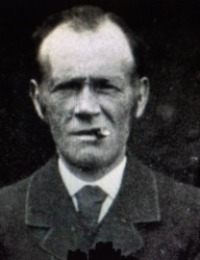
Personal data Maarten Hoek
- He was born on September 5, 1875 in Noordwijk, Zuid Holland, Nederland.
- He died on January 10, 1956 in Noordwijk, Zuid Holland, Nederland, he was 80 years old.
- A child of Maarten Hoek and Neeltje Barnhoorn
- This information was last updated on August 18, 2015.
Household of Maarten Hoek
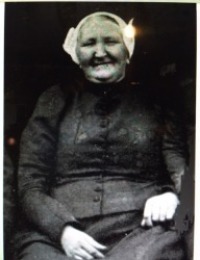
He is married to Neeltje Passchier.
They got married on February 28, 1902 at 's-Gravenhage, he was 26 years old.
Child(ren):
- Maarten Hoek 1902-1902
- Maarten Hoek 1903-1943
- Hendrik Hoek 1906-1982
- NN Hoek 1908
- Jacoba Hoek 1913-1914
- Floris Hoek 1918-2001
Timeline Maarten Hoek
This functionality is only available in Javascript supporting browsers.
Click on the names for more info.
Symbols used:  grandparents
 parents
 brothers/sisters
 children
grandparents
parents
brothers/sisters
children
Ancestors (and descendant) of Maarten Hoek
Maarten Hoek | ||||||||||||||||||||||||||||||||||||||||||||||||||||||||||||||||||||||
1902 | ||||||||||||||||||||||||||||||||||||||||||||||||||||||||||||||||||||||
Neeltje Passchier | ||||||||||||||||||||||||||||||||||||||||||||||||||||||||||||||||||||||
Relationship Maarten Hoek
- Maarten Hoek is the 6th great grandson of Floris Dirksz Waasdorp:
- Maarten Hoek is the 2nd great grandson of Daniel Danielsz van Beveren:
- Maarten Hoek is the 5th great grandson of Klaas Jansz Plug:
- Maarten Hoek is the 5th great grandson of Steven Riethoven:
The data shown has no sources.
Matches in other publications
This person also appears in the publication: View all
- Stamboom Van den Eijkel en Van den Haak, one author has confirmed this is the same person
- Stamboom Hoek, van Scherpenzeel, la Verge en van de Water
- Genealogie Sepers
Historical events
Birthday September 5, 1875
- The temperature on September 5, 1875 was about 17.3 °C. The air pressure was 3 kgf/m2 and came mainly from the west. The airpressure was 77 cm mercury. The atmospheric humidity was 84%. Source: KNMI
- Koning Willem III (Huis van Oranje-Nassau) was from 1849 till 1890 sovereign of the Netherlands (also known as Koninkrijk der Nederlanden)
- From August 27, 1874 till November 3, 1877 the Netherlands had a cabinet Heemskerk - Van Lijnden van Sandenburg with the prime ministers Mr. J. Heemskerk Azn. (conservatief) and Mr. C.Th. baron Van Lijnden van Sandenburg (AR).
- In the year 1875: Source: Wikipedia
- The Netherlands had about 4.0 million citizens.
- January 5 » The Palais Garnier, one of the most famous opera houses in the world, is inaugurated in Paris.
- February 24 » The SSGothenburg hits the Great Barrier Reef and sinks off the Australian east coast, killing approximately 100, including a number of high-profile civil servants and dignitaries.
- April 4 » Vltava, composed by Czech composer Bedřich Smetana and also known by its German name Die Moldau, premiered in Prague.
- July 9 » The Herzegovina Uprising against Ottoman rule begins, which would last until 1878 and have far-reaching implications throughout the Balkans.
- August 25 » Captain Matthew Webb becomes the first person to swim across the English Channel, traveling from Dover, England, to Calais, France, in 21 hours and 45 minutes.
- December 4 » Notorious New York City politician Boss Tweed escapes from prison; he is later recaptured in Spain.
Day of marriage February 28, 1902
- The temperature on February 28, 1902 was between 4.5 °C and 11.6 °C and averaged 7.2 °C. There was 1.8 hours of sunshine (17%). Source: KNMI
- Koningin Wilhelmina (Huis van Oranje-Nassau) was from 1890 till 1948 sovereign of the Netherlands (also known as Koninkrijk der Nederlanden)
- In The Netherlands , there was from August 1, 1901 to August 16, 1905 the cabinet Kuijper, with Dr. A. Kuijper (AR) as prime minister.
- In the year 1902: Source: Wikipedia
- The Netherlands had about 5.2 million citizens.
- January 30 » The first Anglo-Japanese Alliance is signed in London.
- March 7 » Second Boer War: Boers, led by Koos de la Rey, inflict the biggest defeat upon the British since the beginning of the war, at Tweebosch.
- April 18 » The 7.5 Mw Guatemala earthquake shakes Guatemala with a maximum Mercalli intensity of VIII (Severe), killing between 800–2,000.
- June 24 » King Edward VII of the United Kingdom develops appendicitis, delaying his coronation.
- November 29 » The Pittsburgh Stars defeated the Philadelphia Athletics, 11–0 to win the first championship associated with an American national professional football league.
- December 14 » The Commercial Pacific Cable Company lays the first Pacific telegraph cable, from San Francisco to Honolulu.
Day of death January 10, 1956
- The temperature on January 10, 1956 was between -2.1 °C and 1.8 °C and averaged -0.2 °C. There was 1.5 mm of rain during 3.8 hours. The partly or heavily clouded was. The average windspeed was 6 Bft (strong wind) and was prevailing from the south-southeast. Source: KNMI
- Koningin Juliana (Huis van Oranje-Nassau) was from September 4, 1948 till April 30, 1980 sovereign of the Netherlands (also known as Koninkrijk der Nederlanden)
- In The Netherlands , there was from September 2, 1952 to October 13, 1956 the cabinet Drees II, with Dr. W. Drees (PvdA) as prime minister.
- In The Netherlands , there was from October 13, 1956 to December 22, 1957 the cabinet Drees III, with Dr. W. Drees (PvdA) as prime minister.
- In the year 1956: Source: Wikipedia
- The Netherlands had about 10.8 million citizens.
- April 26 » SSIdeal X, the world's first successful container ship, leaves Port Newark, New Jersey, for Houston, Texas.
- July 26 » Following the World Bank's refusal to fund building the Aswan Dam, Egyptian leader Gamal Abdel Nasser nationalizes the Suez Canal, sparking international condemnation.
- October 17 » Bobby Fischer defeats Donald Byrne in the chess Game of the Century.
- November 4 » Soviet troops enter Hungary to end the Hungarian revolution against the Soviet Union that started on October 23. Thousands are killed, more are wounded, and nearly a quarter million leave the country.
- December 2 » The Granma reaches the shores of Cuba's Oriente Province. Fidel Castro, Che Guevara and 80 other members of the 26th of July Movement disembark to initiate the Cuban Revolution.
- December 4 » The Million Dollar Quartet (Elvis Presley, Jerry Lee Lewis, Carl Perkins, and Johnny Cash) get together at Sun Studio for the first and last time.
About the surname Hoek
- View the information that Genealogie Online has about the surname Hoek.
- Check the information Open Archives has about Hoek.
- Check the Wie (onder)zoekt wie? register to see who is (re)searching Hoek.
The Descendants Hemerik-Broekhuizen-Huner-Koper-Barink publication was prepared by R.A.Hemerik.
When copying data from this family tree, please include a reference to the origin:
R.A.Hemerik, "Descendants Hemerik-Broekhuizen-Huner-Koper-Barink", database, Genealogy Online (https://www.genealogieonline.nl/parenteel-hemerik/I36255.php : accessed March 13, 2026), "Maarten Hoek (1875-1956)".
R.A.Hemerik, "Descendants Hemerik-Broekhuizen-Huner-Koper-Barink", database, Genealogy Online (https://www.genealogieonline.nl/parenteel-hemerik/I36255.php : accessed March 13, 2026), "Maarten Hoek (1875-1956)".