Family tree Drenth » Elisabeth Rempkens (1882-1956)
Personal data Elisabeth Rempkens
- She was born on October 20, 1882 in Utrecht.
- She died on March 14, 1956 in Deventer, she was 73 years old.
- A child of Alexander Rempkens and Anthonia Johanna Wilhelmina van Rooijen
Household of Elisabeth Rempkens
She is married to Jacobus van der Graaf.
They got married on March 29, 1905 at Utrecht, she was 22 years old.
Child(ren):
- Hendrikus Jacobus van der Graaf 1906-1980
- Antonia Johanna Wilhelmina van der Graaf 1907-1908
- Alexander van der Graaf 1908-
- Jan van der Graaf 1912-1920
Timeline Elisabeth Rempkens
This functionality is only available in Javascript supporting browsers.
Click on the names for more info.
Symbols used:  grandparents
 parents
 brothers/sisters
 children
grandparents
parents
brothers/sisters
children
Image(s) Elisabeth Rempkens


Ancestors (and descendant) of Elisabeth Rempkens
Elisabeth Rempkens 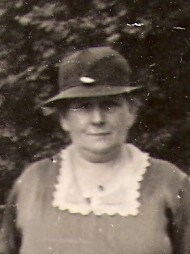 | ||||||||||||||||||||||||||||||||||||||
1905 | ||||||||||||||||||||||||||||||||||||||
Jacobus van der Graaf 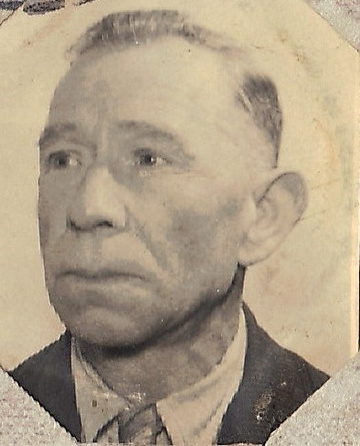 | ||||||||||||||||||||||||||||||||||||||


The data shown has no sources.
Historical events
Birthday October 20, 1882
- The temperature on October 20, 1882 was about 9.4 °C. There was 0.1 mm of rain. The air pressure was 2 kgf/m2 and came mainly from the east-southeast. The airpressure was 76 cm mercury. The atmospheric humidity was 93%. Source: KNMI
- Koning Willem III (Huis van Oranje-Nassau) was from 1849 till 1890 sovereign of the Netherlands (also known as Koninkrijk der Nederlanden)
- In The Netherlands , there was from August 20, 1879 to April 23, 1883 the cabinet Van Lijnden van Sandenburg, with Mr. C.Th. baron Van Lijnden van Sandenburg (conservatief-AR) as prime minister.
- In the year 1882: Source: Wikipedia
- The Netherlands had about 4.5 million citizens.
- March 2 » Queen Victoria narrowly escapes an assassination attempt by Roderick McLean in Windsor.
- June 6 » The Shewan forces of Menelik II of Ethiopia defeat the Gojjame army in the Battle of Embabo. The Shewans capture Negus Tekle Haymanot of Gojjam, and their victory leads to a Shewan hegemony over the territories south of the Abay River.
- July 26 » Premiere of Richard Wagner's opera Parsifal at Bayreuth.
- August 20 » Tchaikovsky's 1812 Overture debuts in Moscow, Russia.
- September 4 » The Pearl Street Station in New York City becomes the first power plant to supply electricity to paying customers.
- December 16 » Wales and England contest the first Home Nations (now Six Nations) rugby union match.
Day of marriage March 29, 1905
- The temperature on March 29, 1905 was between 5.4 °C and 12.7 °C and averaged 8.7 °C. There was 5.8 hours of sunshine (46%). The average windspeed was 4 Bft (moderate breeze) and was prevailing from the southwest. Source: KNMI
- Koningin Wilhelmina (Huis van Oranje-Nassau) was from 1890 till 1948 sovereign of the Netherlands (also known as Koninkrijk der Nederlanden)
- In The Netherlands , there was from August 1, 1901 to August 16, 1905 the cabinet Kuijper, with Dr. A. Kuijper (AR) as prime minister.
- In The Netherlands , there was from August 17, 1905 to February 11, 1908 the cabinet De Meester, with Mr. Th. de Meester (unie-liberaal) as prime minister.
- In the year 1905: Source: Wikipedia
- The Netherlands had about 5.5 million citizens.
- February 23 » Chicago attorney Paul Harris and three other businessmen meet for lunch to form the Rotary Club, the world's first service club.
- June 27 » During the Russo-Japanese War, sailors start a mutiny aboard the Russian battleship Potemkin.
- August 13 » Norwegians vote to end the union with Sweden.
- September 26 » Albert Einstein publishes the third of his Annus Mirabilis papers, introducing the special theory of relativity.
- November 18 » Prince Carl of Denmark becomes King Haakon VII of Norway.
- November 28 » Irish nationalist Arthur Griffith founds Sinn Féin as a political party with the main aim of establishing a dual monarchy in Ireland.
Day of death March 14, 1956
- The temperature on March 14, 1956 was between -0.8 °C and 3.3 °C and averaged 0.6 °C. There was 2.5 mm of rain during 5.5 hours. There was 1.2 hours of sunshine (10%). The heavily clouded was. The average windspeed was 3 Bft (moderate breeze) and was prevailing from the northeast. Source: KNMI
- Koningin Juliana (Huis van Oranje-Nassau) was from September 4, 1948 till April 30, 1980 sovereign of the Netherlands (also known as Koninkrijk der Nederlanden)
- In The Netherlands , there was from September 2, 1952 to October 13, 1956 the cabinet Drees II, with Dr. W. Drees (PvdA) as prime minister.
- In The Netherlands , there was from October 13, 1956 to December 22, 1957 the cabinet Drees III, with Dr. W. Drees (PvdA) as prime minister.
- In the year 1956: Source: Wikipedia
- The Netherlands had about 10.8 million citizens.
- January 3 » A fire damages the top part of the Eiffel Tower.
- September 13 » The IBM 305 RAMAC is introduced, the first commercial computer to use disk storage.
- October 28 » Hungarian Revolution: A de facto ceasefire comes into effect between armed revolutionaries and Soviet troops, who begin to withdraw from Budapest. Communist officials and facilities come under attack by revolutionaries.
- November 5 » Suez Crisis: British and French paratroopers land in Egypt after a week-long bombing campaign.
- November 7 » Hungarian Revolution: János Kádár returns to Budapest in a Soviet armored convoy, officially taking office as the next Hungarian leader. By this point, most armed resistance has been defeated.
- November 22 » The Summer Olympics, officially known as the games of the XVI Olympiad, are opened in Melbourne, Australia.
Same birth/death day
- 1874 » Charles Ives, American composer († 1954)
- 1882 » Bela Lugosi, Hungarian-American actor († 1956)
- 1882 » Margaret Dumont, American actress († 1965)
- 1885 » Jelly Roll Morton, American pianist, composer, and bandleader (Red Hot Peppers and New Orleans Rhythm Kings) († 1941)
- 1887 » Prince Yasuhiko Asaka of Japan († 1981)
- 1889 » Johann Gruber, Austrian priest and saint († 1944)
- 1953 » Klement Gottwald, Czechoslovak Communist politician and 14th President of Czechoslovakia (b. 1896)
- 1957 » Evagoras Pallikarides, Cypriot activist (b. 1938)
- 1965 » Marion Jones Farquhar, American tennis player (b. 1879)
- 1968 » Erwin Panofsky, German historian and academic (b. 1892)
- 1969 » Ben Shahn, Lithuanian-American painter, illustrator, and educator (b. 1898)
- 1973 » Howard H. Aiken, American computer scientist and engineer (b. 1900)
About the surname Rempkens
- View the information that Genealogie Online has about the surname Rempkens.
- Check the information Open Archives has about Rempkens.
- Check the Wie (onder)zoekt wie? register to see who is (re)searching Rempkens.
The Family tree Drenth publication was prepared by Mark Drenth.
When copying data from this family tree, please include a reference to the origin:
Mark Drenth, "Family tree Drenth", database, Genealogy Online (https://www.genealogieonline.nl/drenth-stamboom/I32.php : accessed February 27, 2026), "Elisabeth Rempkens (1882-1956)".
Mark Drenth, "Family tree Drenth", database, Genealogy Online (https://www.genealogieonline.nl/drenth-stamboom/I32.php : accessed February 27, 2026), "Elisabeth Rempkens (1882-1956)".