Family tree Bosch » Janna Stegeman (1893-1942)
Personal data Janna Stegeman
- She was born on July 31, 1893 in Vriezenveen.
- She died on April 11, 1942 in Vriezenveen, she was 48 years old.
- The birth parents are Herman Stegeman and Frederika Johanna Brink
Household of Janna Stegeman
She is married to Derk Webbink.
They got married on May 14, 1925, she was 31 years old.
Child(ren):
- Derk Webbink 1926-1982
- Herman Webbink 1928-2007
Timeline Janna Stegeman
This functionality is only available in Javascript supporting browsers.
Click on the names for more info.
Symbols used:  grandparents
 parents
 brothers/sisters
 children
grandparents
parents
brothers/sisters
children
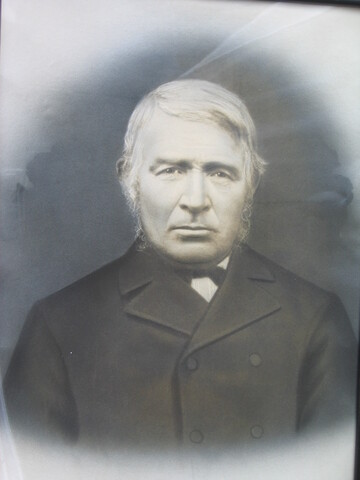
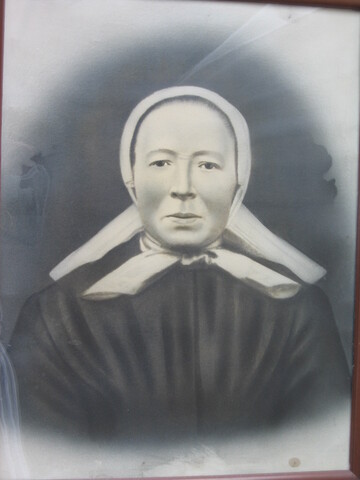
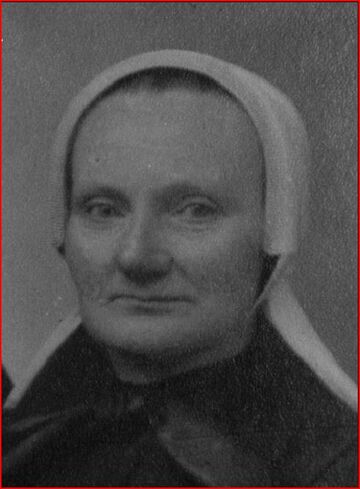
The data shown has no sources.
Historical events
Birthday July 31, 1893
- The temperature on July 31, 1893 was about 17.9 °C. There was 0.2 mm of rain. The airpressure was 76 cm mercury. The atmospheric humidity was 68%. Source: KNMI
- Koningin Wilhelmina (Huis van Oranje-Nassau) was from 1890 till 1948 sovereign of the Netherlands (also known as Koninkrijk der Nederlanden)
- Regentes Emma (Huis van Oranje-Nassau) was from 1890 till 1898 sovereign of the Netherlands (also known as Koninkrijk der Nederlanden)
- In The Netherlands , there was from August 21, 1891 to May 9, 1894 the cabinet Van Tienhoven, with Mr. G. van Tienhoven (unie-liberaal) as prime minister.
- In the year 1893: Source: Wikipedia
- The Netherlands had about 5.1 million citizens.
- June 22 » The Royal Navy battleship HMSCamperdown accidentally rams the British Mediterranean Fleet flagship HMSVictoria which sinks taking 358 crew with her, including the fleet's commander, Vice-Admiral Sir George Tryon.
- July 11 » The first cultured pearl is obtained by Kōkichi Mikimoto.
- August 15 » Ibadan area becomes a British Protectorate after a treaty signed by Fijabi, the Baale of Ibadan with the British acting Governor of Lagos, George C. Denton.
- November 1 » The Battle of Bembezi took place and was the most decisive battle won by the British in the First Matabele War of 1893.
- November 7 » Women's suffrage: Women in the U.S. state of Colorado are granted the right to vote, the second state to do so.
- December 4 » First Matabele War: A patrol of 34 British South Africa Company soldiers is ambushed and annihilated by more than 3,000 Matabele warriors on the Shangani River in Matabeleland.
Day of marriage May 14, 1925
- The temperature on May 14, 1925 was between 7.9 °C and 21.0 °C and averaged 15.4 °C. There was 13.0 hours of sunshine (83%). The average windspeed was 3 Bft (moderate breeze) and was prevailing from the north-northeast. Source: KNMI
- Koningin Wilhelmina (Huis van Oranje-Nassau) was from 1890 till 1948 sovereign of the Netherlands (also known as Koninkrijk der Nederlanden)
- In The Netherlands , there was from September 19, 1922 to August 4, 1925 the cabinet Ruys de Beerenbrouck II, with Jonkheer mr. Ch.J.M. Ruys de Beerenbrouck (RKSP) as prime minister.
- In The Netherlands , there was from August 4, 1925 to March 8, 1926 the cabinet Colijn I, with Dr. H. Colijn (ARP) as prime minister.
- In the year 1925: Source: Wikipedia
- The Netherlands had about 7.3 million citizens.
- January 21 » Albania declares itself a republic.
- January 30 » The Government of Turkey expels Patriarch Constantine VI from Istanbul.
- February 21 » The New Yorker publishes its first issue.
- March 16 » An earthquake occurs in Yunnan, China.
- May 25 » Scopes Trial: John T. Scopes is indicted for teaching human evolution in Tennessee.
- July 21 » Malcolm Campbell becomes the first man to exceed 150mph (241km/h) on land. At Pendine Sands in Wales, he drives Sunbeam 350HP built by Sunbeam at a two-way average speed of 150.33mph (242km/h).
Day of death April 11, 1942
- The temperature on April 11, 1942 was between 4.3 °C and 15.7 °C and averaged 9.7 °C. There was 11.9 hours of sunshine (88%). The average windspeed was 3 Bft (moderate breeze) and was prevailing from the northwest. Source: KNMI
- Koningin Wilhelmina (Huis van Oranje-Nassau) was from 1890 till 1948 sovereign of the Netherlands (also known as Koninkrijk der Nederlanden)
- In The Netherlands , there was from July 27, 1941 to February 23, 1945 the cabinet Gerbrandy II, with Prof. dr. P.S. Gerbrandy (ARP) as prime minister.
- In the year 1942: Source: Wikipedia
- The Netherlands had about 9.0 million citizens.
- January 31 » World War II: Allied forces are defeated by the Japanese at the Battle of Malaya and retreat to Singapore.
- February 2 » The Osvald Group is responsible for the first, active event of anti-Nazi resistance in Norway, to protest the inauguration of Vidkun Quisling.
- February 22 » World War II: President Franklin D. Roosevelt orders General Douglas MacArthur out of the Philippines as the Japanese victory becomes inevitable.
- May 27 » World War II: In Operation Anthropoid, Reinhard Heydrich is fatally wounded in Prague; he dies of his injuries eight days later.
- July 22 » Grossaktion Warsaw: The systematic deportation of Jews from the Warsaw ghetto begins.
- October 11 » World War II: Off Guadalcanal, United States Navy ships intercept and defeat a Japanese force.
Same birth/death day
- 1886 » Fred Quimby, American animation producer († 1965)
- 1886 » Salvatore Maranzano, Italian-American mob boss († 1931)
- 1887 » Hans Freyer, German sociologist and philosopher († 1969)
- 1892 » Herbert W. Armstrong, American evangelist and publisher, founded Worldwide Church of God († 1986)
- 1892 » Joseph Charbonneau, Canadian archbishop († 1959)
- 1894 » Fred Keenor, Welsh footballer († 1972)
- 1926 » Luther Burbank, American botanist and academic (b. 1849)
- 1939 » Kurtdereli Mehmet, Turkish wrestler (b. 1864)
- 1953 » Kid Nichols, American baseball player and manager (b. 1869)
- 1954 » Paul Specht, American violinist and bandleader (b. 1895)
- 1958 » Konstantin Yuon, Russian painter and educator (b. 1875)
- 1960 » Rosa Grünberg, Swedish actress (b. 1878)
About the surname Stegeman
- View the information that Genealogie Online has about the surname Stegeman.
- Check the information Open Archives has about Stegeman.
- Check the Wie (onder)zoekt wie? register to see who is (re)searching Stegeman.
The Family tree Bosch publication was prepared by Ger Bosch.
When copying data from this family tree, please include a reference to the origin:
Ger Bosch, "Family tree Bosch", database, Genealogy Online (https://www.genealogieonline.nl/bosch-stamboom/I660.php : accessed February 6, 2026), "Janna Stegeman (1893-1942)".
Ger Bosch, "Family tree Bosch", database, Genealogy Online (https://www.genealogieonline.nl/bosch-stamboom/I660.php : accessed February 6, 2026), "Janna Stegeman (1893-1942)".