Becker Hoff - Kins » Elisabeth Wüst (1795-1864)
Personal data Elisabeth Wüst
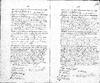
Source 1- She was born on April 3, 1795 in Mannheim Duitsland.
- Profession: Koopman.
- She died on June 3, 1864 in 's-Gravenhage, she was 69 years old.
- A child of Jacob Wüst and Barbara Bakker
Household of Elisabeth Wüst
She is married to Jakob Beckerhoff.
They got married on December 1, 1820 at Oberkirchen Kreis Sanktwendel Duitsland, she was 25 years old.
Child(ren):
- Johanna Maria Beckerhoff 1838-1880
Notes about Elisabeth Wüst
Is rond 1840, samen met haar man Jakob en kinderen naar Nederland verhuist.
Timeline Elisabeth Wüst
This functionality is only available in Javascript supporting browsers.
Click on the names for more info.
Symbols used:  grandparents
 parents
 brothers/sisters
 children
grandparents
parents
brothers/sisters
children
Ancestors (and descendant) of Elisabeth Wüst
Elisabeth Wüst | ||||||||||||||||||||||||||||||||||||||
1820 | ||||||||||||||||||||||||||||||||||||||
Jakob Beckerhoff  | ||||||||||||||||||||||||||||||||||||||

Sources
- (Not public)
Historical events
Birthday April 3, 1795
- The temperature on April 3, 1795 was about 5.0 °C. Wind direction mainly north-northeast. Weather type: zeer betrokken. Source: KNMI
- Erfstadhouder Prins Willem V (Willem Batavus) (Huis van Oranje-Nassau) was from 1751 till 1795 sovereign of the Netherlands (also known as Republiek der Zeven Verenigde Nederlanden)
- This page is only available in Dutch.De Republiek der Verenigde Nederlanden werd in 1794-1795 door de Fransen veroverd onder leiding van bevelhebber Charles Pichegru (geholpen door de Nederlander Herman Willem Daendels); de verovering werd vergemakkelijkt door het dichtvriezen van de Waterlinie; Willem V moest op 18 januari 1795 uitwijken naar Engeland (en van daaruit in 1801 naar Duitsland); de patriotten namen de macht over van de aristocratische regenten en proclameerden de Bataafsche Republiek; op 16 mei 1795 werd het Haags Verdrag gesloten, waarmee ons land een vazalstaat werd van Frankrijk; in 3.1796 kwam er een Nationale Vergadering; in 1798 pleegde Daendels een staatsgreep, die de unitarissen aan de macht bracht; er kwam een nieuwe grondwet, die een Vertegenwoordigend Lichaam (met een Eerste en Tweede Kamer) instelde en als regering een Directoire; in 1799 sloeg Daendels bij Castricum een Brits-Russische invasie af; in 1801 kwam er een nieuwe grondwet; bij de Vrede van Amiens (1802) kreeg ons land van Engeland zijn koloniën terug (behalve Ceylon); na de grondwetswijziging van 1805 kwam er een raadpensionaris als eenhoofdig gezag, namelijk Rutger Jan Schimmelpenninck (van 31 oktober 1761 tot 25 maart 1825).
- In the year 1795: Source: Wikipedia
- January 19 » The Batavian Republic is proclaimed in the Netherlands, bringing to an end the Republic of the Seven United Netherlands.
- February 7 » The 11th Amendment to the United States Constitution is ratified.
- June 16 » French Revolutionary Wars: In what became known as Cornwallis's Retreat, a British Royal Navy squadron led by Vice Admiral William Cornwallis strongly resists a much larger French Navy force and withdraws largely intact, setting up the French Navy defeat at the Battle of Groix six days later.
- October 3 » Slave rebel leader Tula is executed in Curaçao.
- October 4 » Napoleon first rises to prominence by suppressing counter-revolutionary rioters threatening the National Convention.
- December 28 » Construction of Yonge Street, formerly recognized as the longest street in the world, begins in York, Upper Canada (present-day Toronto).
Day of marriage December 1, 1820
- The temperature on December 1, 1820 was about 4.0 °C. Wind direction mainly southwest. Weather type: betrokken mist. Source: KNMI
- This page is only available in Dutch.De Republiek der Verenigde Nederlanden werd in 1794-1795 door de Fransen veroverd onder leiding van bevelhebber Charles Pichegru (geholpen door de Nederlander Herman Willem Daendels); de verovering werd vergemakkelijkt door het dichtvriezen van de Waterlinie; Willem V moest op 18 januari 1795 uitwijken naar Engeland (en van daaruit in 1801 naar Duitsland); de patriotten namen de macht over van de aristocratische regenten en proclameerden de Bataafsche Republiek; op 16 mei 1795 werd het Haags Verdrag gesloten, waarmee ons land een vazalstaat werd van Frankrijk; in 3.1796 kwam er een Nationale Vergadering; in 1798 pleegde Daendels een staatsgreep, die de unitarissen aan de macht bracht; er kwam een nieuwe grondwet, die een Vertegenwoordigend Lichaam (met een Eerste en Tweede Kamer) instelde en als regering een Directoire; in 1799 sloeg Daendels bij Castricum een Brits-Russische invasie af; in 1801 kwam er een nieuwe grondwet; bij de Vrede van Amiens (1802) kreeg ons land van Engeland zijn koloniën terug (behalve Ceylon); na de grondwetswijziging van 1805 kwam er een raadpensionaris als eenhoofdig gezag, namelijk Rutger Jan Schimmelpenninck (van 31 oktober 1761 tot 25 maart 1825).
- In the year 1820: Source: Wikipedia
- January 27 » A Russian expedition led by Fabian Gottlieb von Bellingshausen and Mikhail Petrovich Lazarev discovers the Antarctic continent, approaching the Antarctic coast.
- February 23 » Cato Street Conspiracy: A plot to murder all the British cabinet ministers is exposed.
- April 8 » The Venus de Milo is discovered on the Aegean island of Milos.
- May 1 » Execution of the Cato Street Conspirators, who plotted to kill the British Cabinet and Prime Minister Lord Liverpool.
- September 15 » Constitutionalist revolution in Lisbon, Portugal.
- November 17 » Captain Nathaniel Palmer becomes the first American to see Antarctica. (The Palmer Peninsula is later named after him.)
Day of death June 3, 1864
- The temperature on June 3, 1864 was about 17.3 °C. The air pressure was 0.5 kgf/m2 and came mainly from the east-northeast. The airpressure was 76 cm mercury. The atmospheric humidity was 48%. Source: KNMI
- Koning Willem III (Huis van Oranje-Nassau) was from 1849 till 1890 sovereign of the Netherlands (also known as Koninkrijk der Nederlanden)
- In The Netherlands , there was from February 1, 1862 to February 10, 1866 the cabinet Thorbecke II, with Mr. J.R. Thorbecke (liberaal) as prime minister.
- In the year 1864: Source: Wikipedia
- The Netherlands had about 3.6 million citizens.
- February 20 » American Civil War: Battle of Olustee: The largest battle fought in Florida during the war.
- April 22 » The U.S. Congress passes the Coinage Act of 1864 that mandates that the inscription In God We Trust be placed on all coins minted as United States currency.
- May 20 » American Civil War: Battle of Ware Bottom Church: In the Virginia Bermuda Hundred campaign, 10,000 troops fight in this Confederate victory.
- August 23 » American Civil War: The Union Navy captures Fort Morgan, Alabama, thus breaking Confederate dominance of all ports on the Gulf of Mexico except Galveston, Texas.
- October 31 » Nevada is admitted as the 36th U.S. state.
- December 10 » American Civil War: Sherman's March to the Sea: Major General William Tecumseh Sherman's Union Army troops reach the outer Confederate defenses of Savannah, Georgia.
Same birth/death day
- 1781 » Swaminarayan, Indian religious leader († 1830)
- 1782 » Alexander Macomb, American general († 1841)
- 1783 » Washington Irving, American short story writer, essayist, biographer, historian († 1859)
- 1791 » Anne Lister, English diarist, mountaineer, and traveller (d.1840)
- 1798 » Charles Wilkes, American admiral, geographer, and explorer (d.1877)
- 1807 » Mary Carpenter, English educational and social reformer († 1877)
- 1858 » Julius Reubke, German pianist and composer (b. 1834)
- 1861 » Stephen A. Douglas, American lawyer and politician, 7th Secretary of State of Illinois (b. 1813)
- 1865 » Okada Izō, Japanese samurai (b. 1838)
- 1875 » Georges Bizet, French pianist and composer (b. 1838)
- 1877 » Ludwig Ritter von Köchel, Austrian botanist, composer, and publisher (b. 1800)
- 1882 » Christian Wilberg, German painter and illustrator (b. 1839)
About the surname Wüst
- View the information that Genealogie Online has about the surname Wüst.
- Check the information Open Archives has about Wüst.
- Check the Wie (onder)zoekt wie? register to see who is (re)searching Wüst.
The Becker Hoff - Kins publication was prepared by Wim Becker Hoff.
When copying data from this family tree, please include a reference to the origin:
Wim Becker Hoff, "Becker Hoff - Kins", database, Genealogy Online (https://www.genealogieonline.nl/becker-hoff-kins/I500027.php : accessed March 10, 2026), "Elisabeth Wüst (1795-1864)".
Wim Becker Hoff, "Becker Hoff - Kins", database, Genealogy Online (https://www.genealogieonline.nl/becker-hoff-kins/I500027.php : accessed March 10, 2026), "Elisabeth Wüst (1795-1864)".