maximum test » Oria "Oria Lopo Musa Awriya ibn Lubb" (± 831-± 900)
Persönliche Daten Oria "Oria Lopo Musa Awriya ibn Lubb"
- Spitzname ist Oria Lopo Musa Awriya ibn Lubb.
- Sie ist geboren rund 831Pamplona
Navarra España. - Sie ist verstorben rund 900Pamplona
Navarra España. - Diese Information wurde zuletzt aktualisiert am 24. Dezember 2019.
Familie von Oria "Oria Lopo Musa Awriya ibn Lubb"
Sie war verwandt mit Fortún 'el Monje' Garcés.
Kind(er):
Notizen bei Oria "Oria Lopo Musa Awriya ibn Lubb"
#Générale##Générale#
{geni:about_me} '''Oria''' ('''Auria''', '''Awriya'''), the wife of [http://tinyurl.com/zg7dkmb Fortún Garcés], is known only from the ''Códice de Roda'', which names ''domna Oria filia de ---'' (lady Oria, daughter of ---) as thewife of ''Furtunio Garseanis'' (Fortún Garcés). This codex probably dates from the late 10th century with additions for the 11th century, so it is approximately 100 years or more after her lifetime.
There is no contemporary indication of her parentage, but there several theories about her possible ancestry:
*According to the Andalusian historian Ibn Hazm (994-1064), she was married to "Garcia, King of the Basques, from which Musa ibn Garcia was borned"
* Historian and professor Antonio Rei suggested she might have been a granddaughter of [http://tinyurl.com/z5a3h6g Musa ibn Musa ibn Qasi] (Rei, 44–45). The Banu Qasi were a Christian family who converted to Islam.
* Historian and genealogist Christian Settipani suggested she might have been a daughter of Oria bint Musa, daughter of Musa ibn Musa, and her husband García (killed 859). The latter would be a son of García Galíndez the Bad and his first wife Matrona, daughter of Aznar I Galíndez, count of Aragon (Settipani, 114)
* Settipani also suggested she might have been a daughter of García Galíndez the Bad and another Aurea, his second wife, the daughter of Eneko Arista and sister García I of Navarre (Settipani, 114).
* Settipani also suggested she might have been a daughter of Galindo I Aznárez, count of Aragon, and a granddaughter of Aznar I Galíndez and a third Aurea, who could be the daughter of the Duke Lupo II of Gascony and a sister of Oneca or Iniga, the mother of Eneko Arista and Musa ibn Musa (Settipani, 115).
* Spanish Wikipedia (citing Rei) supports the theory she was daughter of Lubb ibn Musa ( Lope ibn Musa) and Ayab Al-Bilatiyya, and a granddaughter of Musa ibn Musa and Assona Iniguez but says in a footnote that her parentage is not documented.
* In unsourced Internet genealogies she is most often called a daughter of [http://www.geni.com/people/Lope-Musa/6000000013401475617 Lope ibn Musa] (banu Qasi).
She married [845] King Fortún Garcés of Pamplona, who died in 922. They were the parents of:
# Íñigo Fortúnez
# Aznar Fortúnez
# Velasco Fortúnez
# Lope Fortúnez
# Onneca Fortúnez, who married firstly Abdallah ibn Mohammed, Emir of Córdoba, and secondly her cousin Aznar Sánchez of Larraun, grandson of king García Íñiguez, becoming the mother of the future queens Toda Aznárez, wife of Sancho Garcés, and Sancha Aznárez, wife of king Jimena Garcés.
== Sources ==
* Charles Cawley, [http://fmg.ac/Projects/MedLands/NAVARRE.htm#FortunGarcesdied925B KINGS of PAMPLONA 822-(905) (IÑIGA DYNASTY)] at Medieval Lands, visited May 27, 2018.
* Todd A. Farmerie, "[https://groups.google.com/forum/#!searchin/soc.genealogy.medieval/Aboazar$20Lovesendes%7Csort:relevance/soc.genealogy.medieval/x-U3vtd9BMo/dydPytUwSSoJ Muslim/Christian descents in Early-Medieval Spain"] at soc.genealogy.medieval (June 16, 2001).
* António Rei (2011–2012). "Descendência Hispânica do Profeta do Islão: Exploração de Algumas Linhas Primárias". ''Armas e Troféus'' (in Portuguese). Instituto Português de Heráldica
* Christian Settipani, ''La Noblesse du Midi Carolingien'', Oxford, Linacre College, Unit for Prosopographical Research, coll. Occasional Publications / 5 (2004)
* Leo van de Pas, citing ''Europäische Stammtafeln'', J.A. Stargardt Verlag, Marburg, Schwennicke, Detlev (Ed.)m II 53.
* Wikipedia: [http://en.wikipedia.org/wiki/Auria English] [http://fr.wikipedia.org/wiki/Fort%C3%BAn_de_Navarre#Origines_possibles_d.E2.80.99Aurea French] [http://de.wikipedia.org/wiki/Fort%C3%BAn_Garc%C3%A9s German] [http://es.wikipedia.org/wiki/Fort%C3%BAn_Garc%C3%A9s#Matrimonio_y_descendencia Spanish]
--------------------
Oria (Auria, Awriya), the wife of Fortún Garcés, is known only from the Códice de Roda, which names domna Oria filia de --- (lady Oria, daughter of ---) as the wife of Furtunio Garseanis (Fortún Garcés). This codex probably dates from the late 10th century with additions for the 11th century, so it is approximately 100 years or more after her lifetime.
There is no contemporary indication of her parentage, but there several theories about her possible ancestry:
Historian and professor Antonio Rei suggested she might have been a granddaughter of Musa ibn Musa ibn Qasi (Rei, 44–45). The Banu Qasi were a Christian family who converted to Islam.
Historian and genealogist Christian Settipani suggested she might have been a daughter of Oria bint Musa, daughter of Musa ibn Musa, and her husband García (killed 859). The latter would be a son of García Galíndez the Bad and hisfirst wife Matrona, daughter of Aznar I Galíndez, count of Aragon (Settipani, 114)
Settipani also suggested she might have been a daughter of García Galíndez the Bad and another Aurea, his second wife, the daughter of Eneko Arista and sister García I of Navarre (Settipani, 114).
Settipani also suggested she might have been a daughter of Galindo I Aznárez, count of Aragon, and a granddaughter of Aznar I Galíndez and a third Aurea, who could be the daughter of the Duke Lupo II of Gascony and a sister of Oneca or Iniga, the mother of Eneko Arista and Musa ibn Musa (Settipani, 115).
Spanish Wikipedia (citing Rei) supports the theory she was daughter of Lubb ibn Musa ( Lope ibn Musa) and Ayab Al-Bilatiyya, and a granddaughter of Musa ibn Musa and Assona Iniguez but says in a footnote that her parentage is not documented.
In unsourced Internet genealogies she is most often called a daughter of Lope ibn Musa (banu Qasi).
She married [845] King Fortún Garcés of Pamplona, who died in 922. They were the parents of:
Íñigo Fortúnez
Aznar Fortúnez
Velasco Fortúnez
Lope Fortúnez
Onneca Fortúnez, who married firstly Abdallah ibn Mohammed, Emir of Córdoba, and secondly her cousin Aznar Sánchez of Larraun, grandson of king García Íñiguez, becoming the mother of the future queens Toda Aznárez, wife of Sancho Garcés, and Sancha Aznárez, wife of king Jimena Garcés.
Sources
Charles Cawley, KINGS of PAMPLONA 822-(905) (IÑIGA DYNASTY) at Medieval Lands, visited May 27, 2018.
Todd A. Farmerie, "Muslim/Christian descents in Early-Medieval Spain" at soc.genealogy.medieval (June 16, 2001).
António Rei (2011–2012). "Descendência Hispânica do Profeta do Islão: Exploração de Algumas Linhas Primárias". Armas e Troféus (in Portuguese). Instituto Português de Heráldica
Christian Settipani, La Noblesse du Midi Carolingien, Oxford, Linacre College, Unit for Prosopographical Research, coll. Occasional Publications / 5 (2004)
Leo van de Pas, citing Europäische Stammtafeln, J.A. Stargardt Verlag, Marburg, Schwennicke, Detlev (Ed.)m II 53.
Wikipedia: English French German Spanish
Era sobrina segunda de su esposo el rey Fortún el Monje
OR "ORIA"
Vorfahren (und Nachkommen) von Oria
Oria | ||||||||||||||||||||||||||||||||||
Fortún 'el Monje' Garcés 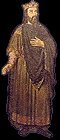 | ||||||||||||||||||||||||||||||||||

Die angezeigten Daten haben keine Quellen.
Die maximum test-Veröffentlichung wurde von Ard van Bergen erstellt.
Geben Sie beim Kopieren von Daten aus diesem Stammbaum bitte die Herkunft an:
Ard van Bergen, "maximum test", Datenbank, Genealogie Online (https://www.genealogieonline.nl/maximum-test/I6000000007427665201.php : abgerufen 16. März 2026), "Oria "Oria Lopo Musa Awriya ibn Lubb" (± 831-± 900)".
Ard van Bergen, "maximum test", Datenbank, Genealogie Online (https://www.genealogieonline.nl/maximum-test/I6000000007427665201.php : abgerufen 16. März 2026), "Oria "Oria Lopo Musa Awriya ibn Lubb" (± 831-± 900)".